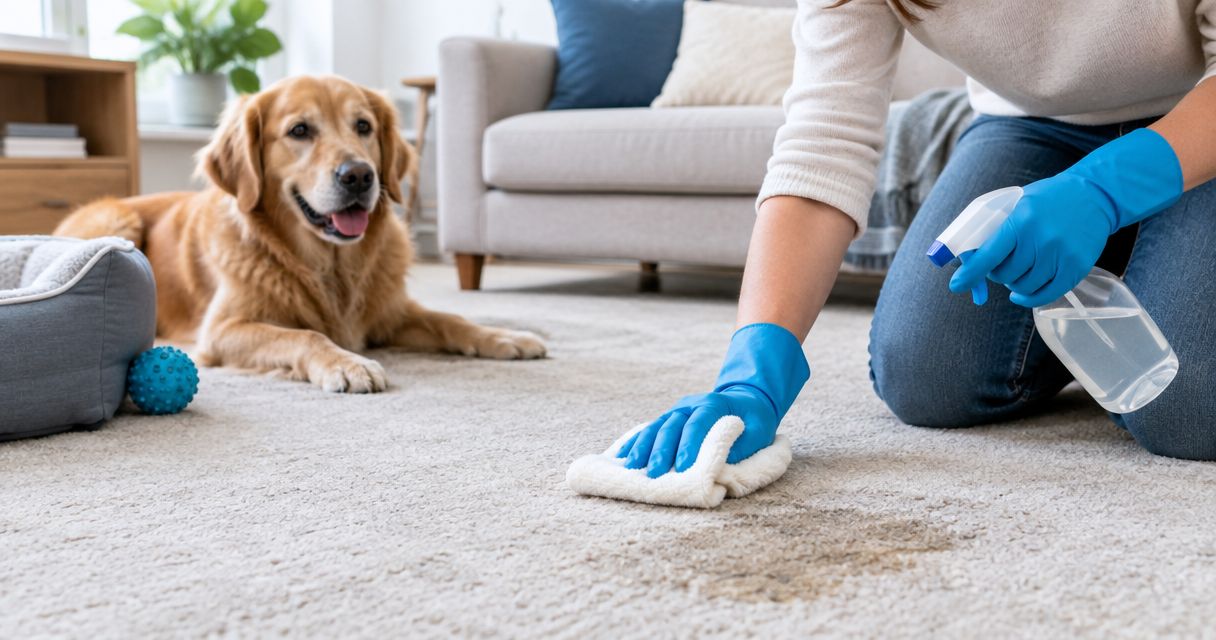
Best overall: a carpet-compatible enzymatic cleaner for urine spots. Best immediate response: blotting. Best for recurring odor: professional assessment. The best way to remove pet stains from carpet in 2026 is to match the treatment to the mess and stop adding moisture when the problem extends below the surface.
- The best way to remove pet stains from carpet starts with blotting, then a carpet-compatible treatment.
- Enzymatic cleaners suit urine spots; follow the product label and your carpet’s care instructions.
- Finesse Pro Services provides residential carpet cleaning for homeowners in Wilmington and surrounding Pender and Onslow counties.
- Recurring pet odor needs assessment, not another layer of fragrance.
Why this matters
A cleaner-looking carpet does not prove the odor source is gone. Urine can reach the backing or padding, while repeated scrubbing and soaking create additional problems. Choose your 2026 cleaning approach by the type of accident, the carpet’s care requirements, and whether the smell returns after drying.
What makes the best pet-stain treatment
- Carpet compatibility: The treatment must suit the fiber, backing, and manufacturer’s care instructions.
- Correct target: Urine, solid waste, and vomit require different preparation.
- Moisture control: More liquid is not automatically more effective.
- Residue removal: Cleaner left behind can affect the carpet’s feel and attract soil.
- Honest limits: Surface cleaning does not repair damaged fibers or replace contaminated padding.
Best pet-stain methods at a glance
| Method | Best for | Standout feature | Key limitation |
|---|---|---|---|
| Carpet-compatible enzymatic cleaner | Urine spots | Targets organic material responsible for staining and odor | Needs label-directed application and contact time |
| Blotting and solid-waste removal | An accident you find immediately | Removes material before further treatment | Does not finish the cleaning job |
| Professional carpet assessment and cleaning | Recurring odor or widespread staining | Separates cleaning needs from deeper damage | Cleaning alone cannot fix every affected layer |
| Finesse Pro Services | Local residential carpet-cleaning assessment | Serves Wilmington and surrounding Pender and Onslow counties | The treatment and scope need an individual assessment |
| Carpet-approved spot extraction | Removing residue after compatible treatment | Removes liquid rather than covering the smell | Overwetting and unsuitable equipment create problems |
| Carpet patching | Permanently damaged carpet | Replaces the affected carpet section | Does not independently resolve contamination underneath |
The local service row identifies a provider for the professional option, not a separate cleaning method. The ranked sections below compare the five approaches you can choose between.
1. Enzymatic cleaner: best for carpet-compatible urine treatment
A carpet-compatible enzymatic cleaner is the default choice for a urine spot when the carpet’s care instructions permit it. Enzymes help break down organic material rather than simply adding a scent. The label determines application, contact time, removal, and drying instructions.
Remove excess liquid first, then test the product in a hidden area. Follow the label’s sequence instead of adding another cleaner halfway through. Do not assume a product intended for hard floors, laundry, or outdoor use belongs on carpet.
Enzymatic cleaner pros:
- Targets organic material associated with pet urine.
- Gives you a focused treatment for an identified spot.
- Provides product-specific directions for application and removal.
Enzymatic cleaner cons:
- Not every formula is suitable for every carpet.
- Surface application does not establish whether padding needs attention.
Best for: An identified urine spot on carpet whose care instructions allow the selected product.
Verdict: Buy a carpet-compatible formula only after checking its label and the carpet’s care requirements. Do not choose by fragrance alone.
2. Blotting: best for an accident you find immediately
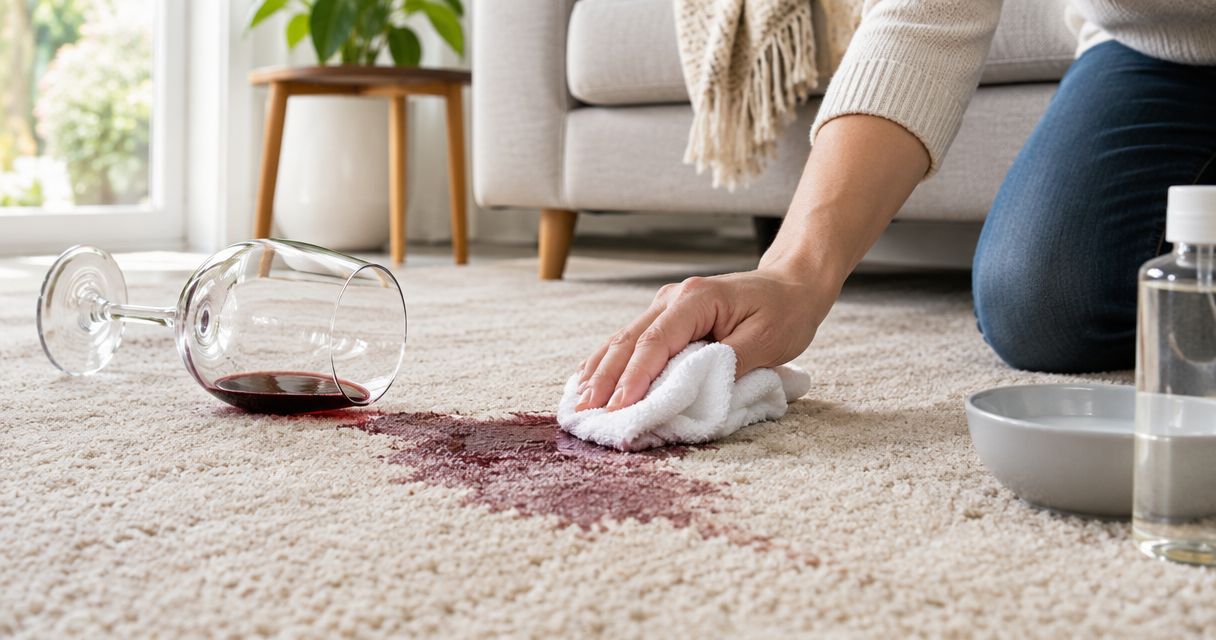
Blotting removes excess liquid before you apply a treatment. Use a clean, absorbent white cloth and press rather than scrub. Move to a dry portion of the cloth as it takes up moisture.
For solid waste or vomit, carefully lift away the material before treating the remaining spot. Avoid pressing debris into the pile. Blotting is preparation, not proof that the carpet is clean or that urine odor has been removed.
Blotting pros:
- Starts the cleanup without adding chemicals.
- Removes excess liquid before targeted treatment.
- Avoids the aggressive friction of scrubbing.
Blotting cons:
- Does not remove everything left in the fibers.
- Cannot pull all contamination out of backing or padding.
Best for: A fresh accident that is still wet or has removable material on the surface.
Verdict: Use immediately, then choose the appropriate cleaning treatment. Skip vigorous scrubbing, even when the stain looks stubborn.
3. Professional assessment: best for odor that keeps returning
Professional assessment is the next move when a spot smells again after drying, several areas are affected, or you cannot identify a carpet-safe treatment. The key question is whether the problem remains in the carpet face or involves the backing, padding, or material underneath.
Finesse Pro Services provides residential carpet cleaning for homeowners in Wilmington and surrounding Pender and Onslow counties. When requesting a personalized quote, describe the accident, previous treatments, and whether the odor returns. Ask what the proposed service addresses and what falls outside its scope.
Professional assessment pros:
- Helps distinguish a cleaning problem from physical damage.
- Gives you a defined service scope before work begins.
- Provides a route for discussing delicate materials and previous treatments.
Professional assessment cons:
- Carpet cleaning cannot reverse every stain or damaged fiber.
- Contaminated padding or underlying material can require separate work.
Best for: Recurring odor, repeated accidents, extensive staining, or uncertain carpet compatibility.
Verdict: Request an assessment rather than repeating unsuccessful treatments. Ask how the stated satisfaction guarantee applies to the proposed work; do not treat a guarantee as a promise that every stain is reversible.
4. Spot extraction: best for removing compatible cleaning residue
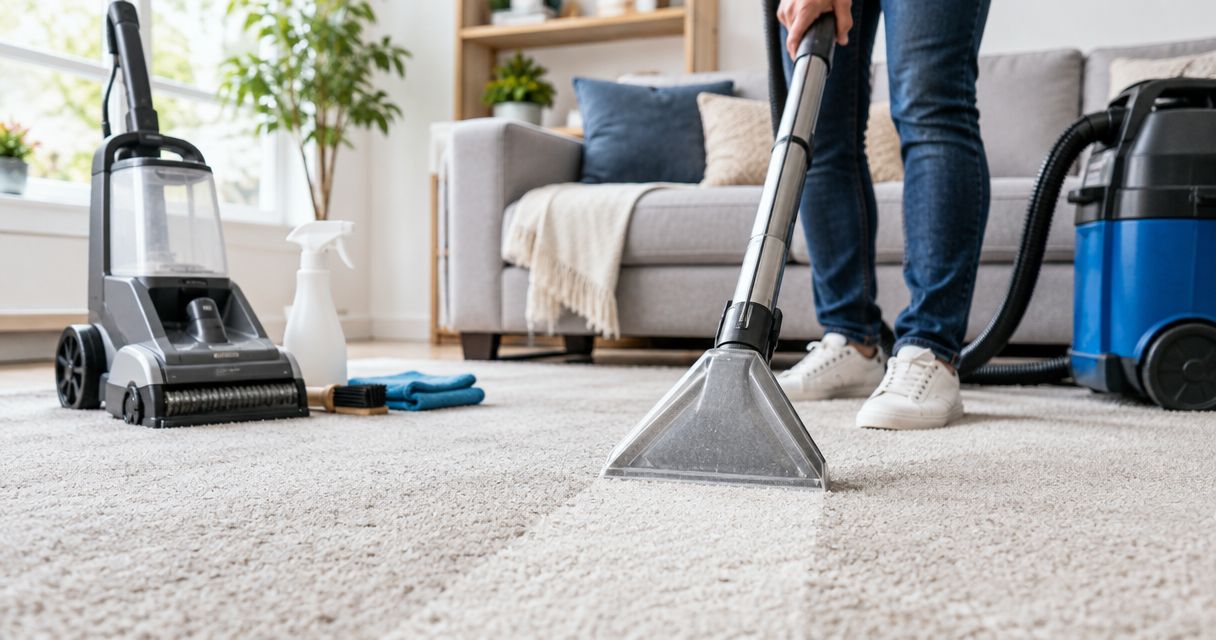
Spot extraction uses suitable equipment to apply and recover liquid from a localized area. Its useful role is removal: drawing out moisture and residue after a treatment that permits extraction. It is not permission to saturate the carpet.
Follow both the cleaner’s label and the equipment instructions. Check the carpet’s care requirements before starting, and use only approved solutions. If an enzymatic product requires contact time before removal, extracting it early interrupts that process.
Spot extraction pros:
- Removes liquid instead of masking odor with fragrance.
- Can help remove residue when the treatment instructions call for it.
- Concentrates work on an identified area.
Spot extraction cons:
- Excess moisture can reach backing and padding.
- Incorrect solutions or equipment settings can damage carpet.
Best for: A localized spot where the carpet, cleaner, and equipment instructions all permit extraction.
Verdict: Use only when the instructions agree. Skip extraction as an improvised fix for a delicate rug or unknown fiber.
5. Carpet patching: best for permanently damaged carpet
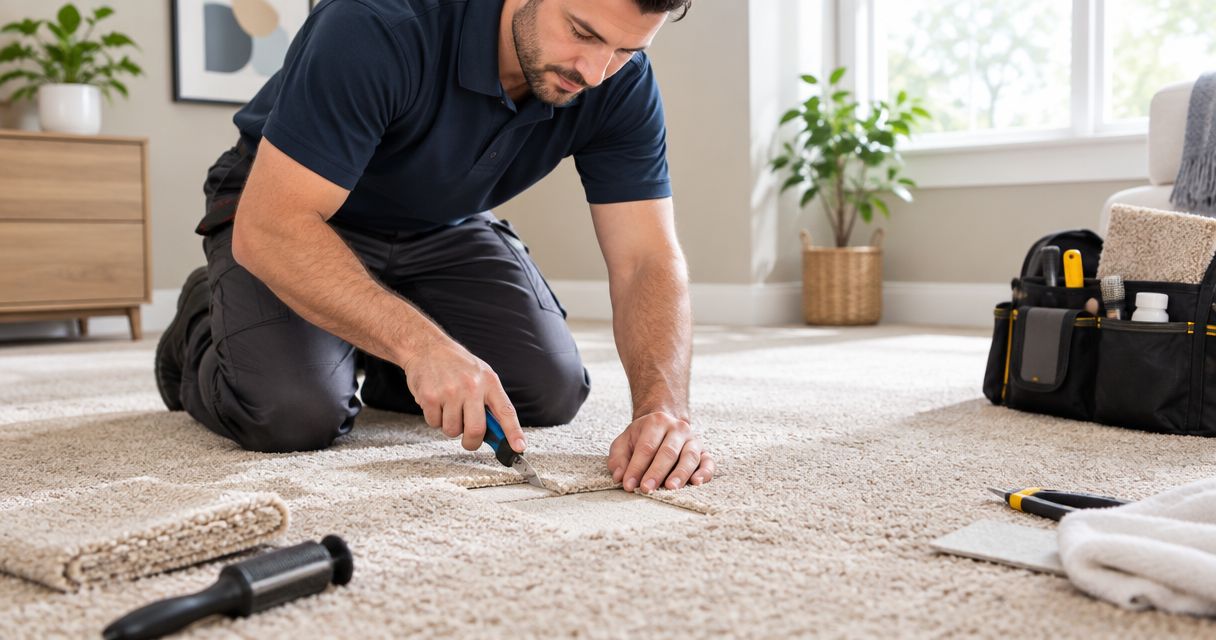
Carpet patching replaces a damaged section rather than cleaning it. It belongs in the decision when fibers are physically damaged or a visible mark remains after appropriate cleaning. Matching the replacement material is part of the assessment.
Patching does not independently solve urine contamination beneath the carpet. Address the affected padding or underlying material before treating a new carpet section as the finished repair. Power stretching addresses loose carpet and wrinkles; it is not a pet-odor treatment.
Carpet patching pros:
- Addresses localized carpet damage that cleaning cannot reverse.
- Keeps the discussion focused on the affected section.
- Separates a repair decision from repeated stain-treatment attempts.
Carpet patching cons:
- The replacement section needs a suitable match.
- Underlying contamination needs its own treatment plan.
Best for: A permanently damaged area after the odor source has been assessed.
Verdict: Consider repair after cleaning limits and underlying conditions are clear. Finesse Pro Services offers carpet patching and power stretching; request advice about the repair that matches the actual problem.
A practical cleanup sequence for 2026
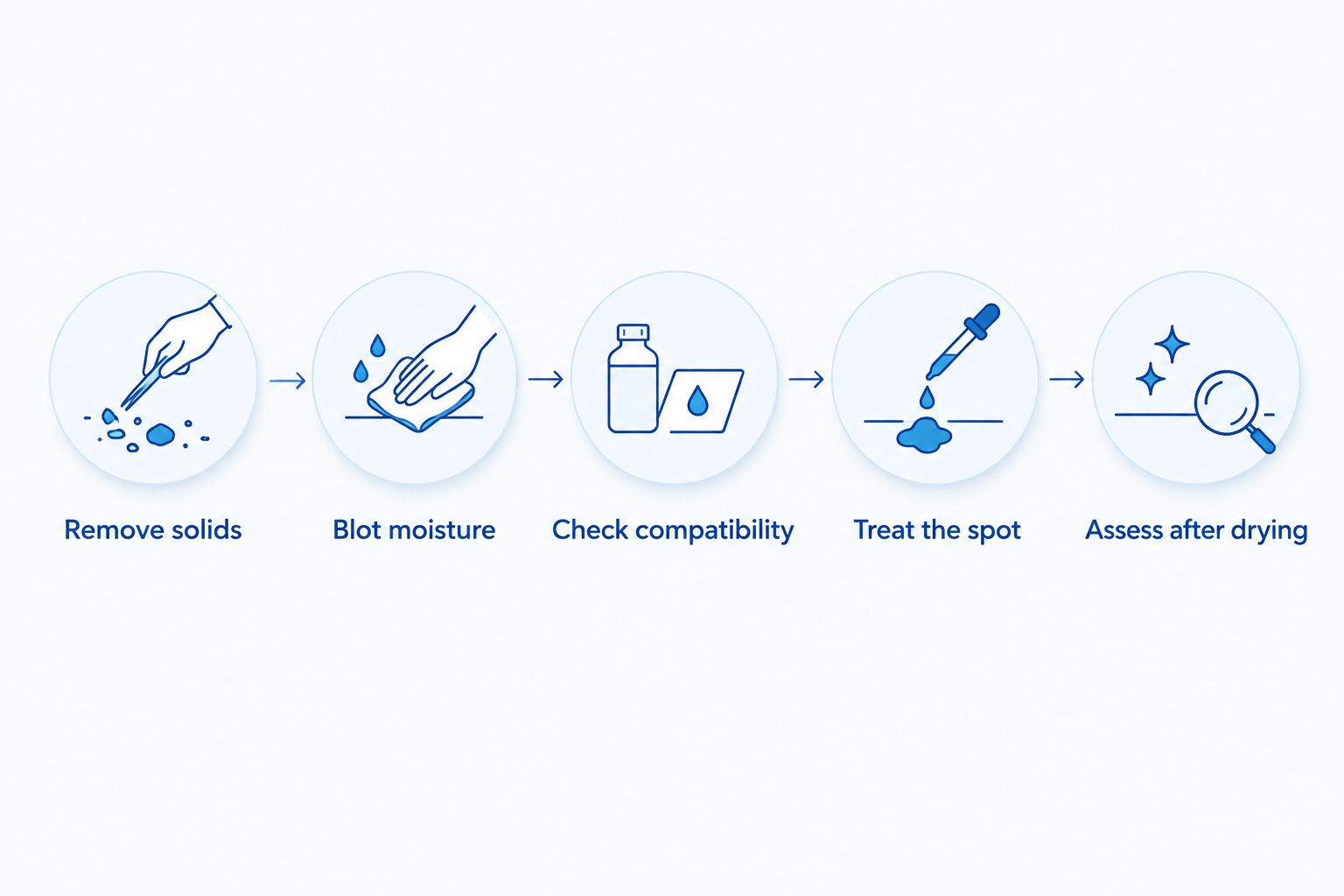
Use this sequence to avoid turning a small accident into a larger wet area. Stop when a step conflicts with your carpet’s care instructions.
- Remove solids. Lift waste or vomit carefully without pushing it into the pile.
- Blot moisture. Press with an absorbent white cloth and move to a dry area of the cloth.
- Check compatibility. Read the carpet instructions and cleaner label, then test a hidden area.
- Treat the spot. Follow the product’s application, contact, removal, and drying directions.
- Assess after drying. Check the appearance and odor before deciding whether further treatment is needed.
Keep pets away from the treated area according to the product’s directions. Do not use a dry-looking surface as the only signal that the carpet is ready for normal use. Follow the instructions for ventilation, drying, and re-entry.
If you are preparing a 2026 service request, take 2 photos: one close-up of the affected spot and one wider view showing its location. Add the cleaner names you have already used. These details help explain the problem without relying on appearance alone.
What to avoid when removing pet stains
Do not mix cleaners. Combining products creates avoidable safety and compatibility risks. In particular, never mix bleach with ammonia or acids, including vinegar.
Do not substitute fragrance for removal. A pleasant smell immediately after treatment does not prove that the original odor source is gone. Evaluate the area again after the carpet dries.
Do not scrub harder because the mark remains. Aggressive friction can distort the pile. A persistent mark needs a different decision, not automatically more force.
Do not keep soaking the same spot. Repeated wetting can move the problem beyond the carpet face. When odor returns after a correctly applied treatment, reassess the affected layers.
Do not apply wall-to-wall carpet advice to every rug. Wool, silk, dyes, backing, and construction affect treatment choices. Check the rug’s own care instructions rather than assuming a carpet cleaner is suitable.
How to request a useful local quote
For homeowners in Pender County, a useful quote starts with a clear description of the affected room and the result you need. Tell the provider whether the concern is a visible stain, recurring odor, physical damage, or a combination.
Before contacting Finesse Pro Services, complete 3 checks: identify the affected areas, list previous treatments, and find any available carpet-care information. Mention repeated accidents and whether the smell changes after cleaning or drying. Ask how delicate rugs or nearby upholstery should be handled if they also need attention.
Request a personalized quote that separates carpet cleaning from any proposed repair or work below the carpet. Confirm preparation instructions and the terms of the satisfaction guarantee. Clear scope is more useful than an unsupported promise of complete removal.
Request Your Carpet Cleaning Quote
Describe the stains, recurring odor, and previous treatments to discuss the right service scope.
How the methods are ranked
This 2026 guide ranks methods by carpet compatibility, the material they address, moisture control, residue removal, and their limits. It does not treat immediate cleanup, deeper cleaning, and repair as interchangeable. Blotting starts the job; a compatible treatment addresses the spot; assessment determines when the job extends beyond surface cleaning.
Which pet-stain method should you choose?
For an ordinary urine spot, start with blotting and a carpet-compatible enzymatic cleaner. Follow the instructions rather than adding household mixtures. Use compatible extraction only when the treatment calls for it.
Choose professional assessment when odor returns, several areas are affected, or the carpet’s care requirements are unclear. Choose patching for physical damage only after the underlying odor source has been addressed. The right method solves the identified problem without creating another one.
FAQ
What’s the best way to remove pet stains from carpet?
The best way to remove pet stains from carpet is to remove excess material, blot moisture, and use a treatment compatible with the carpet and the type of accident. For urine, choose a carpet-compatible enzymatic cleaner and follow its label. Recurring odor needs assessment of more than the surface.
Is an enzymatic cleaner better than a scented carpet spray?
A carpet-compatible enzymatic cleaner is the better choice for targeting organic material associated with urine. A scented spray can cover a smell without removing its source. Check compatibility before applying either product.
Why does my carpet still smell after it dries?
Remaining contamination in the carpet, backing, padding, or underlying material can cause odor after drying. Repeated accidents and incomplete removal complicate the problem. Request an assessment rather than repeatedly saturating the area.
Should I scrub a fresh pet stain?
Blot a fresh pet stain rather than scrubbing it. First lift away any solids, then press with an absorbent white cloth. Follow with a treatment allowed by the carpet’s care instructions.
Can I use the same pet-stain cleaner on an area rug?
Use the same cleaner only if the rug’s care instructions and the product label both permit it. Rug fibers, dyes, backing, and construction affect compatibility. Delicate rugs need material-specific treatment.
Can carpet patching remove pet odor?
Carpet patching replaces a carpet section but does not independently remove contamination underneath it. Assess affected padding and underlying material before completing a repair. Patching suits physical damage, not an unidentified odor source.
Who provides residential carpet cleaning around Pender County in 2026?
Finesse Pro Services provides residential carpet cleaning for homeowners in Wilmington and surrounding Pender and Onslow counties. Request a personalized quote and describe the stains, recurring odor, and treatments already used. Confirm the proposed scope before booking.
One last thing
For your 2026 cleanup plan, separate 1 decision from everything else: is the remaining problem dirt, odor, or damage? A stain can disappear while odor remains, and clean carpet can still have damaged fibers. Name the remaining problem before choosing the next treatment.