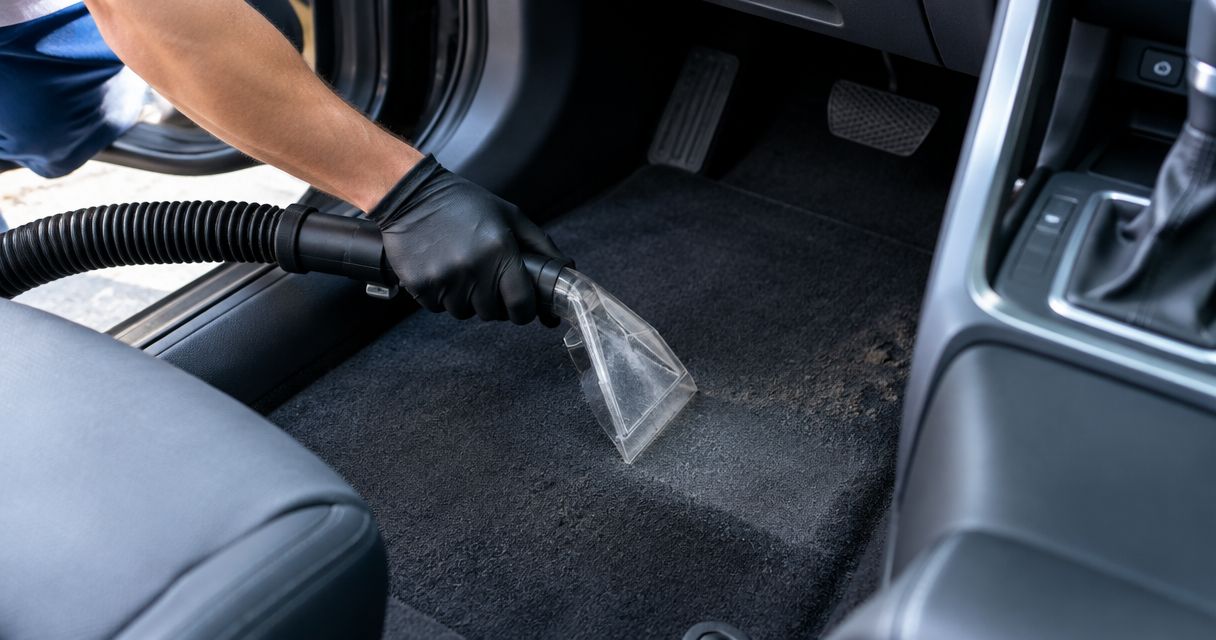
Best overall in 2026: controlled extraction for rinse-safe, embedded stains; best for dry sand and dirt: thorough vacuuming; best first response to fresh drink spills: blotting with a carpet-compatible spot cleaner. For homeowners in Wilmington and Pender County who need help with their vehicle’s interior, Finesse Pro Services offers auto detailing alongside residential cleaning services.
- The best car carpet cleaning method matches the stain: vacuum dry dirt, blot fresh spills, extract rinse-safe residue.
- Carpet-compatible enzyme cleaners suit organic contamination; targeted degreasers suit oily marks.
- Finesse Pro Services offers auto detailing for homeowners in Wilmington and surrounding Pender and Onslow counties.
- Recurring odor, damp padding, and unknown stains need assessment rather than repeated surface cleaning.
Why this matters
Car carpet collects more than visible stains. Sand sits between fibers, spilled drinks leave sticky residue, and liquid can reach beneath the carpet before the surface looks seriously affected.
The wrong cleaning method adds work. Wetting sandy carpet before vacuuming creates muddy residue; scrubbing a spill spreads it; repeatedly soaking an odor patch adds moisture without establishing where the contamination sits.
Match the method to the material and stain before you add liquid. Start with the vehicle’s care instructions, then check the cleaner’s label. Instructions for household carpet do not automatically apply to automotive carpet, removable mats, or nearby leather and plastic trim.
What makes the best car carpet cleaning method in 2026?
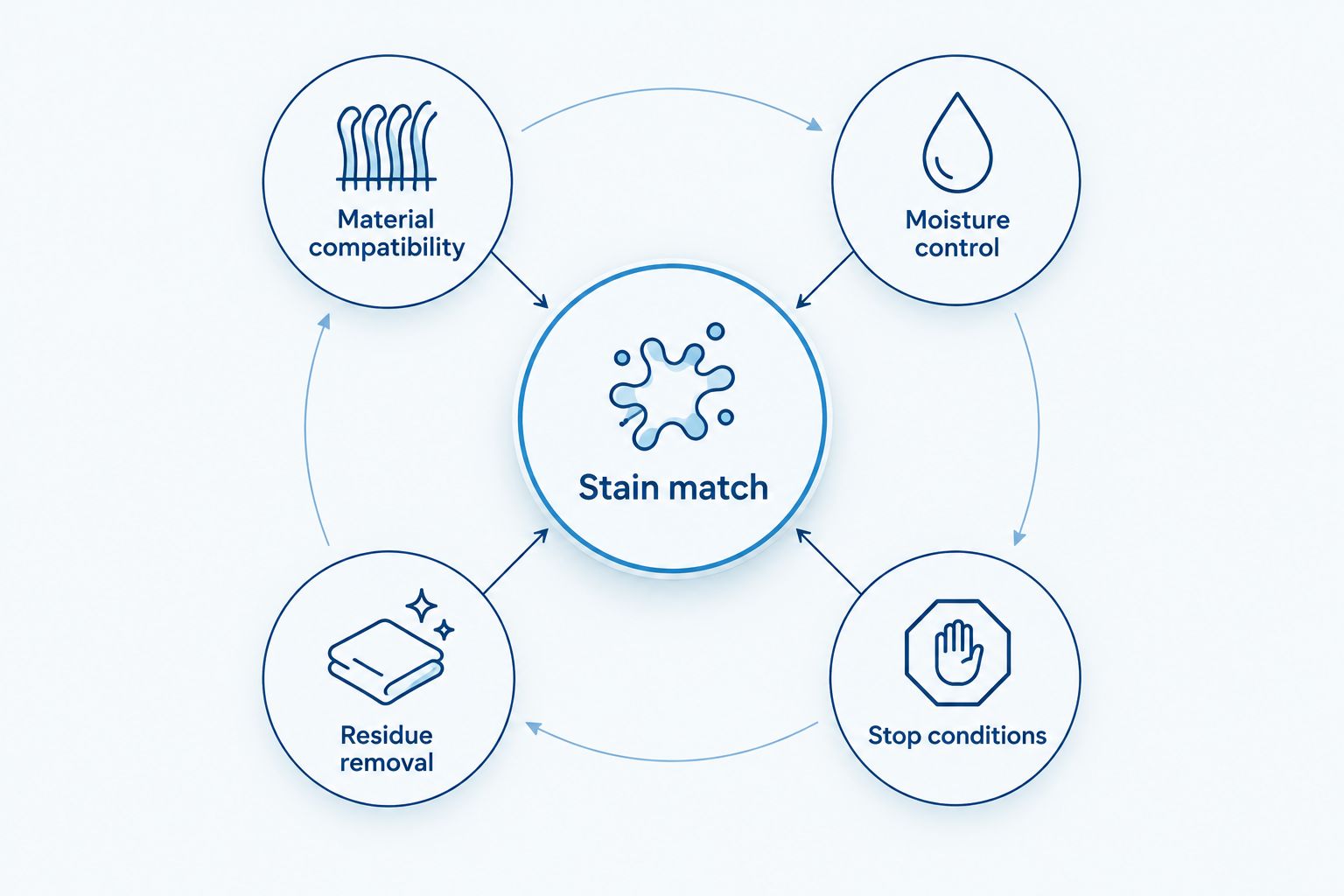
Judge a method by these criteria, not by how much foam it produces:
- Material compatibility: The cleaner and equipment must suit the carpet, backing, and surrounding vehicle surfaces.
- Stain match: Dry soil, sugary drinks, organic contamination, and grease need different first treatments.
- Moisture control: Cleaning must avoid saturating padding, seams, and areas near electrical components.
- Residue removal: A method should remove loosened contamination rather than leave cleaner and soil behind.
- Stop conditions: Dye transfer, recurring odor, water intrusion, or damaged material require a different approach.
These criteria also help you assess a detailing quote. Ask what the service includes, how the provider handles the affected material, and whether the problem appears limited to the carpet surface.
Car carpet cleaning methods at a glance: 2026
The ranking below assigns each method a different job. Extraction is the default for compatible, embedded contamination—not the first move for every stain.
| Rank and method | Best for | Standout feature | Key limitation |
|---|---|---|---|
| 1. Controlled extraction | Embedded, rinse-safe residue | Removes loosened contamination with liquid recovery | Excess moisture can reach padding |
| 2. Dry vacuuming | Sand, crumbs, and loose dirt | Removes particles without wetting carpet | Does not dissolve sticky or oily stains |
| 3. Blotting and compatible spot cleaning | Fresh coffee, soda, and similar spills | Contains a spill before wider treatment | Old stains and added ingredients complicate removal |
| 4. Carpet-compatible enzyme treatment | Urine and other organic contamination | Targets suitable organic residues | Requires label-directed use and contact time |
| 5. Targeted degreasing | Oily food marks and tracked-in grease | Addresses contamination water alone does not remove | Unsuitable chemicals can affect dyes or backing |
| 6. Professional assessment | Unknown stains and recurring odor | Establishes whether surface cleaning is appropriate | Adds an assessment step before treatment |
1. Controlled extraction: best for embedded, rinse-safe residue
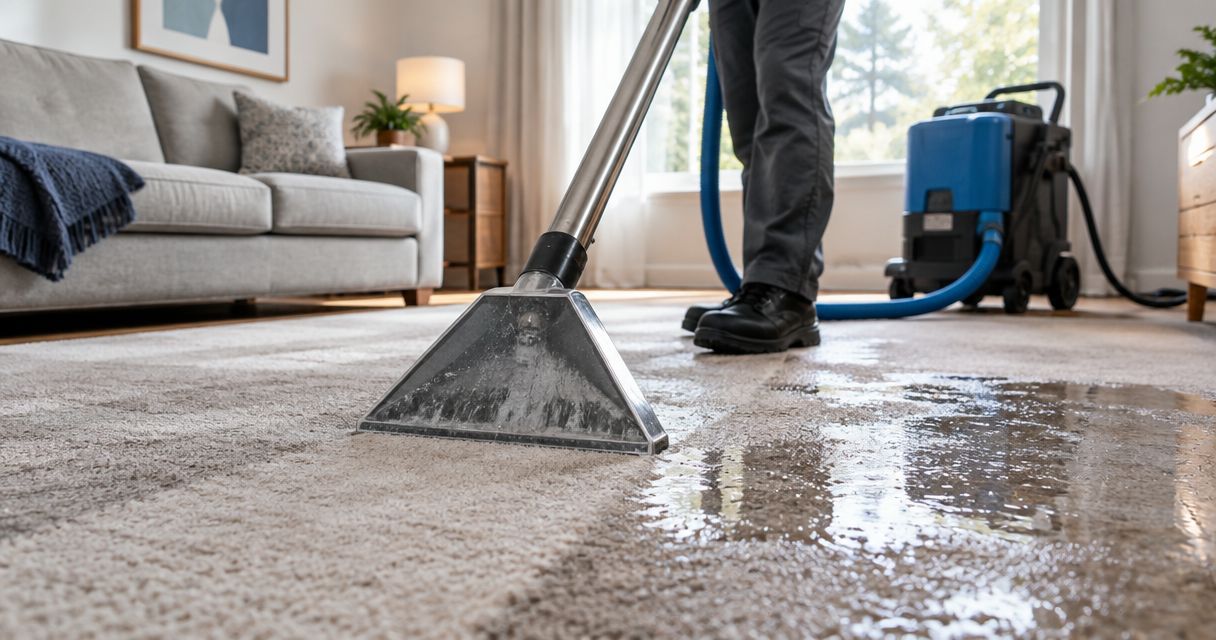
Controlled extraction applies cleaning liquid and recovers it with suction. It suits compatible carpet containing dissolved spills or embedded soil that vacuuming and light spot treatment leave behind.
Vacuum first and pretreat only as directed. Follow the equipment instructions for application and recovery, avoiding saturation around seams, seat mounts, and electrical components.
Controlled extraction pros:
- Recovers liquid instead of relying on evaporation alone.
- Removes compatible cleaning solution together with loosened contamination.
- Treats a larger affected area more evenly than isolated scrubbing.
Controlled extraction cons:
- Excess liquid can reach padding that the tool cannot adequately recover.
- It does not resolve every dye stain, chemical discoloration, or odor source.
Best for: Embedded drink residue and general soiling on carpet approved for wet cleaning.
After treatment, allow the carpet to dry fully before replacing removable mats. If the surface dries but odor returns, stop repeating extraction and investigate beneath the carpet.
Verdict: Buy an extraction service for compatible embedded contamination; skip uncontrolled soaking.
2. Dry vacuuming: best for sand, crumbs, and loose dirt
Dry vacuuming removes loose particles before they become part of a wet cleaning problem. For a Pender County homeowner returning from a beach trip, this is the starting point for sandy footwells and removable carpet mats.
Remove the mats and clean them separately. Use a suitable attachment around seat tracks and carpet edges without forcing it against wiring or trim.
Dry vacuuming pros:
- Removes loose contamination without adding moisture.
- Makes later stain treatment easier to assess.
- Reaches edges and crevices with the appropriate attachment.
Dry vacuuming cons:
- Does not dissolve grease, sugary residue, or dried beverage deposits.
- Cannot establish whether odor originates beneath the carpet.
Best for: Dry sand, crumbs, and loose soil with no liquid contamination.
Avoid wetting the carpet simply because it still looks flattened after vacuuming. Flattened fibers, wear, and discoloration are not the same as removable dirt.
Verdict: Buy a suitable vacuum attachment if needed; skip wet treatment for loose dry soil alone.
3. Blotting and spot cleaning: best for fresh beverage spills
Blotting lifts free liquid before you apply a compatible spot cleaner. Work from the stain’s outside edge toward its center to limit spreading, and use light pressure rather than aggressive scrubbing.
Keep 2 clean cloths ready: one for initial blotting and another for cleaner removal as directed. Test the cleaner on 1 hidden patch before treating the visible stain.
Blotting and spot cleaning pros:
- Limits the area exposed to cleaning liquid.
- Provides a practical first response to a fresh spill.
- Lets you check progress before treating a larger section.
Blotting and spot cleaning cons:
- Coffee with milk or a greasy drink needs more than a generic beverage treatment.
- Old staining or liquid beneath the carpet can remain after surface cleaning.
Best for: Fresh coffee, soda, and other small drink spills on compatible carpet.
Do not stack several cleaners on a stubborn mark. Remove the first product as directed, then reassess; repeated applications can leave residue and make the original stain harder to identify.
Verdict: Buy a carpet-compatible spot cleaner when needed; skip vigorous scrubbing.
4. Enzyme treatment: best for organic contamination
A carpet-compatible enzyme cleaner is an option for urine and other organic residues covered by its label. These products depend on correct application and contact time, so spraying and immediately wiping is not a substitute for following instructions.
Check both the vehicle’s care guidance and the product label. Do not assume every pet cleaner suits automotive carpet or every organic stain.
Enzyme treatment pros:
- Targets organic contamination when the product is intended for that residue.
- Addresses the residue rather than merely adding fragrance.
- Provides a stain-specific alternative to general-purpose cleaning.
Enzyme treatment cons:
- Needs the label’s application conditions and contact time.
- Surface treatment cannot reliably address contamination deep in padding.
Best for: Identified organic contamination on compatible carpet, where the product label supports that use.
Avoid combining an enzyme cleaner with disinfectants or other stain treatments unless the instructions explicitly permit it. Persistent odor after correct treatment warrants assessment, not an increasingly complicated chemical mixture.
Verdict: Buy only an enzyme cleaner labeled for the material and contamination; skip fragrance-only treatment.
5. Targeted degreasing: best for oily marks
Targeted degreasing uses a carpet-compatible cleaner intended for oily contamination. It fits tracked-in grease and greasy food marks that do not respond to plain water.
Lift loose material first without grinding it into the fibers. Apply and remove the treatment according to its label, protecting nearby trim and avoiding excessive liquid.
Targeted degreasing pros:
- Matches the treatment to oil-based contamination.
- Keeps attention on the affected patch rather than the entire footwell.
- Can precede extraction when both treatments are compatible and instructed.
Targeted degreasing cons:
- Harsh or unsuitable chemicals can affect color, backing, and nearby surfaces.
- Excess cleaner can leave residue that needs further removal.
Best for: Identified grease and oily food stains on carpet approved for the selected cleaner.
Do not reach for an engine degreaser just because the stain is in a car. Engine surfaces and interior carpet are different materials with different cleaning requirements.
Verdict: Hold until compatibility is confirmed; skip improvised solvent mixtures.
6. Professional assessment: best for unknown stains and recurring odor
Professional assessment is the strongest next step when you cannot identify the stain, odor keeps returning, or the carpet stays damp. The first task is deciding whether cleaning the surface will address the problem.
Finesse Pro Services offers auto detailing for homeowners in Wilmington and surrounding Pender and Onslow counties. Ask about your specific carpet concern before booking, particularly when liquid has reached beneath the visible fibers.
Professional assessment pros:
- Separates routine surface soiling from problems needing further investigation.
- Gives you a chance to discuss material care before treatment.
- Supports a personalized service scope rather than a one-method assumption.
Professional assessment cons:
- Adds an assessment step instead of providing an immediate DIY fix.
- Cleaning cannot repair every damaged backing, permanent discoloration, or leak.
Best for: Unidentified stains, repeated odor, suspected padding contamination, and water intrusion.
Mention previous cleaners and the original spill if known. If floodwater or sewage contacted the interior, do not treat the job as ordinary stain removal.
Verdict: Buy professional help for unresolved contamination; skip repeated blind treatment.
How these methods are ranked
This 2026 ranking prioritizes stain match, material compatibility, moisture control, residue removal, and clear stop conditions. It is a decision guide, not a claim that every method was tested on every vehicle.
Controlled extraction ranks first for embedded, rinse-safe contamination because it includes liquid recovery. Dry vacuuming ranks first within its own use case because adding water is unnecessary for loose particles. The correct starting method depends on what is actually in the carpet.
Which car carpet cleaning method should you choose?
Choose vacuuming for dry debris, blotting for a fresh spill, and controlled extraction for compatible embedded residue. Use enzymes or degreasing only when the stain and cleaner label support them.
For your 2026 cleaning plan, stop when the carpet shows dye transfer, remains damp, or develops recurring odor. More product is not a diagnosis.
Finesse Pro Services is a local auto detailing option for Wilmington and Pender County homeowners who want help assessing dirty vehicle interiors. Call or request a personalized quote, and ask how the satisfaction guarantee applies to the proposed service.
Take 2 photos before requesting a quote: a close view of the stain and a wider view showing its location. Include what spilled, treatments already used, and whether the carpet feels damp.
Request a personalized detailing quote
Describe the stain, prior treatments, and any recurring odor before arranging service.
FAQ
What’s the best car carpet cleaning method in 2026?
Controlled extraction is the best default for embedded, rinse-safe contamination, while dry vacuuming is best for loose sand and dirt. Fresh spills need blotting first, and all wet treatment must match the carpet and vehicle care instructions.
Is steam cleaning better than extraction for car carpet?
Steam cleaning and extraction are not interchangeable methods. Steam applies heat, while extraction applies and recovers cleaning liquid; choose according to material compatibility and the stain rather than treating heat as automatically better.
How do I remove coffee from car carpet?
Blot fresh coffee, then use a carpet-compatible spot cleaner according to its label. Coffee containing milk or other ingredients needs treatment appropriate to those residues, and an old stain does not guarantee complete removal.
What removes pet urine odor from car carpet?
A carpet-compatible enzyme cleaner is an option when its label covers urine treatment. Recurring odor after correct application needs assessment because contamination can extend beneath the carpet.
Can I use household carpet cleaner in my car?
Use household carpet cleaner only when its label and your vehicle’s care instructions support the application. Test a hidden patch and protect surrounding trim, seams, and electrical components.
Why does my car carpet smell after cleaning?
Remaining moisture, cleaner residue, or unresolved contamination can cause odor after cleaning. Let compatible materials dry fully, and seek assessment if the carpet stays damp or the smell returns.
How much does professional car carpet cleaning cost?
Request a personalized quote for your vehicle and its specific condition. Tell the provider about the affected area, stain type, previous treatments, and any water beneath the carpet.
Does Finesse Pro Services offer auto detailing near Pender County?
Finesse Pro Services offers auto detailing for homeowners in Wilmington and surrounding Pender and Onslow counties. Call or request a quote to discuss your vehicle’s carpet concern and the proposed service scope.
One last thing
A clean-looking surface does not prove the padding underneath is dry. Before putting mats back, check the treated carpet and pay attention to any returning odor.
If the same patch becomes wet again without another spill, investigate the source of the moisture before cleaning it again. Removing a stain and stopping water entry are separate jobs.