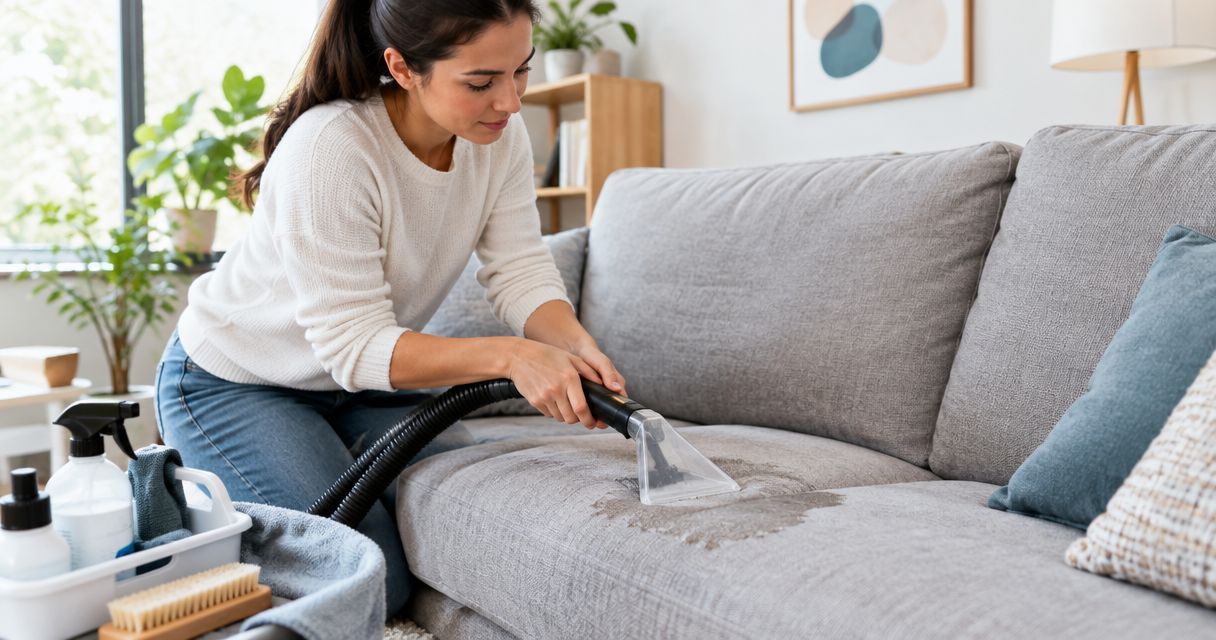
Best overall for persistent stains and odor: professional upholstery cleaning after a fabric assessment. Best for fresh, water-compatible spills: blotting and label-approved spot cleaning. Best low-intervention option for loose dirt: vacuuming. The best couch cleaning method in 2026 starts with the care label; Finesse Pro Services is a local option for homeowners who want professional upholstery cleaning in Pender County.
- The best couch cleaning method follows the upholstery care label, not the stain alone.
- Finesse Pro Services offers upholstery cleaning for homeowners in Wilmington and surrounding Pender and Onslow counties.
- Choose professional assessment for persistent odor, delicate upholstery, or stains that return after spot cleaning.
- Use vacuuming for loose debris; use liquid treatments only when the fabric and cleaner instructions permit them.
Why this matters
A couch can have several problems at once: crumbs between cushions, a visible drink stain, and odor beneath the fabric. One cleaner does not solve all of them. Treating the surface repeatedly also misses contamination inside a cushion.
For Pender County homeowners comparing couch cleaning options in 2026, the useful question is not which method sounds strongest. It is which method suits the upholstery and reaches the source of the problem. Finesse Pro Services provides residential upholstery cleaning alongside carpet and area rug cleaning in Wilmington and surrounding Pender and Onslow counties.
Finesse Pro Services upholstery cleaning is best for local homeowners seeking professional help rather than another round of trial-and-error spot treatment. Describe the fabric, stain, and odor when requesting a personalized quote.
What makes the best couch cleaning method?
Judge each method against these criteria before choosing equipment or applying a cleaner:
- Fabric compatibility: The furniture instructions and upholstery cleaning code determine which treatments belong on the fabric.
- Problem match: Loose dirt, a fresh spill, an oily mark, and absorbed pet contamination need different responses.
- Moisture control: A method must account for drying the upholstery without unnecessarily wetting cushion interiors.
- Stain depth: Surface treatment is different from addressing material that has soaked beneath the cover.
- Residue removal: Follow instructions for removing cleaning residue rather than leaving repeated applications behind.
- Damage risk: Color transfer, texture changes, water rings, and shrinkage matter more than a temporarily lighter stain.
A hidden-area test is a screening step, not permission to ignore a care label. Stop if you see color transfer or a change in texture.
Couch cleaning methods at a glance
This 2026 ranking separates methods by their strongest use case. Professional upholstery cleaning ranks first for problems that need assessment; it does not mean every couch should receive the same treatment.
| Rank and method | Best for | Standout feature | Key limitation |
|---|---|---|---|
| 1. Professional upholstery assessment and cleaning | Persistent stains, odor, or uncertain fabric | Treatment can be selected after examining the furniture | Cleaning cannot reverse every stain or material change |
| 2. Controlled extraction | Broader soil on upholstery approved for wet cleaning | Removes liquid and suspended soil during treatment | Unsuitable for fabrics that prohibit water-based cleaning |
| 3. Approved solvent spot cleaning | Localized marks on S-coded upholstery | Follows solvent-only fabric requirements | Requires product-specific safety precautions |
| 4. Compatible enzyme treatment | Pet contamination on permitted materials | Targets the type of residue identified on the cleaner label | Does not automatically reach contamination inside cushions |
| 5. Blotting and approved spot cleaning | Fresh spills on W or WS upholstery | Limits spreading while treating a small area | Does not provide whole-couch cleaning |
| 6. Vacuuming and gentle brushing | Loose debris and routine care of X-coded upholstery | Removes dry material without introducing cleaner | Does not remove absorbed stains or odor sources |
1. Professional upholstery cleaning: best for persistent problems
Professional upholstery cleaning starts with determining what the furniture can tolerate and what caused the stain or odor. That matters when several home treatments have already failed, the fabric is delicate, or the care instructions are unclear. The appropriate treatment depends on that assessment, not on a universal steam-cleaning rule.
Finesse Pro Services offers residential upholstery cleaning for homeowners in the service area. When requesting help, explain whether the issue is a visible mark, an odor, or both; also disclose anything already applied. Ask how the proposed treatment fits your furniture's instructions and what results are realistic.
Professional upholstery cleaning pros:
- Gives uncertain fabric and recurring problems an assessment before more treatment.
- Creates an opportunity to address stain type, fabric condition, and drying together.
- Reduces the need to keep experimenting with unrelated household cleaners.
Professional upholstery cleaning cons:
- Permanent discoloration, wear, and damaged fibers are not simply dirt to remove.
- Contamination inside cushions can require a different response from surface cleaning.
- You must arrange access and discuss post-cleaning use of the furniture.
Best for: Delicate upholstery, recurring stains, persistent odor, and uncertain care requirements.
Verdict: Buy professional help when the next DIY attempt would be another guess.
2. Controlled extraction: best for broader water-compatible soil
Extraction applies an appropriate cleaning solution and removes liquid along with loosened soil. It is a candidate for fabric approved for wet cleaning, especially when dirt extends beyond one small spot. The upholstery code and manufacturer's instructions still control whether it belongs on your couch.
Do not equate extraction with pouring more water into the cushion. Check the furniture instructions, equipment instructions, and cleaner label before use. Removable covers do not establish that the cushion underneath is washable or that the cover belongs in a washing machine.
Controlled extraction pros:
- Treats a broader fabric area than isolated spot cleaning.
- Removes liquid during the cleaning process rather than only applying it.
- Can address general soil on compatible upholstery.
Controlled extraction cons:
- Water-based treatment conflicts with solvent-only and vacuum-only care codes.
- Excess moisture can leave cushion interiors difficult to dry.
- Incorrect cleaning can produce rings, color changes, or texture changes.
Best for: General soiling on upholstery whose instructions permit wet cleaning.
Verdict: Hold until the fabric instructions confirm wet cleaning is appropriate.
3. Approved solvent spot cleaning: best for S-coded fabric
An S upholstery code calls for an appropriate water-free cleaning solvent. It does not mean any household solvent is suitable. Choose a product specifically intended for the upholstery and follow both the furniture instructions and the cleaner's safety directions.
For an unfamiliar fabric or cleaner, professional assessment is the safer decision than experimenting with alcohol, paint thinner, or an all-purpose spray. Ventilation and ignition precautions depend on the product label. Solvent cleaning is a compatibility choice, not proof that a particular stain will disappear.
Approved solvent spot cleaning pros:
- Respects solvent-only care requirements when correctly selected.
- Allows localized treatment without switching to a water-based method.
- Can address compatible marks without wet-cleaning the entire couch.
Approved solvent spot cleaning cons:
- Products have specific handling and ventilation requirements.
- The wrong solvent can affect upholstery finishes or color.
- Surface spot treatment does not resolve every cushion-level odor source.
Best for: Localized stains on S-coded upholstery with clear product and furniture instructions.
Verdict: Hold unless you can confirm compatibility and follow every safety instruction.
4. Compatible enzyme treatment: best for pet-related residue
Enzyme cleaners are formulated to break down particular organic residues. Choose one whose label identifies the contamination you are treating and permits use on your upholstery. A pet-cleaning label alone does not override an S or X furniture code.
The treatment must reach the affected material while respecting the couch's moisture limits. Those requirements can conflict when urine has soaked into a cushion. Do not keep saturating the surface to chase an odor that originates below it.
Compatible enzyme treatment pros:
- Targets specified organic residues rather than merely adding fragrance.
- Provides instructions for the cleaner's intended contamination and materials.
- Offers a focused option when both upholstery and product labels permit it.
Compatible enzyme treatment cons:
- Not every enzyme product is approved for every fabric.
- Required application conditions can conflict with furniture care restrictions.
- Surface application does not establish that deeper contamination has been treated.
Best for: Pet-related residue on materials explicitly permitted by the cleaner and furniture instructions.
Verdict: Buy only a compatible treatment; skip repeated soaking when odor persists.
5. Blotting and approved spot cleaning: best for fresh spills
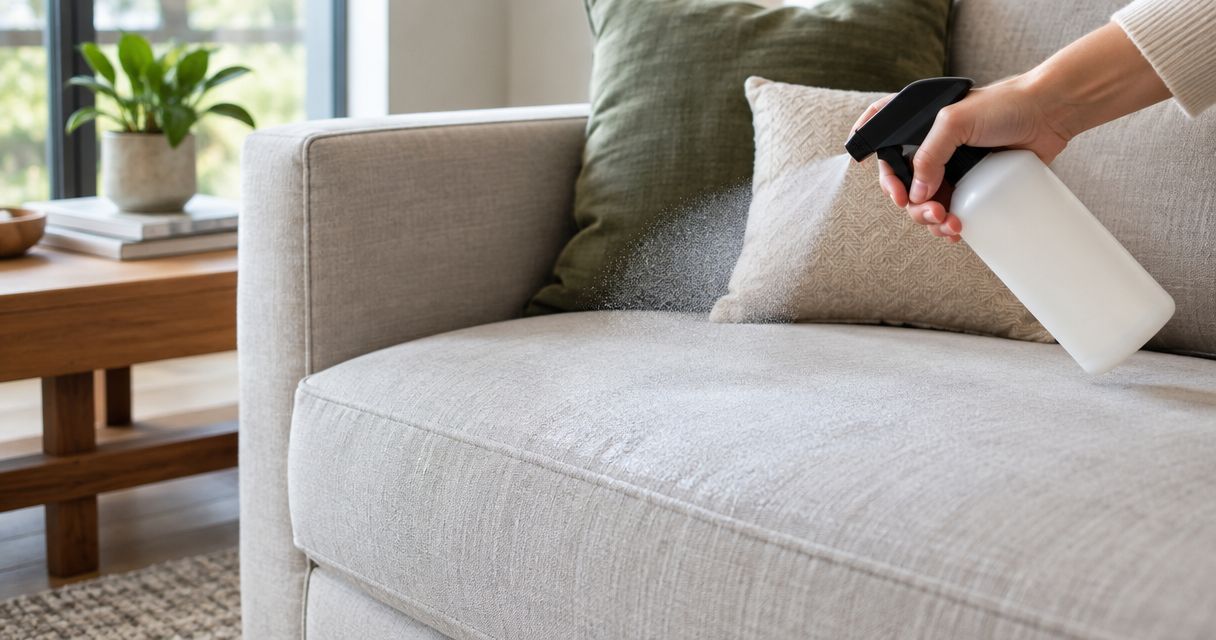
Blotting removes a fresh spill without scrubbing it across more fabric. Use a clean, absorbent cloth and work gently; avoid rubbing the affected area. On W or WS upholstery, follow the furniture instructions for selecting and applying a water-based spot cleaner.
Start with the least intervention the instructions allow. Apply cleaner as directed rather than improvising a stronger mixture, and follow the label's residue-removal instructions. A concentrated scrub can change the fabric's appearance even when some of the stain comes out.
Blotting and approved spot cleaning pros:
- Addresses a spill before repeated handling spreads it.
- Focuses treatment on the affected area.
- Avoids unnecessary whole-couch wetting for a small incident.
Blotting and approved spot cleaning cons:
- Only suits liquids and cleaners permitted by the care instructions.
- Does not remove general soil from the rest of the couch.
- Leaves deeper contamination unresolved if the spill penetrated the cushion.
Best for: Fresh, localized spills on upholstery approved for the chosen cleaner.
Verdict: Buy into prompt blotting; skip aggressive rubbing and homemade mixtures.
6. Vacuuming and gentle brushing: best for loose debris
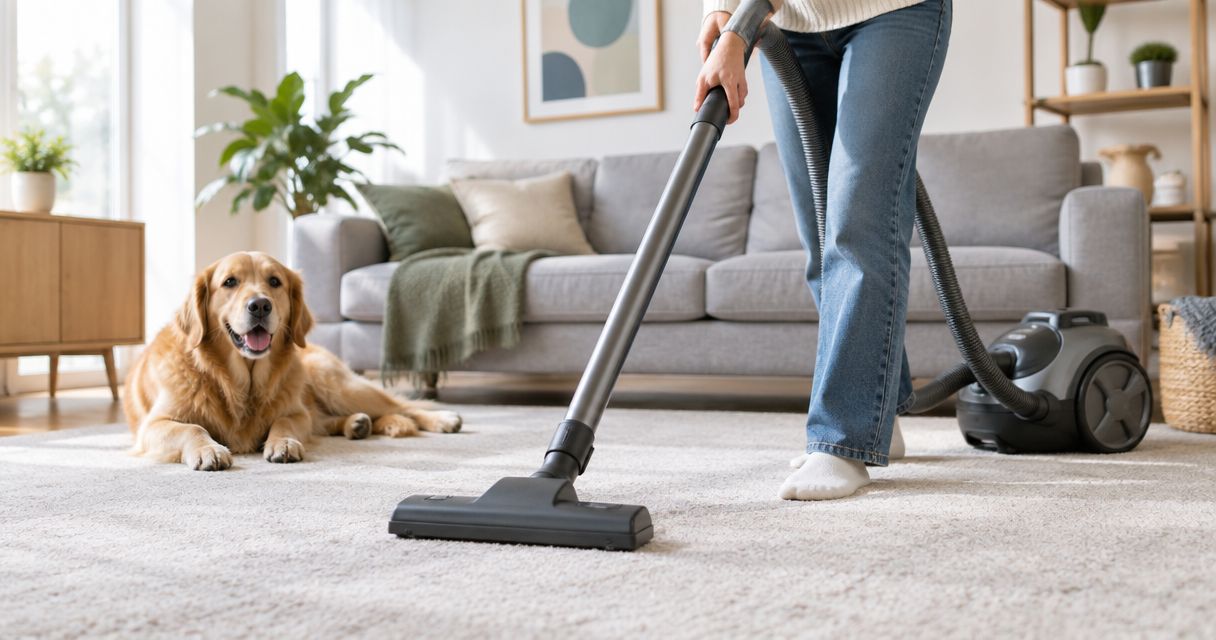
Vacuuming removes crumbs, dust, hair, and other loose material from upholstery. Use a suitable upholstery attachment and follow the furniture instructions around seams, trim, and delicate surfaces. For X-coded upholstery, routine care is limited to vacuuming or light brushing rather than water-based or solvent cleaning.
This is the simplest starting point when the problem is dry debris rather than a spill. It also helps you see whether the remaining issue is a stain, wear, or trapped hair. Vacuuming cannot remove liquid contamination already absorbed beneath the fabric.
Vacuuming and gentle brushing pros:
- Removes loose dirt without adding moisture or cleaning chemicals.
- Reaches seams and gaps with an appropriate attachment.
- Fits routine care instructions for X-coded upholstery.
Vacuuming and gentle brushing cons:
- Does not dissolve or extract absorbed stains.
- Cannot eliminate an odor source inside a cushion.
- Rough attachments or vigorous brushing can damage delicate surfaces.
Best for: Dry debris, routine upkeep, and upholstery marked X.
Verdict: Buy into regular vacuuming; skip treating it as a stain-removal substitute.
Read the care code before choosing a cleaner
For your 2026 couch-cleaning decision, use these standard upholstery codes as the first filter. Read the full furniture instructions too: a code is not a complete treatment plan, and separate covers or trim can have different requirements.
- W: Water-based upholstery cleaning products.
- S: Appropriate water-free cleaning solvents.
- WS: Water-based or solvent products permitted by the furniture instructions.
- X: Vacuuming or light brushing; no water-based or solvent cleaning.
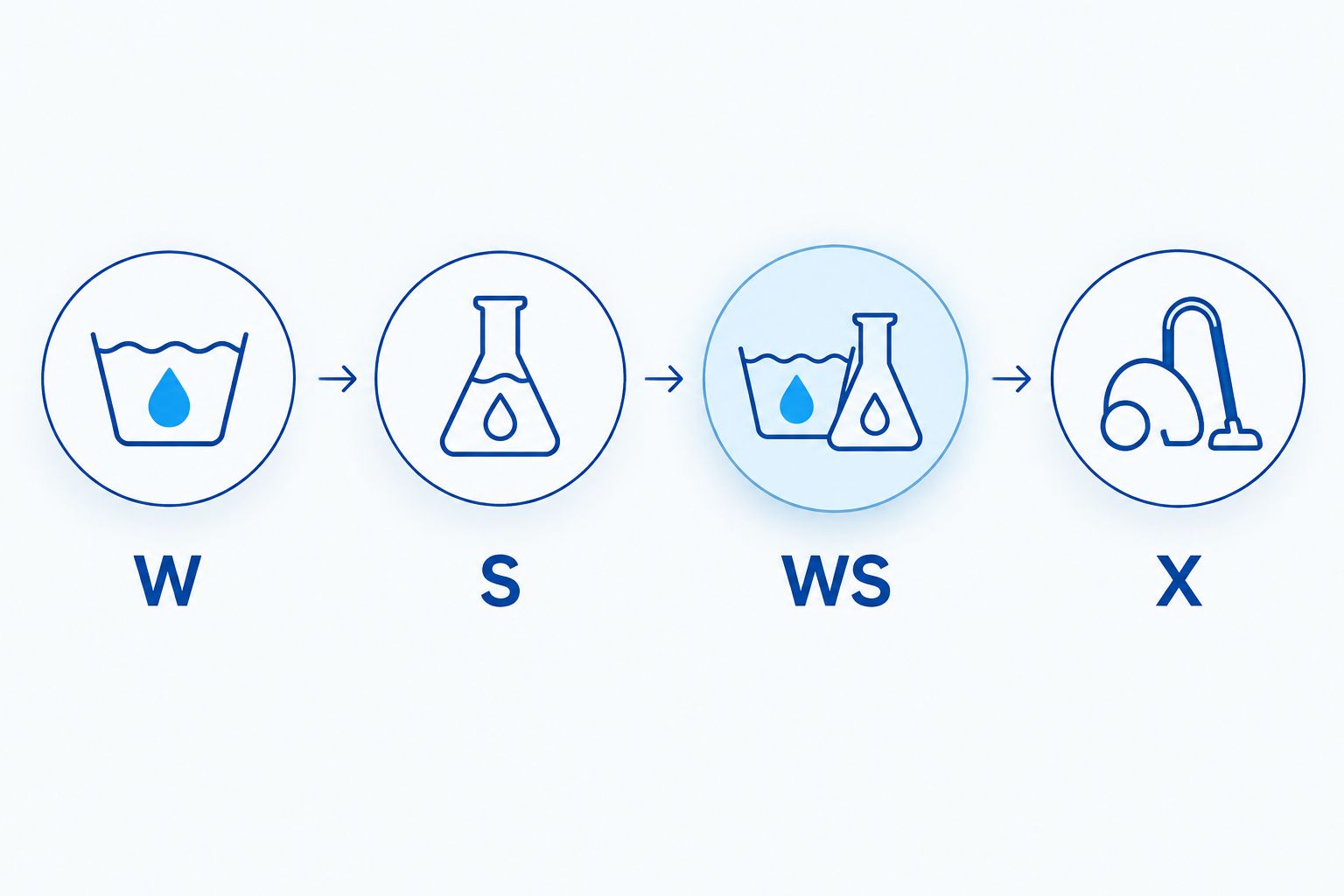
If the label is missing or unreadable, do not assume the fabric is washable. Gather the manufacturer's instructions if available and request an upholstery assessment before applying liquid.
How these methods are ranked
This is a use-case ranking, not a claim that one machine or cleaner outperforms every alternative. The order prioritizes assessment for difficult problems, then matches individual methods to fabric compatibility and contamination. Moisture control, residue removal, and damage risk remain deciding factors throughout.
The best couch cleaning method is the least damaging compatible method that addresses the actual problem. A stronger chemical or wetter treatment does not earn a higher rank simply because it feels more intensive.
Which couch cleaning method should you choose?
Choose vacuuming for loose debris, prompt blotting for an approved fresh-spill treatment, and professional assessment for uncertainty or persistent odor. Choose extraction, solvent treatment, or an enzyme cleaner only after the relevant labels support that choice. In 2026, the furniture instructions remain more useful than a viral cleaning recipe.
For a personalized quote, tell Finesse Pro Services upholstery cleaning staff your town, furniture type, care code, and main concern. Include photos of the label and affected area when requesting a quote, and describe previous treatments. Ask about delicate-fabric handling, expected results, drying instructions, and the satisfaction guarantee before booking.
Request a couch cleaning quote
Describe your upholstery, stains, and odor concerns for a personalized service discussion.
FAQ
What's the best couch cleaning method for stains and odor?
The best couch cleaning method is one permitted by the furniture instructions that addresses the stain and odor source. Professional assessment is the practical starting point for persistent odor, delicate upholstery, or unsuccessful previous treatments.
Is steam cleaning safe for every couch?
No, steam cleaning is not safe for every couch. Solvent-only and vacuum-only care instructions exclude water-based cleaning, and furniture instructions must guide any proposed treatment.
What do W, S, WS, and X mean on a couch label?
W indicates water-based cleaning products, S indicates appropriate water-free solvents, WS permits either category subject to the furniture instructions, and X limits care to vacuuming or light brushing. Read the full instructions before selecting a cleaner.
What's the best way to clean a fresh couch spill?
Blot a fresh spill gently with a clean, absorbent cloth rather than rubbing it. Apply a spot cleaner only if the furniture instructions permit it, and follow the product directions.
Will an enzyme cleaner remove pet odor from my couch?
A compatible enzyme cleaner can treat the organic residues specified on its label, but surface treatment does not establish that contamination inside a cushion has been removed. Confirm upholstery compatibility and seek assessment when odor persists.
Can I put removable couch covers in the washing machine?
Wash removable couch covers only when their care instructions explicitly permit machine washing. A zipper or removable cover does not establish washability, and upholstery cleaning codes are not laundry instructions.
How do I get a couch cleaning quote in Pender County?
Request a personalized upholstery cleaning quote from Finesse Pro Services, which serves homeowners in Wilmington and surrounding Pender and Onslow counties. Describe the furniture, care label, stains, odor, and any cleaners already applied.
Should I clean a leather couch like a fabric couch?
No, leather needs care suited to its finish and manufacturer instructions rather than a fabric-upholstery treatment. Confirm the material and permitted products before applying a cleaner.
One last thing
An odor that returns after the couch dries is a reason to reassess the source, not repeat the same surface treatment. For your next cleaning decision in 2026, separate visible staining from absorbed contamination. Tell the cleaner what returns, where it returns, and what you already tried. That information is more useful than asking for the strongest available cleaner.