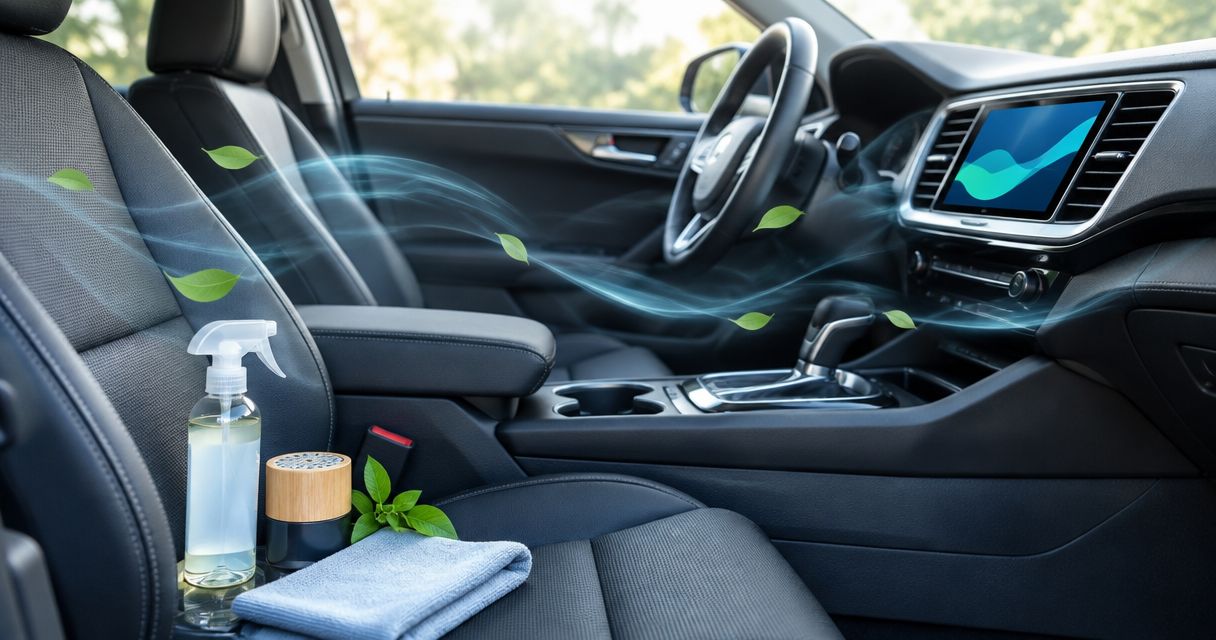
Best overall: source removal followed by material-appropriate cleaning. Best for pet accidents: a compatible enzyme cleaner. Best for light, lingering smells: activated carbon after cleaning. The best way to remove odor from car interior surfaces in 2026 is to remove what causes the smell, not cover it with fragrance.
- The best way to remove odor from car interior surfaces is source removal, compatible cleaning, and complete drying.
- Finesse Pro Services offers auto detailing for homeowners in Wilmington and surrounding Pender and Onslow counties.
- Enzyme cleaners suit biological spills; activated carbon is a finishing step, not a substitute for cleaning.
- Persistent damp smells require a moisture investigation before another deodorizing treatment.
Why this matters
A spilled drink, wet floor mat, pet accident, and dirty ventilation system need different solutions. Treating every smell with the same spray leaves the underlying problem untouched. Start by locating the source before choosing a method.
For local homeowners who want help rather than another round of trial and error, Finesse Pro Services offers auto detailing alongside residential cleaning services. Finesse Pro Services is best for Wilmington-area homeowners seeking professional auto detailing rather than repeated fragrance treatments. Describe the smell and where it is strongest when requesting a personalized quote.
This 2026 ranking compares six approaches by the problem each addresses. The ranking favors source removal, material safety, and drying over a temporarily pleasant smell.
What makes the best car interior odor removal method?
Use these criteria before choosing a treatment:
- Source removal: The method removes contamination rather than simply changing what you smell.
- Material compatibility: The treatment suits the fabric, leather, trim, adhesive, and electronics around the affected area.
- Moisture control: Cleaning does not leave seats, carpet, or padding unnecessarily wet.
- Problem fit: The method addresses the actual cause, whether a biological spill, loose debris, or ventilation issue.
- Clear limits: You know when a household treatment ends and professional cleaning or mechanical inspection begins.
A method that fails the compatibility check is not a good choice, even if it removes odor elsewhere. Read the vehicle's care guidance and the cleaning product label before applying anything.
Car odor removal methods at a glance
| Rank and method | Best for | Standout feature | Key limitation |
|---|---|---|---|
| 1. Source removal and targeted cleaning | Embedded spills and dirty upholstery | Physically removes odor-producing material | Deep contamination can extend into padding |
| 2. Compatible enzyme cleaner | Pet accidents and biological spills | Targets suitable organic residues | Requires label-specific use and material compatibility |
| 3. Vacuuming and surface cleaning | Food debris and routine cabin buildup | Removes accessible contamination without soaking upholstery | Does not reach absorbed spills |
| 4. Ventilation inspection and maintenance | Odor strongest with the fan running | Investigates an airflow-related source | Mechanical faults need automotive service |
| 5. Activated carbon | Mild residual odor after cleaning | Adsorbs some airborne odor compounds | Does not remove the source |
| 6. Fragrance sprays and air fresheners | Adding scent to an already clean cabin | Changes the cabin's scent | Masks odor rather than removing contamination |
1. Source removal and targeted cleaning: best for embedded spills
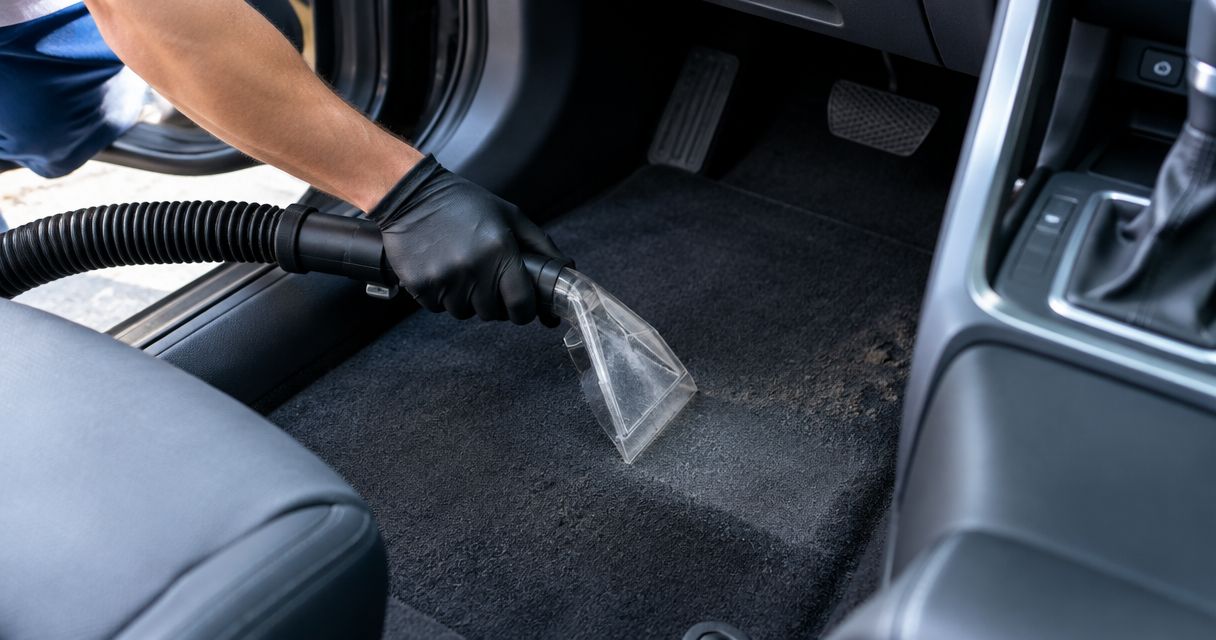
Removing the spill, debris, or wet material comes first. Cleaning then addresses the residue left on compatible surfaces; controlled extraction is an option for suitable fabric seats and carpet, not a universal treatment for every interior material.
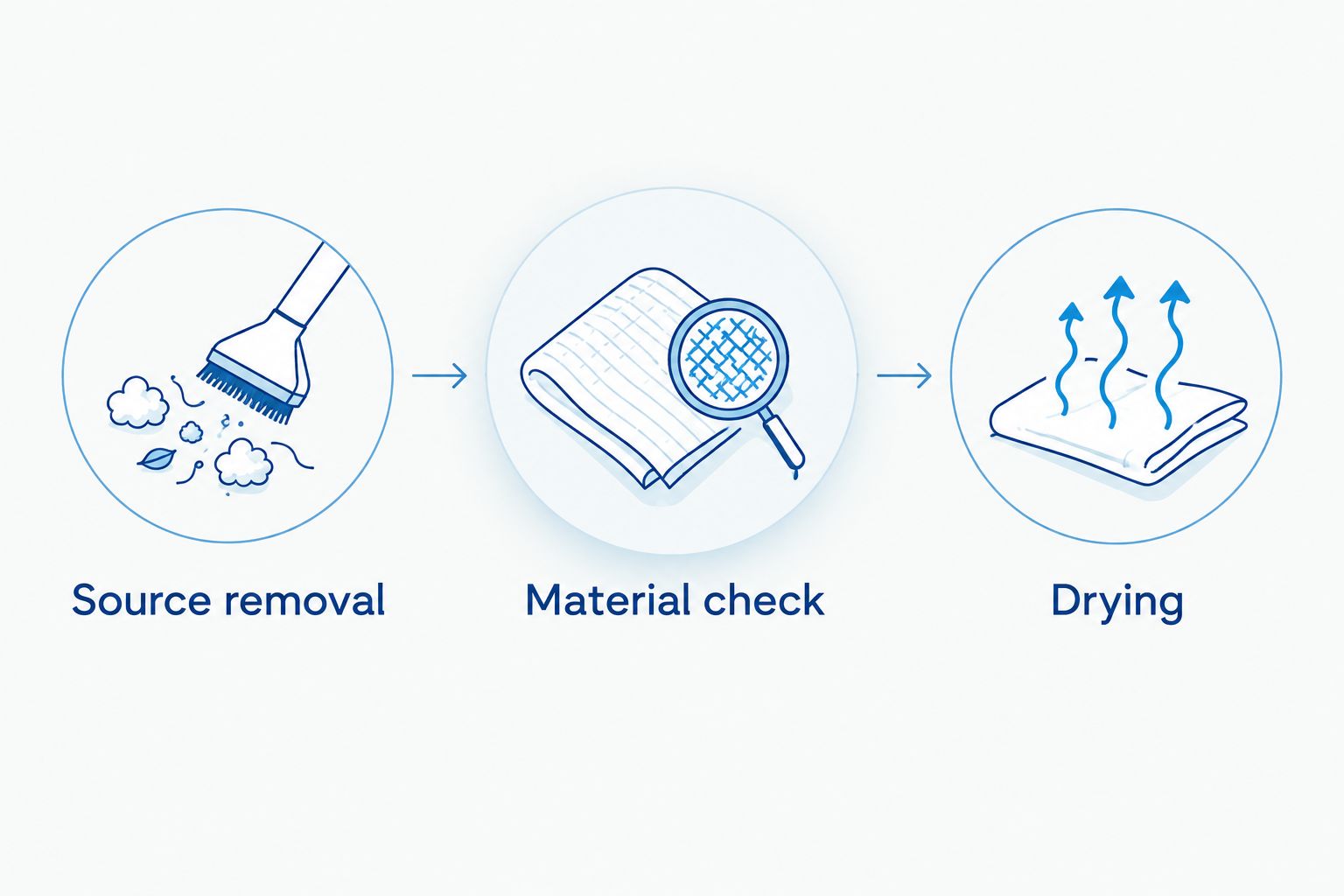
For your 2026 cleaning plan, separate three checks: Source removal, Material check, and Drying. Lift removable mats, inspect accessible carpet, and identify the affected material before adding liquid. After cleaning, let the treated area dry completely before putting damp mats back or closing the vehicle for storage.
Source removal and targeted cleaning pros:
- Removes contamination instead of adding another scent.
- Lets you treat the affected area rather than wetting the whole cabin.
- Works alongside vacuuming, blotting, and compatible surface cleaning.
- Gives professional detailing a clearly defined problem to address.
Source removal and targeted cleaning cons:
- Surface cleaning cannot necessarily reach contamination beneath carpet or inside seat padding.
- Excess liquid can create a drying problem or reach nearby electrical components.
Best for: Spilled drinks, soiled fabric seats, and dirty carpet where you can identify the affected area.
Finesse Pro Services offers auto detailing for homeowners across its stated Wilmington, Pender County, and Onslow County service area. Request a personalized quote and explain whether the problem involves fabric, leather, carpet, or a removable mat. Discuss material care and the satisfaction guarantee before booking; do not assume any cleaning service can reverse every absorbed spill.
Verdict: Choose source removal and targeted cleaning as the default; request professional help for deep or persistent contamination.
2. Compatible enzyme cleaner: best for pet accidents
An enzyme cleaner is a targeted option for biological residues such as pet accidents, provided its label covers the contamination and the vehicle material. It is not an all-purpose solution for smoke, fuel smells, or ventilation faults.
Blot fresh liquid without spreading it. Follow the product's application and contact instructions rather than inventing a soaking period. Test an inconspicuous area first, and do not mix the treatment with other cleaners.
Compatible enzyme cleaner pros:
- Addresses suitable biological residue instead of masking it.
- Allows localized treatment where an accident occurred.
- Provides product-specific instructions for application and material suitability.
Compatible enzyme cleaner cons:
- Not every formula is suitable for leather, headliners, or delicate upholstery.
- Residue beneath the accessible surface can remain untreated.
- Incorrect application can leave the area too wet.
Best for: A known pet accident or biological spill on a material the product explicitly allows.
If odor returns after the surface dries, investigate whether liquid reached padding or an inaccessible seam. Repeatedly spraying the visible stain is not the same as reaching the whole source.
Verdict: Choose a compatible enzyme cleaner for a confirmed biological spill; skip it for unrelated odor sources.
3. Vacuuming and surface cleaning: best for routine buildup
Vacuuming removes crumbs, grit, hair, and other loose material from accessible areas. Wiping compatible hard surfaces removes residues that vacuuming leaves behind. Together, these are a sensible starting point when the cabin has accumulated everyday mess rather than an absorbed spill.
Check three accessible areas: under removable mats, along seat seams, and inside storage pockets. Avoid dismantling seats or pulling electrical connectors to chase debris. Use a surface cleaner approved for the material, applied according to its instructions.
Vacuuming and surface cleaning pros:
- Removes loose contamination without saturating upholstery.
- Helps reveal hidden food packaging or damp items.
- Makes it easier to identify an odor that remains after routine cleaning.
Vacuuming and surface cleaning cons:
- Does not remove liquid absorbed into carpet backing or seat foam.
- Requires care around delicate trim and seat controls.
- Cannot resolve a ventilation or mechanical problem.
Best for: Crumbs, pet hair, forgotten food, and general cabin buildup.
For a 2026 maintenance routine, make this your first inspection step rather than automatically buying a deodorizer. Remove trash and loose debris, then reassess the smell before adding a wet treatment.
Verdict: Choose vacuuming and surface cleaning for accessible debris; move to targeted cleaning if odor remains in fabric.
4. Ventilation inspection and maintenance: best for fan-related odor
A smell that becomes stronger when the ventilation fan starts deserves a ventilation-focused inspection. Check the cabin filter according to the vehicle manual and investigate moisture or contamination in the system rather than treating the seats by default.
A cabin filter is not a cure for every ventilation smell. Drainage issues, evaporator contamination, or another fault require the appropriate automotive assessment. Do not spray household chemicals into vents unless the product and vehicle instructions explicitly permit that use.
Ventilation inspection and maintenance pros:
- Focuses on the system associated with the symptom.
- Includes checking a maintenance item identified in the vehicle manual.
- Helps separate cabin cleaning needs from automotive repair needs.
Ventilation inspection and maintenance cons:
- Filter access and maintenance procedures vary by vehicle.
- Replacing a filter does not fix every moisture or mechanical issue.
- Diagnosis can require an automotive technician.
Best for: Odor that appears or intensifies when you run the fan or air conditioning.
Fuel or exhaust smells require a safety assessment, not interior deodorizing. Stop treating those smells as a detailing problem and arrange automotive assistance.
Verdict: Choose ventilation inspection for fan-linked odor; seek automotive service for mechanical or safety concerns.
5. Activated carbon: best for mild residual odor
Activated carbon adsorbs some airborne compounds onto its porous surface. Use a contained product designed for the intended setting after removing contamination and drying the cabin. Keep it securely positioned away from pedals and controls.
This is a finishing step, not spill removal. A carbon pouch cannot clean a sticky drink out of carpet or correct water entering the vehicle.
Activated carbon pros:
- Offers an option that does not rely on adding fragrance.
- Does not require wetting seats or carpet.
- Fits a finishing role after source-focused cleaning.
Activated carbon cons:
- Effectiveness depends on the compounds present and the product's condition.
- Does not remove contamination from surfaces or padding.
- Requires replacement or maintenance according to its instructions.
Best for: A light remaining smell after the cabin is clean and dry.
If the smell keeps returning, reopen the source investigation. Do not keep adding pouches while ignoring a damp mat, contaminated seat seam, or ventilation issue.
Verdict: Hold activated carbon until cleaning and drying are complete; use it only as a supporting measure.
6. Fragrance sprays and air fresheners: best for scent preference
Air fresheners change the scent you notice. They do not remove the spill, dirt, or moisture responsible for an underlying odor. Use them only if you want fragrance in a cabin that is already clean.
Spraying upholstery with an unsuitable fragrance product can also leave residue. Follow placement instructions and keep hanging or mounted products away from controls and your field of view.
Fragrance sprays and air fresheners pros:
- Add a preferred scent without a full cleaning treatment.
- Are straightforward to use when you follow the label.
- Serve a separate purpose from cleaning in an already clean cabin.
Fragrance sprays and air fresheners cons:
- Mask odor instead of removing its cause.
- Added fragrance can bother sensitive passengers.
- Make it harder to judge whether the original smell remains.
Best for: Personal scent preference after cleaning, not odor removal.
Verdict: Skip fragrance as an odor-removal method; choose it only for scent preference.
How the methods are ranked
This 2026 ranking prioritizes removal of the cause, material compatibility, moisture control, and fit to the problem. It is a decision guide, not a claim of comparative laboratory testing. A lower-ranked method wins for its specific use case: ventilation inspection comes before upholstery cleaning when the smell starts with the fan.
Which car odor removal method should you choose?
Start with source removal and targeted cleaning. Choose enzyme treatment for a compatible biological spill, ventilation inspection for fan-linked odor, and activated carbon only for a mild smell remaining after cleaning.
Before requesting a quote, note where the smell is strongest, what happened before it began, and what treatments you have already applied. Tell Finesse Pro Services about delicate upholstery or leather so material care is part of the discussion. Homeowners in Pender County can request a personalized auto detailing quote through the website.
Request an auto detailing quote
Describe the odor, affected surfaces, and your location to discuss the cleaning needed.
FAQ
What's the best way to remove odor from car interior surfaces?
The best way to remove odor from car interior surfaces is to locate and remove the source, clean compatible materials, and dry them completely. Choose the treatment according to whether the problem is a spill, loose debris, or ventilation-related odor.
Is an enzyme cleaner better than an air freshener for pet odor?
A compatible enzyme cleaner is better suited to biological residue than an air freshener. An air freshener adds scent without removing the accident; check that the enzyme product permits use on the affected material.
Will activated carbon remove a strong car smell?
Activated carbon is a supporting treatment, not a reliable substitute for removing a strong odor's source. Clean the contamination and address moisture first, then consider carbon for residual airborne odor.
Why does my car smell when I turn on the air conditioning?
A smell linked to the ventilation fan calls for inspection of the ventilation system. Check maintenance instructions for the cabin filter and arrange automotive assessment if the smell persists or a mechanical issue is suspected.
Can I use the same cleaner on fabric seats and leather?
Only use the same cleaner if its instructions explicitly allow both materials. Follow the vehicle's care guidance and test an inconspicuous area before treating a visible surface.
Should I use an ozone generator inside my car?
Do not use an ozone generator as a routine household car-cleaning shortcut. Ozone is a respiratory irritant, and generating it does not replace removing contamination or correcting moisture problems.
Who can help with car interior cleaning in Pender County?
Finesse Pro Services offers auto detailing for homeowners in Wilmington and surrounding Pender and Onslow counties. Request a personalized quote and describe the odor, affected materials, and previous treatments.
One last thing
Reassess the cabin after it is completely dry, without added fragrance. That gives you a clearer check than smelling it immediately after treatment. For your 2026 cleanup, a returning damp smell is a reason to investigate moisture—not repeat the same deodorizer.