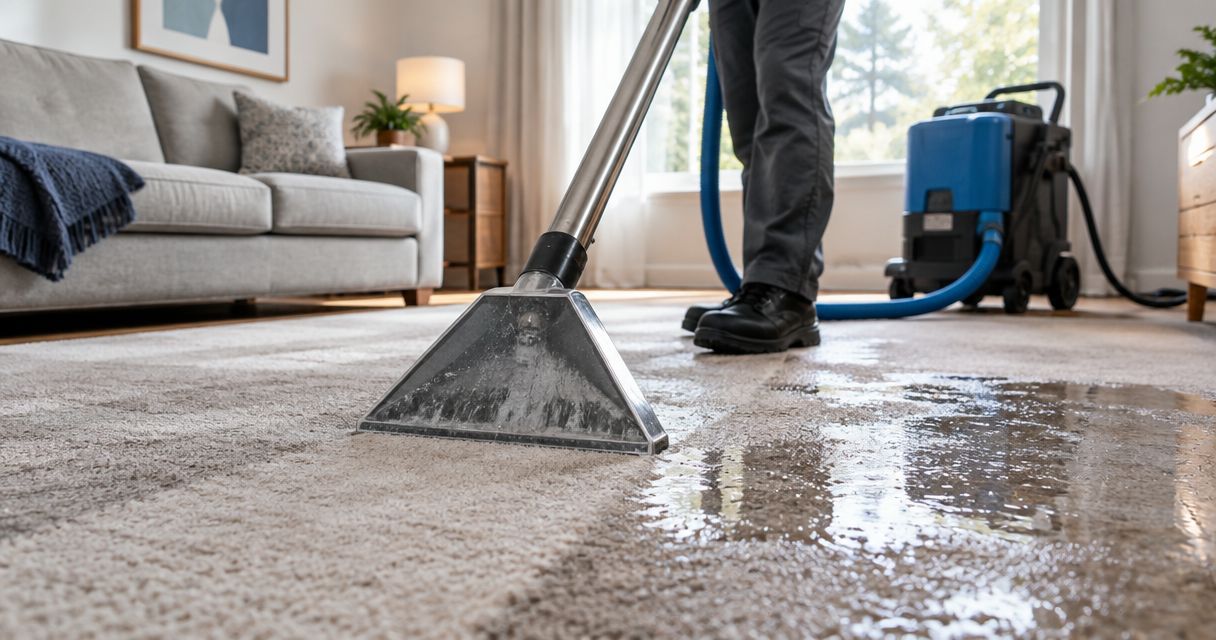
Best overall: professional water extraction with a drying assessment. Best for a small, confirmed clean-water incident: a wet/dry vacuum. Best for a minor surface spill: absorbent towels. This 2026 guide ranks the best way to extract water from carpet by water source, saturation, and what remains wet underneath.
- The best way to extract water from carpet is professional extraction when padding or the floor underneath is saturated.
- A wet/dry vacuum suits small clean-water incidents, not sewage or outdoor floodwater.
- Towels absorb surface spills; carpet-cleaning machines do not replace a flood-drying plan.
- Finesse Pro Services provides residential water damage restoration for homeowners in Wilmington and surrounding Pender and Onslow counties.
Why this matters
Removing visible water is only the beginning. Carpet can feel drier while its backing, padding, and the floor underneath remain wet. Choosing a method solely because it improves the surface leaves the actual drying problem unresolved.
Finesse Pro Services is a residential water damage restoration option for homeowners in Wilmington and surrounding Pender and Onslow counties. Contact Finesse Pro Services to request a personalized quote and describe where the water came from before arranging service.
For a Pender County homeowner, the first decision is not which machine to use. It is whether the water is safe to handle and whether the damage extends beyond the carpet.
What makes the best carpet water extraction method
Use these criteria to choose an extraction method in 2026:
- Water source: A small spill from a clean supply differs from sewage, outdoor floodwater, or water of unknown origin.
- Depth of saturation: Surface moisture needs a different response from soaked padding or a wet subfloor.
- Liquid removal: The method must collect water, not simply move it around or add cleaning solution.
- Drying access: A workable plan addresses moisture underneath the carpet, not just exposed fibers.
- Safe operation: Electrical hazards and contaminated water take priority over saving the carpet.
- Verification: Surface appearance alone does not establish that the affected materials are dry.
Make 2 safety checks before touching equipment: identify the water source and identify electrical hazards. If water reaches outlets, cords, appliances, or electrical equipment, stay out of the affected area and arrange qualified help. Do not walk through water to disconnect power.
Water extraction methods at a glance
| Rank and method | Best for | Standout feature | Key limitation |
|---|---|---|---|
| 1. Professional extraction and drying assessment | Saturated carpet or damage extending underneath | Connects water removal with assessment of affected materials | Requires arranging service; some materials need removal |
| 2. Wet/dry vacuum | Small, confirmed clean-water incidents | Collects liquid directly | Does not establish that padding or subfloor is dry |
| 3. Portable carpet extractor | Localized clean-water moisture in suitable carpet | Extracts moisture through a carpet tool | Equipment suitability and drying needs still require judgment |
| 4. Absorbent towels | Minor surface spills caught immediately | Simple blotting without powered equipment | Cannot address saturated padding |
| 5. Household carpet-cleaning machine | Routine cleaning after flood damage is resolved | Designed for carpet cleaning tasks | Not a substitute for water damage restoration |
These rankings compare methods, not contractors or machine brands. A lower-ranked method still has a useful role when the incident fits its limits.
1. Professional extraction: best for saturated carpet
Professional water damage restoration is the default when water has spread across a room, reached the padding, or affected adjoining materials. Extraction equipment removes liquid; assessment determines what needs drying, lifting, or removal. Those are separate decisions.
Ask the provider how the carpet backing, padding, subfloor, and nearby wall materials will be evaluated. Do not assume that a machine described as powerful also establishes whether the floor assembly is dry.
Professional extraction pros:
- Addresses more than the carpet's visible surface.
- Connects extraction with a drying and material-assessment plan.
- Gives you a service route when the source or extent is uncertain.
- Helps distinguish salvageable materials from materials requiring removal.
Professional extraction cons:
- Requires arranging a visit rather than starting with household supplies.
- Cannot guarantee that every carpet or pad is salvageable.
- The scope depends on contamination and the affected materials.
Best for: Flooded rooms, soaked padding, recurring dampness, or damage beyond the carpet.
Finesse Pro Services offers residential water damage restoration. When requesting a quote, explain the source, affected rooms, and whether water is still entering; ask which extraction and drying work the proposed service includes.
Verdict — Buy: Choose professional assessment and restoration when the carpet assembly is saturated or the extent is uncertain.
2. Wet/dry vacuum: best for small clean-water incidents
A wet/dry vacuum collects liquid from a localized area when its manufacturer permits wet pickup. It is a practical first-response tool for a small incident involving confirmed clean water, provided you can operate it without electrical exposure.
Use the manufacturer's wet-pickup configuration and empty the collection tank as instructed. Never substitute an ordinary household vacuum: a dry-only appliance is not suitable for collecting water.
Wet/dry vacuum pros:
- Collects water rather than relying only on evaporation.
- Lets you target a small affected area.
- Provides a direct way to remove accessible liquid.
Wet/dry vacuum cons:
- Does not prove that moisture underneath the carpet is gone.
- Requires safe electrical access and correct equipment setup.
- Is not a homeowner cleanup recommendation for sewage or outdoor floodwater.
Best for: A small, recent clean-water incident with no electrical hazard or evidence of deeper saturation.
Stop treating the incident as a small spill if water spreads beyond the visible patch, the carpet remains wet after pickup, or the source is uncertain. More vacuum passes do not resolve those questions.
Verdict — Buy: Use a wet/dry vacuum for limited clean-water pickup, then assess whether professional drying is needed.
3. Portable carpet extractor: best for localized clean-water moisture
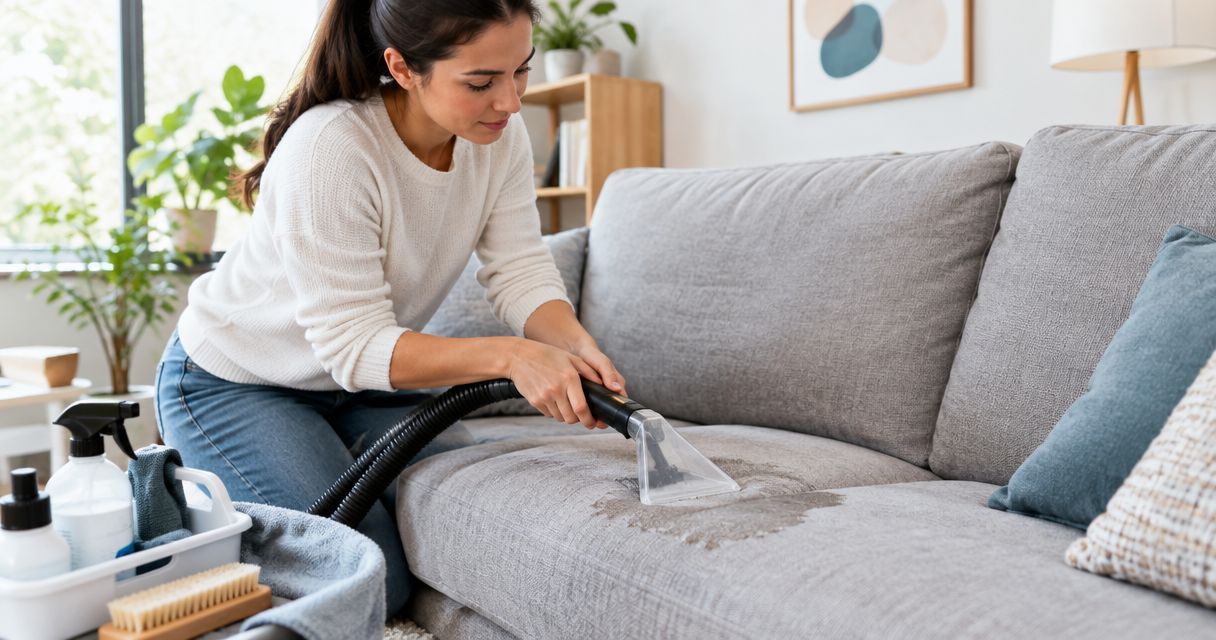
A portable carpet extractor uses a carpet tool to recover moisture. A machine suitable for extraction can address localized clean-water moisture, but its suitability depends on the equipment instructions and the carpet condition.
Do not add cleaning solution simply because the machine has a solution tank. During water removal, adding liquid works against the immediate goal and does not answer whether the padding is wet.
Portable carpet extractor pros:
- Uses a tool intended to work across carpet.
- Provides controlled extraction over a localized area.
- Separates recovered liquid into a collection tank.
Portable carpet extractor cons:
- Requires confirmation that the equipment supports the intended task.
- Does not replace inspection of the carpet assembly.
- Incorrect use can add moisture instead of resolving the incident.
Best for: Localized clean-water moisture where equipment suitability is confirmed and deeper saturation has been ruled out.
Professional restoration equipment and household cleaning machines are not interchangeable just because both recover water. Ask what a proposed machine is intended to do before relying on it for a flooded room.
Verdict — Hold: Use a portable extractor only after confirming suitability; do not make it the default for saturated padding.
4. Absorbent towels: best for minor surface spills
Clean, absorbent towels are useful when a small spill remains near the carpet surface. Blot with pressure, replace wet towels, and avoid vigorous rubbing that spreads the spill or distorts fibers.
This is a spill response, not a flooded-room strategy. If the carpet feels saturated or water has traveled beneath it, towels cannot address the hidden moisture.
Absorbent towel pros:
- Start water pickup without powered equipment.
- Allow controlled blotting of a small area.
- Avoid adding cleaning liquid during the initial response.
Absorbent towel cons:
- Reach only moisture accessible from the surface.
- Become ineffective once saturated.
- Cannot verify or dry wet padding underneath.
Best for: A minor clean-water spill noticed immediately.
Do not keep pressing towels onto carpet affected by sewage, outdoor floodwater, or an unknown source. Avoid contact and seek qualified restoration guidance instead.
Verdict — Hold: Keep towels for surface spills; move to assessment when moisture extends below the fibers.
5. Household carpet-cleaning machine: best after restoration
A household carpet-cleaning machine belongs in a routine cleaning plan, not at the center of a flood response. Its cleaning function does not establish whether flooded carpet, padding, or the floor underneath has dried.
After the water damage is resolved, carpet cleaning can address remaining soil when the material is suitable for cleaning. Ask the restoration provider when cleaning is appropriate rather than immediately adding detergent and water.
Household carpet-cleaning machine pros:
- Provides a tool for routine carpet cleaning.
- Collects some moisture during its intended cleaning cycle.
- Fits a separate cleaning task after restoration is complete.
Household carpet-cleaning machine cons:
- Cleaning cycles can introduce additional water.
- Does not assess contamination or structural moisture.
- Can distract from the need to remove wet padding or damaged materials.
Best for: Routine carpet care once flood-related moisture and contamination have been addressed.
Verdict — Skip: Skip the household carpet cleaner as your primary flooded-carpet response.
Check beneath the surface before calling the job finished
Check 3 material layers: carpet, padding, and subfloor. Each can hold moisture independently, so a dry-feeling carpet surface is not a completion test.
- Carpet: Look beyond surface appearance; the backing also matters.
- Padding: Determine whether water reached the material underneath.
- Subfloor: Assess the floor below the padding and any adjoining affected materials.
Do not pull up wet carpet yourself if the water is contaminated, electrical hazards exist, or the work exceeds what you can safely handle. Ask the restoration provider to explain the inspection and drying plan.
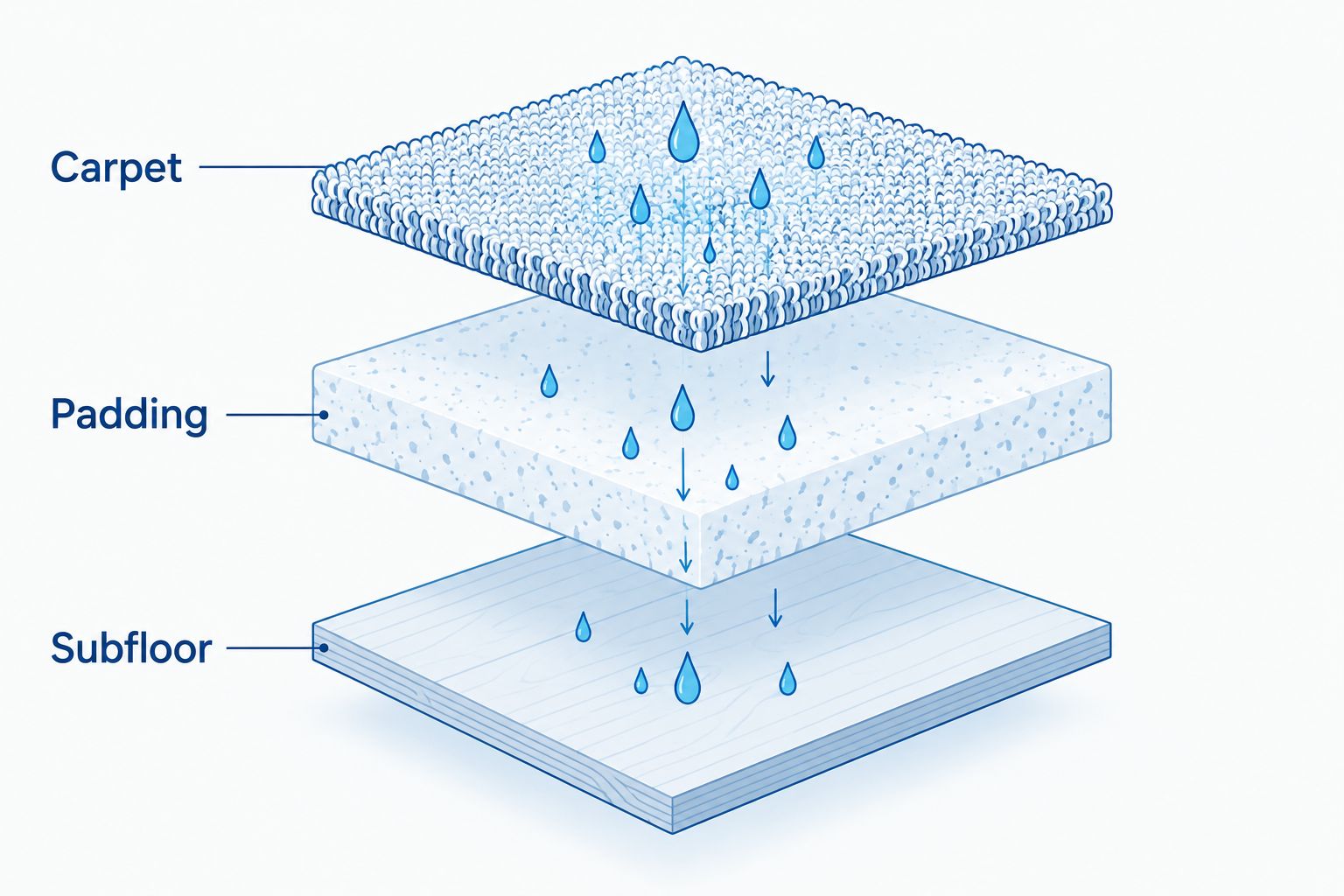
EPA guidance on clean-water damage identifies 24–48 hours as a drying window for carpet and backing and directs attention to drying the subfloor as well. For this 2026 guide, that window is a reason to act promptly—not a promise that any particular carpet will dry on schedule.
Do not wait for the end of that window before seeking help. Contaminated water requires a different response, and outdoor floodwater or sewage can make porous materials unsuitable for salvage.
What to tell a restoration provider
Give Finesse Pro Services a clear description of the incident so the quote request focuses on restoration rather than routine carpet cleaning:
- Where the water came from and whether the source has stopped.
- Which rooms and adjoining materials are affected.
- When you first noticed the water.
- Whether you have already used extraction equipment.
- Whether there are electrical hazards, unusual odors, or visible contamination.
Ask what extraction, drying assessment, and follow-up the proposed work includes. Also ask how the satisfaction guarantee applies to the proposed service; cleaning expectations and water damage outcomes need clear agreement.
Request a water damage restoration quote
Describe the water source, affected rooms, and remaining moisture when requesting service.
How the methods are ranked
This 2026 ranking prioritizes safe source identification, liquid removal, access to hidden moisture, and drying verification. Professional restoration ranks first for saturated carpet because the decision extends beyond picking up visible water.
Towels and household machines rank lower because their useful roles are narrower. They are not replacements for assessing a wet floor assembly or contaminated materials.
Which water extraction method should you choose?
Choose professional restoration for flooded carpet; choose a wet/dry vacuum only for a small, confirmed clean-water incident. Use towels for minor surface spills and reserve household carpet-cleaning machines for an appropriate cleaning task afterward.
Your next move is to identify the source, avoid hazards, and describe the affected materials to a provider. Do not choose equipment before deciding whether the carpet is safe to handle.
FAQ
What's the best way to extract water from carpet?
Professional extraction with a drying assessment is the best choice when carpet padding or the floor underneath is saturated. A wet/dry vacuum suits smaller, confirmed clean-water incidents with no electrical hazard.
Can I use my regular vacuum on wet carpet?
No, a dry-only household vacuum is not suitable for collecting water. Use equipment specifically approved for wet pickup and follow its instructions.
Is a carpet cleaner better than a wet/dry vacuum for flooding?
A household carpet cleaner is not the default choice for flooding. A wet/dry vacuum collects accessible liquid, but neither device replaces assessment of wet padding, subfloor, or contaminated materials.
How quickly should flooded carpet be dried in 2026?
EPA clean-water damage guidance identifies a 24–48-hour drying window for carpet and backing, with attention to the subfloor. Start promptly and seek professional assessment rather than treating that window as a guaranteed drying time.
Can carpet be saved after sewage or outdoor flooding?
Do not assume carpet affected by sewage or outdoor floodwater can be saved. Avoid contact and obtain qualified restoration guidance because contaminated porous materials can require removal.
Does carpet that feels dry still need checking underneath?
Yes, a dry-feeling surface does not establish that padding or the subfloor is dry. Ask how the affected layers will be assessed before considering restoration complete.
Who can I contact for residential water damage restoration in Pender County?
Finesse Pro Services provides residential water damage restoration in Wilmington and surrounding Pender and Onslow counties. Call or request a personalized quote and explain the water source and affected rooms.
One last thing
For your 2026 response plan, photograph the affected area from a safe, dry location before cleanup and keep notes about the source and timing. Do not enter unsafe water to document damage: the useful record is the one you can make without exposure.