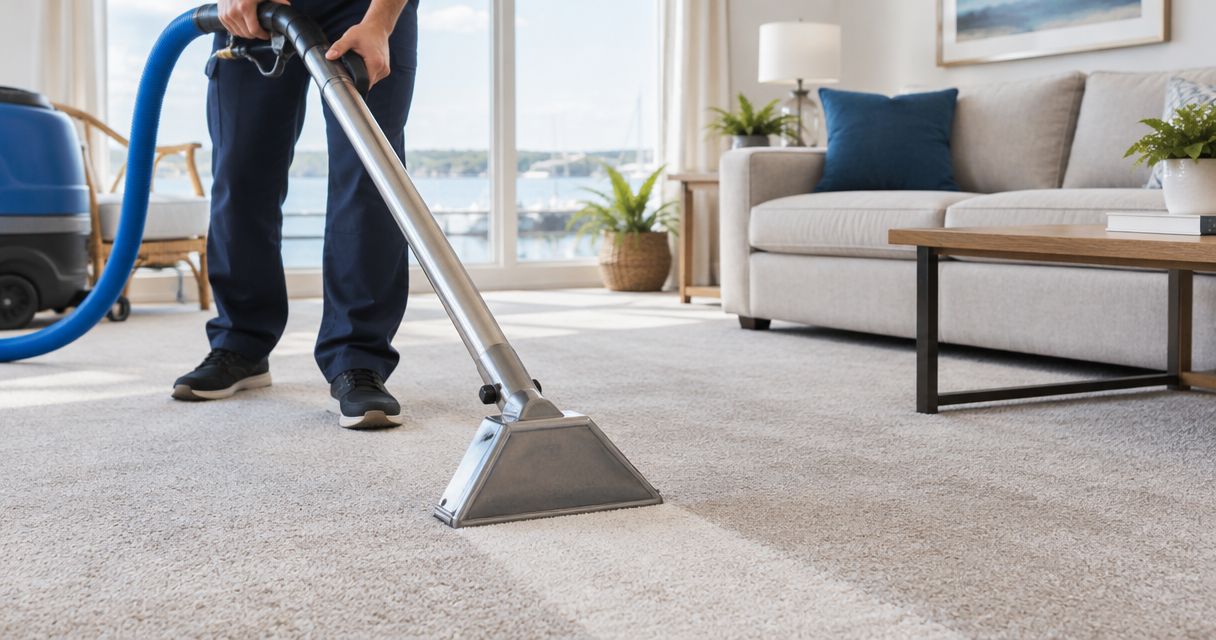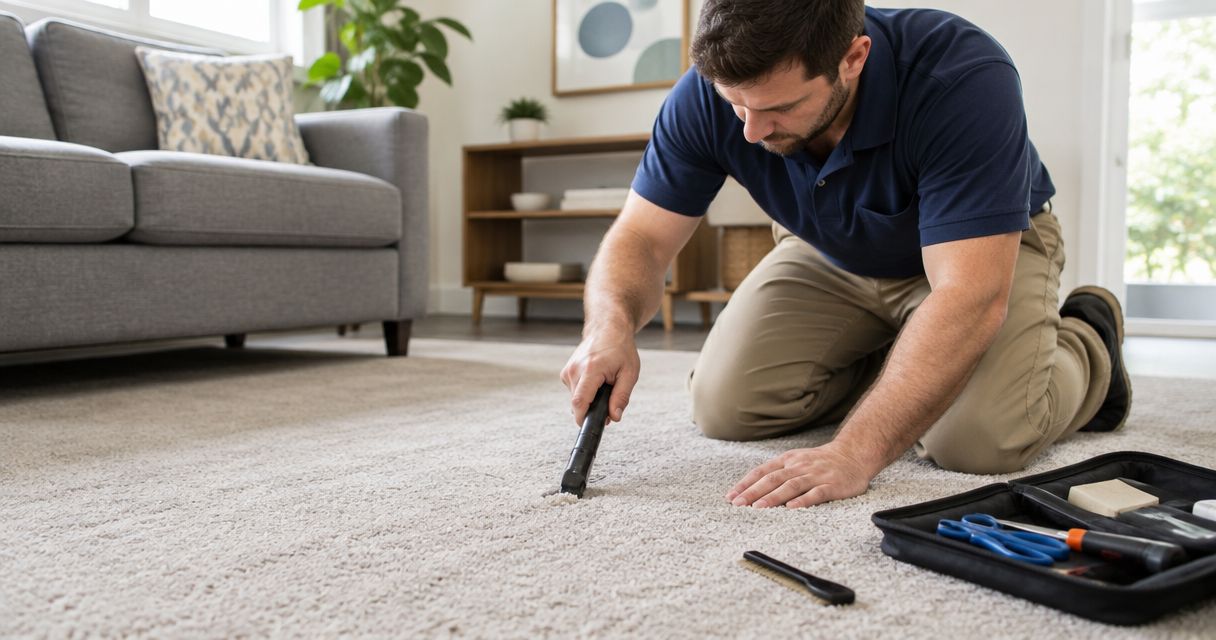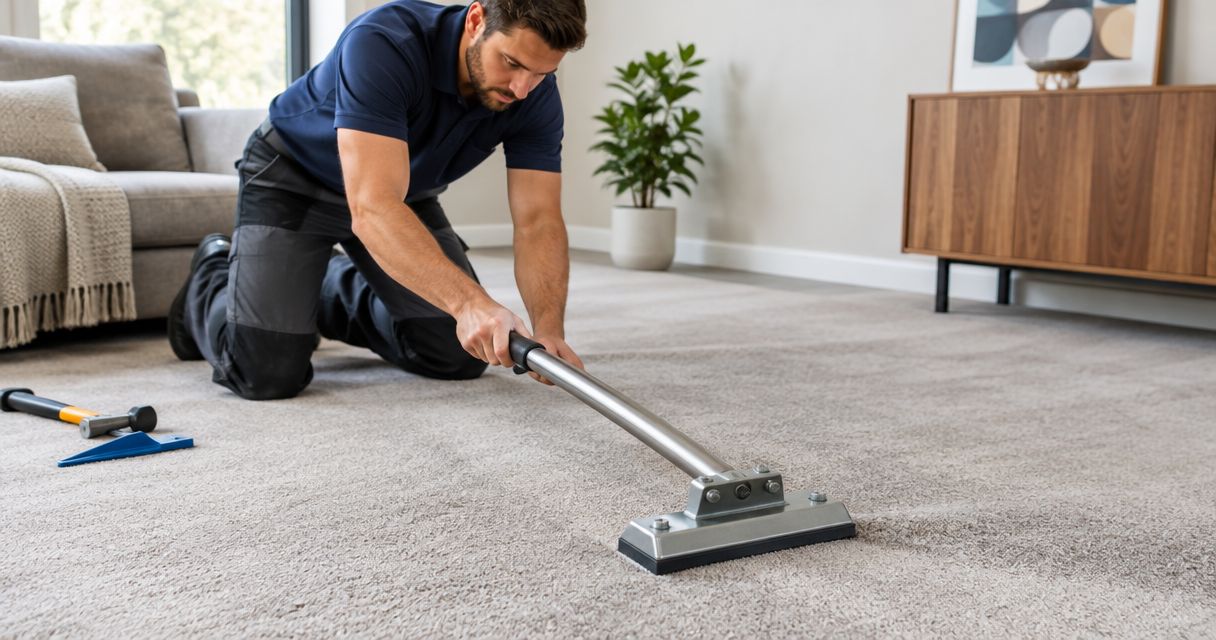
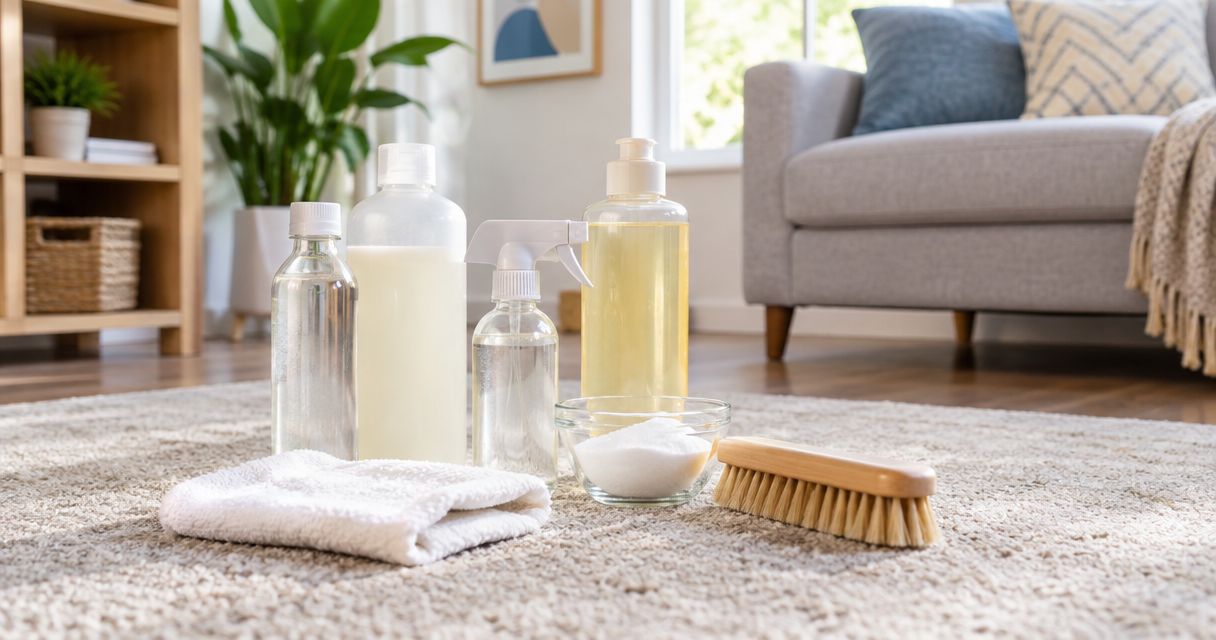
Best overall: a carpet-labeled general spot cleaner. Best for pet accidents: a carpet-safe enzyme cleaner. Best first response to a fresh, water-soluble spill: plain water. This 2026 guide ranks the best carpet cleaning products for spot treatment by stain type, carpet compatibility, and cleanup requirements—not by promises on the bottle.
- The best carpet cleaning products for spot treatment match the stain and the carpet manufacturer's care instructions.
- Choose a carpet-labeled general spot cleaner for routine stains; choose an enzyme cleaner for pet accidents.
- Plain water is the first option for fresh, water-soluble spills, not grease or persistent pet odor.
- Finesseproserv carpet cleaning is the service option for homeowners facing recurring spots or unsuccessful DIY treatment.
Why this matters
A spot remover can target a stain without being suitable for your carpet. The wrong treatment can affect color, leave residue, or wet the backing while the visible stain remains. Start with compatibility, then match the cleaner to the spill.
For homeowners in Pender County, Wilmington, and surrounding Onslow County, Finesseproserv offers residential carpet cleaning alongside upholstery and area rug cleaning. Professional help belongs in the decision when a stain returns, an odor persists, or you cannot identify the material safely.
This 2026 ranking compares product categories rather than individual bottles. Within each category, the actual label and your carpet manufacturer's instructions decide whether a product belongs on your floor.
What makes the best carpet spot-treatment product?
Use these criteria before choosing a cleaner:
- Carpet compatibility: The label must permit use on your carpet material. Do not assume a product suitable for synthetic carpet is suitable for wool or a delicate rug.
- Stain match: Food spills, pet accidents, colored drinks, and oily marks need different approaches. Identify the spill before choosing the chemistry.
- Color safety: Test in a hidden area and check the dried result. Stop if you see color transfer or a change in texture.
- Residue removal: Follow the cleanup instructions. A product that requires rinsing is not finished when the stain disappears.
- Moisture control: Treat the affected fibers without saturating the backing. More liquid is not a substitute for better stain matching.
- Clear directions: Application, dwell time, removal, and drying instructions should be understandable before you open the bottle.
Carpet spot-treatment options at a glance
| Rank and option | Best for | Standout feature | Key limitation |
|---|---|---|---|
| 1. Carpet-labeled general spot cleaner | Routine food spills and everyday marks | Directions written for carpet spot treatment | Not a universal answer for odor, grease, or dye stains |
| 2. Carpet-safe enzyme cleaner | Pet accidents and organic residue | Enzymes target suitable organic material | Requires label-directed contact time and material compatibility |
| 3. Plain water | Fresh, water-soluble spills | Adds no detergent residue | Does not address every stain or persistent odor |
| 4. Carpet-safe oxygen-based stain remover | Colored food and drink stains | Oxidizing action targets certain colored stain compounds | Requires particular attention to fiber and dye compatibility |
| 5. Carpet-approved solvent spotter | Small oily or greasy marks | Targets residue that water does not readily dissolve | Needs strict handling, ventilation, and application controls |
The ranking is a decision tree, not a claim that one cleaner removes everything. A pet accident belongs in the enzyme category even though a general spot cleaner ranks first for routine household use.
1. Carpet-labeled general spot cleaner: best for everyday stains
A general carpet spot cleaner is the default bottle for routine household marks when its label matches the carpet. Depending on the formulation, it uses cleaning agents to loosen residue so you can remove it through the specified blotting or rinsing process.
Choose a product explicitly labeled for carpet spot treatment. A hard-floor cleaner, upholstery spray, and extraction-machine concentrate are not interchangeable simply because each cleans something.
General spot cleaner pros:
- Gives you carpet-specific application instructions.
- Covers routine spills without requiring a separate specialist product for each one.
- Supports targeted treatment instead of wetting an entire room.
General spot cleaner cons:
- Does not necessarily address pet odor or oily residue.
- Can leave cleaning residue if you skip the specified removal step.
Best for: Homeowners handling ordinary food spills and everyday marks on a compatible carpet.
Apply only as directed. Some labels specify spraying the spot; others call for applying cleaner through a cloth. Do not replace the manufacturer's method with a heavier application because a mark looks stubborn.
For your 2026 cleaning kit, choose clear instructions over an all-purpose claim. Buy: A carpet-labeled general spot cleaner for routine marks after checking compatibility.
2. Carpet-safe enzyme cleaner: best for pet accidents
Enzyme cleaners use enzymes to break down suitable organic residue. Carpet-labeled formulations are a targeted choice for pet accidents when the product instructions permit use on the material.
These products are not simply fragrance sprays. Follow the stated contact time and cleanup method; immediately wiping away a treatment that requires contact time works against its instructions.
Enzyme cleaner pros:
- Targets organic residue associated with pet accidents.
- Offers a stain-specific approach rather than relying on fragrance alone.
- Can be applied to a localized affected area when the label permits.
Enzyme cleaner cons:
- Requires the specified contact time rather than immediate removal.
- Surface treatment cannot establish whether contamination has reached the backing or pad.
Best for: A known pet accident on carpet approved for the chosen enzyme formulation.
Blot fresh liquid before applying treatment. Keep pets away while you work and follow the product's directions for safe access after treatment.
Finesseproserv carpet cleaning is the service option for Pender County homeowners whose pet spots return after DIY treatment. Describe where the accident occurred, what you applied, and whether the odor changes after drying.
Buy: A carpet-safe enzyme cleaner for known pet accidents. Skip: Repeated surface applications when the same spot or odor keeps returning.
3. Plain water: best first response to fresh, water-soluble spills
Plain water is a useful first treatment for a fresh spill that dissolves in water, provided your carpet's care instructions permit it. It adds no detergent and lets you start with a controlled blotting approach before introducing a cleaning product.
Water is not a universal stain remover. Grease, persistent pet odor, and some colored stains require a different decision.
Plain water pros:
- Adds no cleaning-agent residue.
- Supports gentle, localized blotting of suitable fresh spills.
- Avoids introducing another chemical before you identify the stain.
Plain water cons:
- Does not readily dissolve oily residue.
- Excess application can spread moisture into the backing.
Best for: A fresh, identified water-soluble spill on water-compatible carpet.
Use 2 clean white cloths: one for controlled damp blotting and one for absorbing moisture. Work from the edge toward the center, and switch to a clean section of cloth as residue transfers.
Do not pour water onto the carpet. A damp cloth gives you more control than soaking the spot and then trying to retrieve the excess.
Hold: Start with plain water for a suitable fresh spill. Move to a compatible spot cleaner only if the mark remains and the care instructions permit it.
4. Carpet-safe oxygen-based stain remover: best for colored spills
Oxygen-based stain removers use oxidizing chemistry to act on certain colored stain compounds. A formulation specifically approved for your carpet can be a targeted option for colored food or drink marks that remain after the initial cleanup.
The same action that targets a stain demands care around carpet dyes and delicate fibers. A laundry oxygen powder is not automatically an approved carpet treatment.
Oxygen-based stain remover pros:
- Targets certain colored stains rather than only loosening surface soil.
- Provides a distinct option when a compatible general cleaner has not resolved the mark.
- Allows localized treatment when the product label supports it.
Oxygen-based stain remover cons:
- Is not automatically suitable for wool, delicate fibers, or every carpet dye.
- Can alter color if the formulation or application is unsuitable.
Best for: A colored food or drink stain on carpet explicitly compatible with the chosen product.
Check the label before opening the container. Test a hidden area, allow it to dry, and inspect both color and texture before treating the visible spot.
In 2026, treat an oxygen-based cleaner as a targeted stain treatment—not permission to experiment with homemade concentrations. Buy: Only a carpet-approved formulation with clear compatibility instructions. Skip: Unlabeled mixtures or improvised dilution.
5. Carpet-approved solvent spotter: best for small greasy marks
A solvent spotter targets oily residue that water does not readily dissolve. It is a specialist option for a small, identified greasy mark when both the product label and carpet care instructions permit its use.
This category requires more handling care than plain water or a routine carpet spot cleaner. Solvent products differ, so the actual label controls ventilation, application, removal, and storage.
Solvent spotter pros:
- Targets oily residue that water-based blotting leaves behind.
- Provides a specific approach for an identified greasy mark.
- Supports limited spot application when used according to directions.
Solvent spotter cons:
- Requires strict attention to handling and ventilation instructions.
- Unsuitable application can affect backing materials or spread dissolved residue.
Best for: A small greasy mark on compatible carpet when you can follow every label instruction.
Never substitute paint thinner, gasoline, or an unrelated household solvent. Do not pour a solvent spotter into the carpet or combine it with another cleaner.
Hold: Use a carpet-approved solvent spotter only when compatibility and handling instructions are clear. Skip: DIY solvent treatment on an unidentified carpet or delicate rug.
How to treat a spot without making it harder to remove
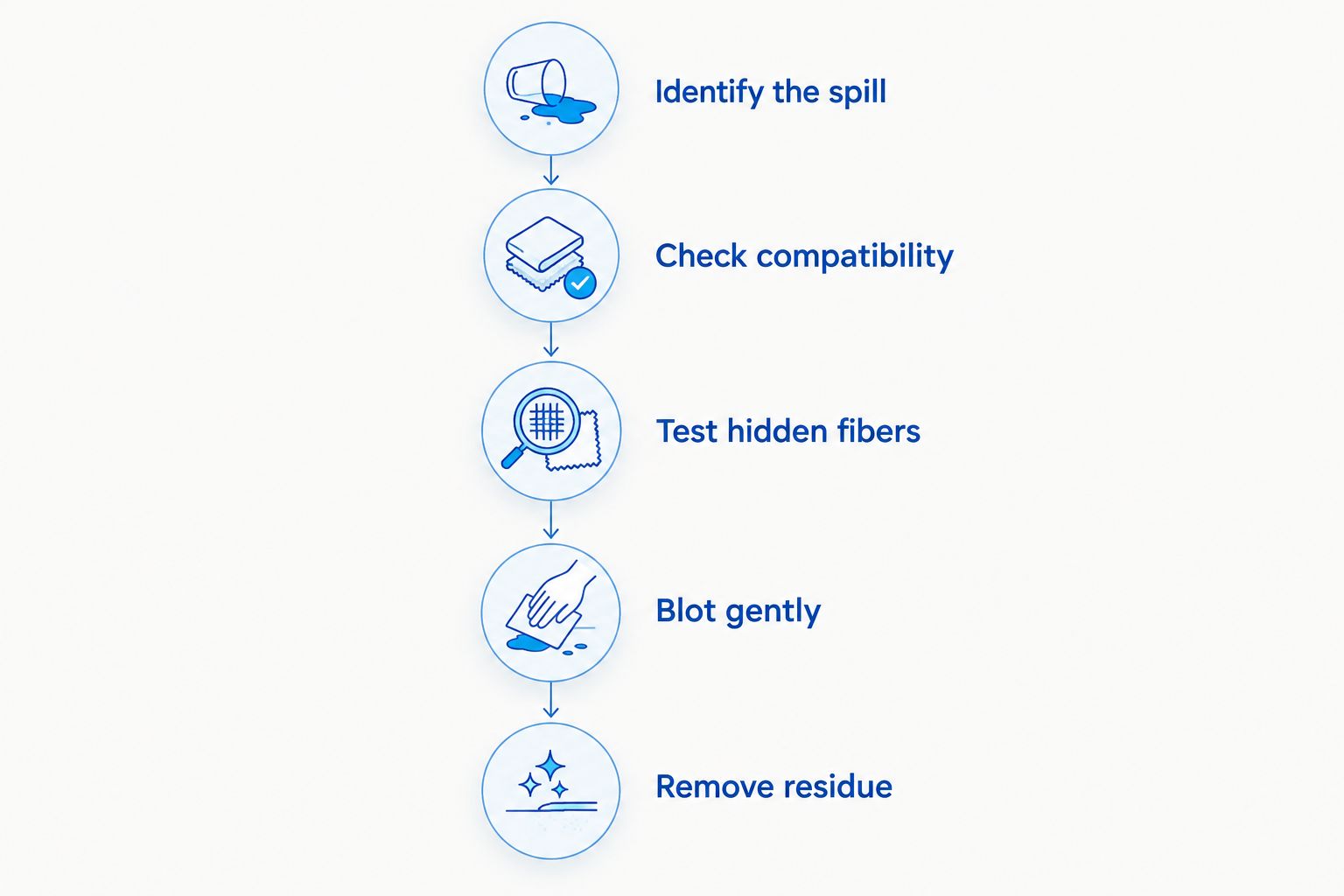
The best product still needs a controlled process. Handle 1 spot at a time, so you can track what you applied and whether it changed the carpet.
Identify the spill
Write down what spilled and what you have already used. Remove loose solids gently before treating the remaining mark; avoid pushing them farther into the pile.
Check compatibility
Read both the carpet care instructions and the cleaner label. If either rules out the treatment, choose another approach rather than reducing the amount and hoping it becomes safe.
Test hidden fibers
Treat a concealed area as directed and inspect it after drying. Color transfer, discoloration, or a changed texture is a reason to stop.
Blot gently
Absorb liquid without scrubbing aggressively. Follow the product's application directions and work from the edge inward to limit spreading.
Remove residue
Complete any required rinsing or extraction step. Let the treated area dry before deciding whether the stain needs another assessment.
Never mix cleaning products. Do not add bleach, vinegar, ammonia, or another stain remover to a product in an attempt to strengthen it. Follow its instructions, including any requirements for removing an earlier treatment.
How this ranking works
This 2026 ranking prioritizes carpet compatibility, stain matching, residue removal, moisture control, and usable directions. General spot cleaner ranks first because it fits routine household spot treatment; specialist categories earn their positions through distinct stain uses.
The order does not claim laboratory testing or identical performance across formulations. Your carpet's care instructions outrank the list. A highly ranked product category is still the wrong choice if it is unsuitable for the fibers or dyes in your home.
Which carpet spot-treatment option should you choose?
Choose a carpet-labeled general spot cleaner as your default for routine marks. For a fresh water-soluble spill, start with controlled water blotting; for a known pet accident, select a compatible enzyme cleaner instead.
Stop DIY treatment when a spot returns, the color changes, or you cannot identify the carpet material. Cleaning also does not repair a burn, replace missing fibers, or remove a carpet wrinkle; patching and power stretching address different problems.
Finesseproserv offers carpet patching and power stretching alongside residential cleaning. Request a personalized quote and describe whether you need stain treatment, repair, or stretching; ask about the satisfaction guarantee and its terms before booking.
Request help with stubborn carpet spots
Describe your stain, carpet material, and previous treatments when requesting a personalized quote.
FAQ
What's the best carpet cleaning product for spot treatment?
A carpet-labeled general spot cleaner is the default for routine marks when it matches your carpet's care instructions. Choose a compatible enzyme cleaner for pet accidents and a targeted treatment for identified oily or colored stains.
Should I use water before carpet stain remover?
Use controlled water blotting first for a fresh, water-soluble spill when the carpet's care instructions permit it. Do not soak the spot, and do not expect water to remove grease or persistent pet odor.
Is an enzyme cleaner better for pet stains?
A carpet-safe enzyme cleaner is the targeted choice for organic residue from pet accidents. Follow its contact time and cleanup directions; recurring odor needs assessment rather than repeated surface spraying.
Can I use oxygen cleaner on wool carpet?
Use an oxygen cleaner on wool only when the product label and the wool carpet's care instructions explicitly permit it. Otherwise, leave that treatment out and request material-specific guidance.
Why does a carpet spot come back after cleaning?
A returning spot can result from residue remaining in the carpet or material moving upward as the area dries. Stop adding cleaner and arrange an assessment when the same mark repeatedly returns.
Can I use carpet spot cleaner on an area rug or couch?
Use a carpet spot cleaner on an area rug or couch only when both the product label and the item's care instructions permit it. Delicate rugs and upholstery require their own compatibility checks.
When should I call a professional carpet cleaner?
Call a professional when a stain returns, odor persists, color changes, or the carpet material is uncertain. Finesseproserv serves residential customers in Wilmington and surrounding Pender and Onslow counties; request a personalized quote for your specific problem.
One last thing
Photograph the cleaner label before putting the bottle away. If the spot returns, the product name and application instructions help you explain exactly what reached the carpet. Keep that record with your 2026 home-care notes, rather than guessing during a quote request.