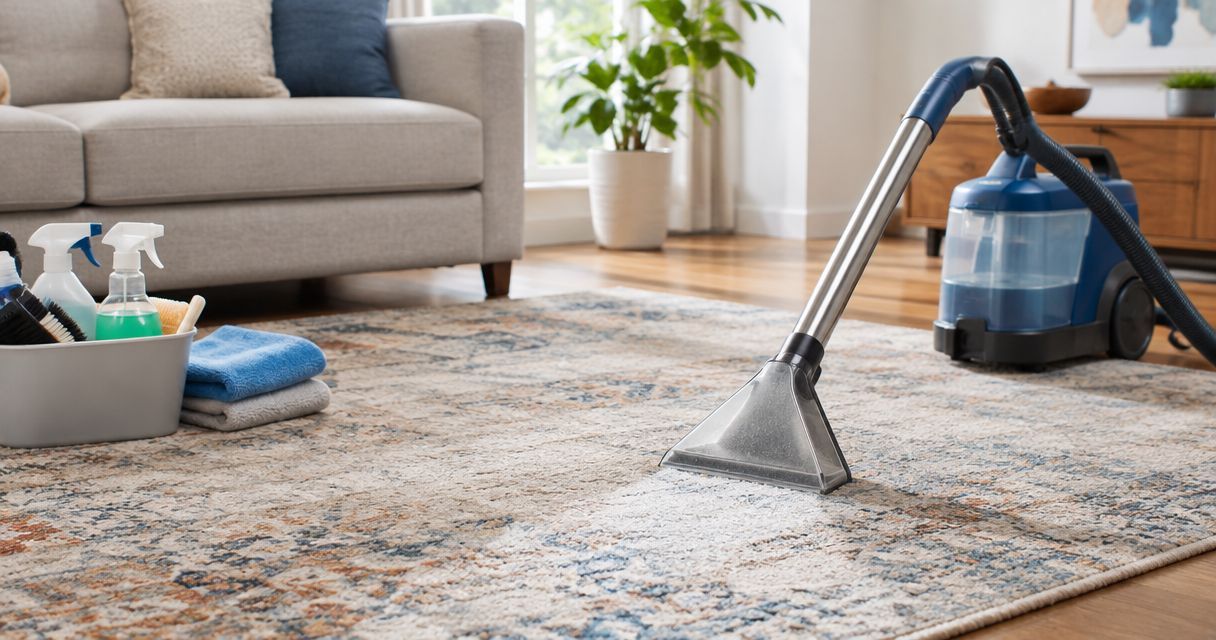
Best overall: professional cleaning matched to the rug’s construction. Best for routine upkeep: vacuuming. Best for machine-washable rugs: label-approved washing. This 2026 guide ranks the best area rug cleaning method for each situation, explains safety limits, and shows what affects your personalized quote without publishing prices.
- The best area rug cleaning method matches the fiber, dyes, backing, and care label—not just the stain.
- Finesse Pro Services is a local option for homeowners seeking professional area rug cleaning in Pender County.
- Vacuuming handles loose soil; spot cleaning targets individual spills. Neither replaces appropriate deeper cleaning.
- Machine washing and hot-water extraction belong only on rugs whose construction and care instructions permit them.
For residential area rug cleaning in Wilmington and surrounding Pender and Onslow counties, contact Finesse Pro Services. Request a personalized quote and describe the rug’s material, condition, and cleaning concerns before choosing a treatment.
Why this matters
A rug is not simply a smaller carpet. Its face fibers, foundation, dyes, fringe, and backing can respond differently to moisture, cleaning products, heat, and agitation. Treating the visible stain without considering those parts risks creating a larger problem.
For your 2026 cleaning decision, separate loose dirt, isolated spills, and embedded soil. Each needs a different response. The safest choice is the method the entire rug can tolerate, not the strongest cleaner you can find.
Cost comparisons also need context. Rug dimensions, construction, soil condition, handling, and any specialized treatment affect the work involved. Ask for a quote based on your actual rug rather than comparing services by method name alone.
What makes the best area rug cleaning method?
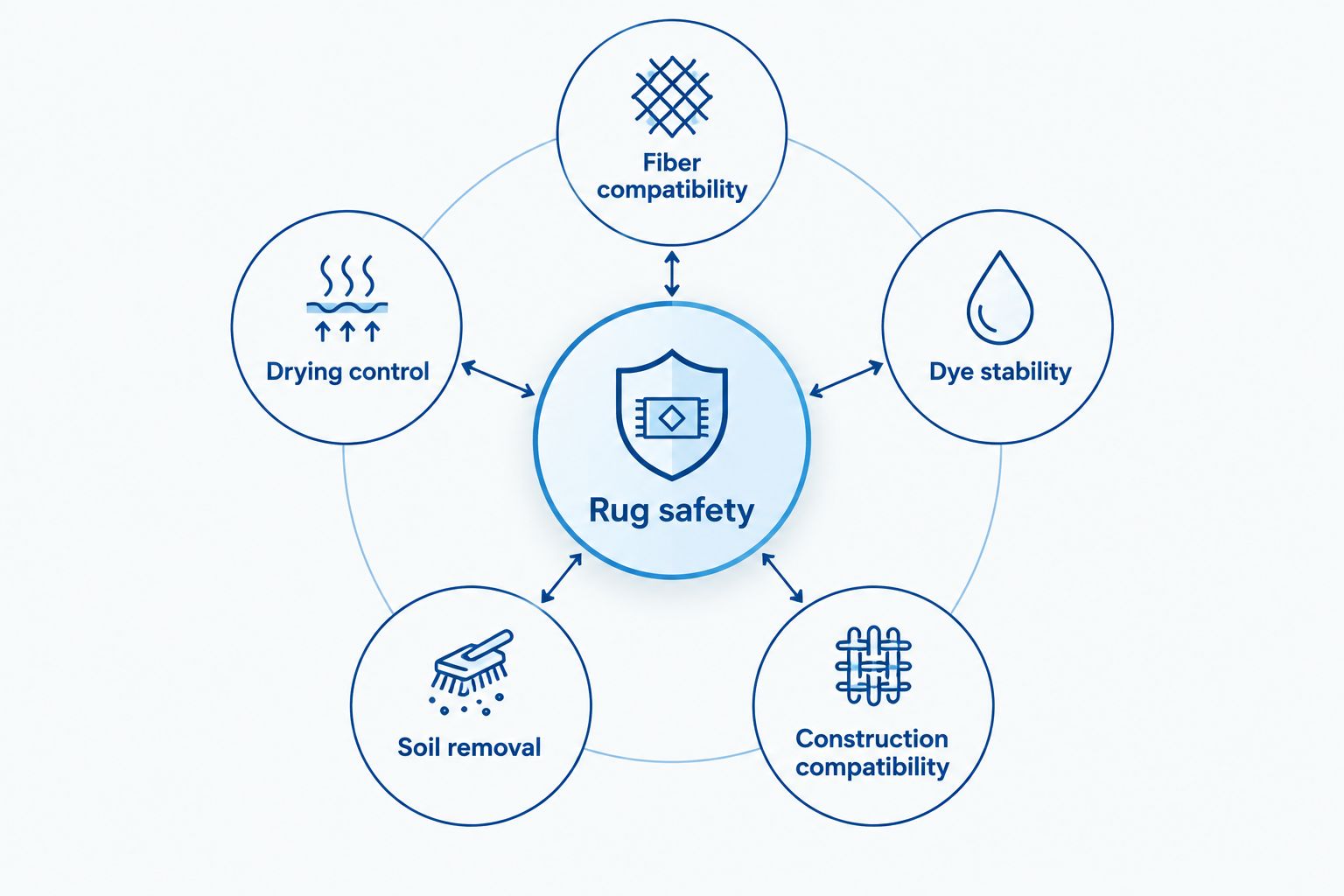
Use these criteria before comparing the options:
- Fiber compatibility: The treatment must suit wool, silk, cotton, synthetic fibers, or whatever the care label identifies.
- Dye stability: A cleaner must not cause colors to bleed or transfer. A hidden-area test helps screen for problems.
- Construction compatibility: Backing, adhesives, fringe, and woven foundations matter as much as the visible pile.
- Soil removal: Choose a method that addresses loose dirt, spills, embedded soil, or odor rather than treating them as interchangeable.
- Drying control: Any wet method needs a drying plan that protects the rug and the floor beneath it.
- Scope clarity: Your quote should identify the work included and any stain, odor, or repair limitations.
Before adding moisture, complete 3 checks: care label, backing condition, and colorfastness. If the label is missing or the construction is unclear, request an assessment rather than treating an inconspicuous test as permission to wash the whole rug.
Area rug cleaning methods at a glance
This 2026 ranking separates methods by use case, not by an unsupported promise that one process cleans every rug. Professional assessment-led care ranks first because selecting a compatible treatment comes before selecting equipment.
| Rank and option | Best for | Standout feature | What affects the quote or effort | Key limitation |
|---|---|---|---|---|
| 1. Professional assessment-led cleaning | Delicate or unidentified rugs | Treatment selected around construction | Material, dimensions, soil, handling, and treatment scope | Results depend on condition; permanent damage remains |
| 2. Controlled vacuuming | Routine loose-soil removal | Removes dry debris without adding moisture | Your equipment and household effort | Does not wash away spills or resolve embedded contamination |
| 3. Targeted spot cleaning | A fresh, localized spill | Limits treatment to the affected area | Spill type, cleaner compatibility, and stain extent | Can spread color or leave residue if done incorrectly |
| 4. Label-approved machine washing | Rugs explicitly labeled machine washable | Follows a defined household care process | Label requirements, machine fit, and drying needs | Unsuitable for rugs without washing permission |
| 5. Compatible hot-water extraction | Wet-cleanable rugs with embedded soil | Applies cleaning solution and extracts moisture | Rug suitability, soil condition, and drying arrangements | Moisture, heat, and backing risks require control |
| 6. Compatible low-moisture cleaning | Suitable rugs where moisture must be limited | Reduces water application | Approved process, product removal, and soil condition | Not automatically safe for delicate fibers or dyes |
1. Professional assessment-led cleaning: best for delicate rugs
Professional assessment-led cleaning starts with identifying what your rug can withstand. The cleaning process should follow its fibers, dyes, construction, and condition rather than a standard treatment used on every floor covering.
Finesse Pro Services is a local option for homeowners seeking professional area rug cleaning in Pender County. Ask how the proposed treatment accounts for delicate materials, color transfer, backing condition, and drying. A service name alone does not answer those questions.
Professional assessment-led cleaning pros:
- Puts material and construction checks before treatment.
- Gives unidentified rugs a decision path beyond DIY guessing.
- Allows stains, odor, fringe, and backing concerns to be discussed together.
- Establishes a defined scope through a personalized quote.
Professional assessment-led cleaning cons:
- Requires arranging service rather than handling everything immediately.
- Cleaning cannot reverse every faded area, damaged fiber, or permanent stain.
- You still need clarity about the proposed process and expected results.
Best for: Delicate rugs, valuable rugs, missing care labels, or cleaning concerns you cannot safely resolve yourself.
Verdict: Buy professional assessment-led care before experimenting on a delicate rug.
2. Controlled vacuuming: best for routine loose-soil removal
Vacuuming removes loose dirt before it becomes worked into the pile. Use a setting suited to the rug and avoid catching fringe in the vacuum head. For delicate rugs, follow the care instructions before using a rotating brush.
Inspect 2 sides—the face and the underside—when the rug can be lifted safely. Look for loose backing, damaged edges, and trapped debris before deciding how to proceed. Inspection is not permission to apply the same vacuum setting to both surfaces.
Controlled vacuuming pros:
- Removes dry debris without introducing water.
- Fits regular household maintenance.
- Helps you notice wear, loose edges, and new stains.
Controlled vacuuming cons:
- Does not dissolve dried spills or sticky residue.
- Aggressive brushing can damage delicate pile or fringe.
- Does not replace suitable cleaning for embedded soil.
Best for: Routine upkeep between deeper cleanings on rugs compatible with your vacuum setting.
Verdict: Buy into regular vacuuming; skip the assumption that vacuuming solves every cleaning problem.
3. Targeted spot cleaning: best for a fresh localized spill
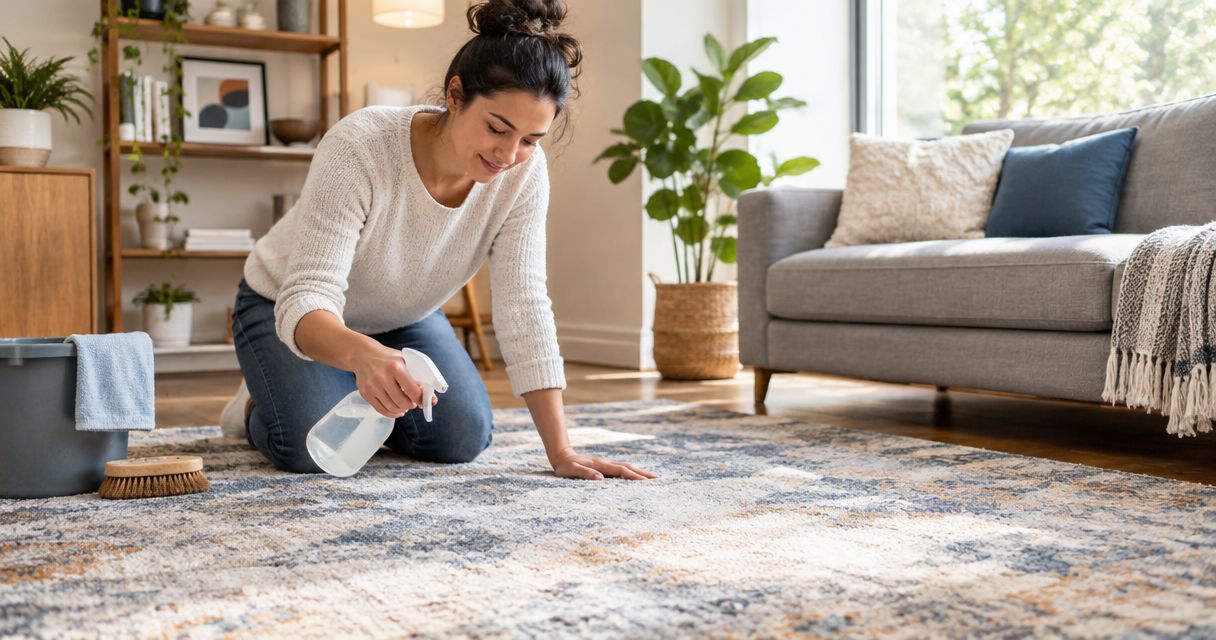
Spot cleaning addresses a small affected area rather than wetting the whole rug. Remove loose solids carefully, then blot liquid with a clean absorbent cloth. Avoid scrubbing the spill outward or working it deeper into the fibers.
If the care instructions permit a cleaner, test it on 1 hidden area before treating the visible spot. Stop if color transfers, the texture changes, or the backing reacts. A successful small test does not establish that full-rug washing is safe.
Targeted spot cleaning pros:
- Focuses attention on the spill before it spreads further.
- Limits treatment to the affected area.
- Starts with simple blotting rather than immediate saturation.
Targeted spot cleaning cons:
- An incompatible cleaner can cause color loss or bleeding.
- Excess product can leave residue.
- Surface treatment does not establish that deeper odor sources are removed.
Best for: Fresh isolated spills on rugs with clear, compatible care instructions.
Verdict: Buy the blot-first approach; skip improvised chemical mixtures and repeated soaking.
4. Label-approved machine washing: best for washable rugs
Machine washing belongs only on rugs whose care instructions explicitly allow it. Follow the stated wash and drying directions, and confirm that the rug fits your machine’s requirements. A small rug is not automatically a washable rug.
Check the backing as well as the face. A washable textile can be attached to components with different care needs, and a damaged rug needs attention before it enters a wash cycle.
Label-approved machine washing pros:
- Provides a defined process when the manufacturer supplies instructions.
- Treats the washable rug as a whole rather than individual spots.
- Offers a household option for eligible rugs.
Label-approved machine washing cons:
- Excludes rugs without explicit washing permission.
- Machine capacity and drying instructions limit suitability.
- Damaged backing or seams complicate the decision.
Best for: Rugs explicitly labeled machine washable, with intact construction and compatible household equipment.
Verdict: Buy only the label-approved process; skip machine washing based on appearance alone.
5. Compatible hot-water extraction: best for wet-cleanable rugs
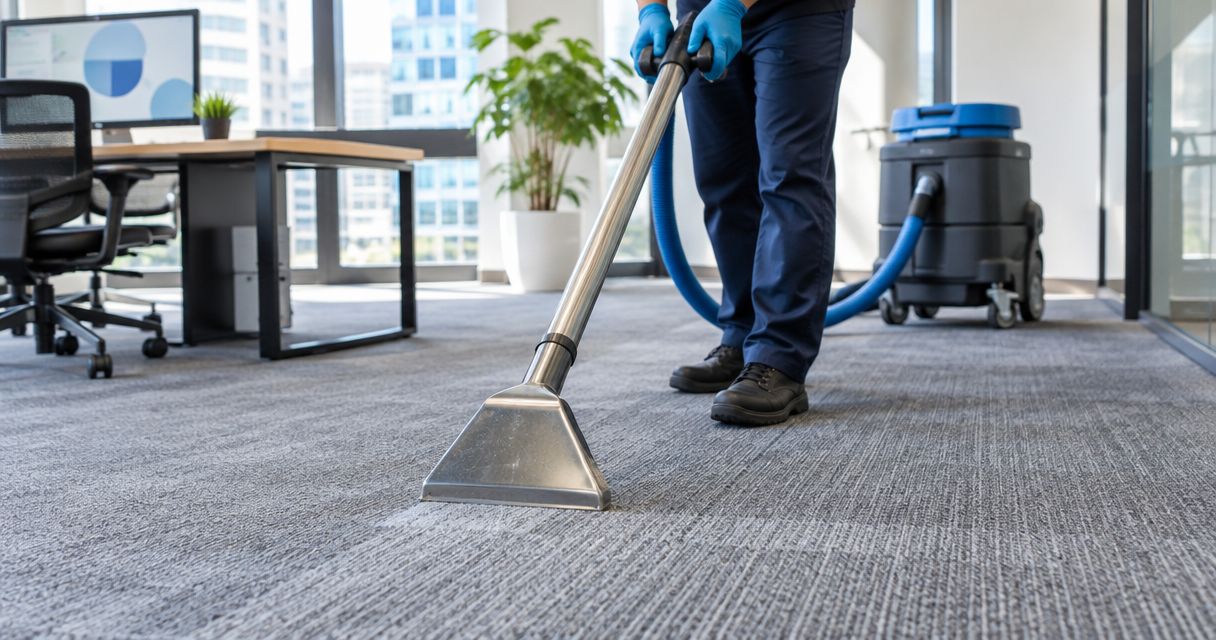
Hot-water extraction applies cleaning solution and removes it with suction. It is an option for rugs whose fibers, dyes, backing, and care instructions tolerate the process. It is not a universal treatment for wool, silk, handmade, or glued-back rugs.
The essential questions concern moisture control and drying—not whether the equipment sounds powerful. Ask how the treatment protects the backing and the floor beneath the rug, and how drying will be managed.
Compatible hot-water extraction pros:
- Addresses soil that dry vacuuming leaves behind.
- Extracts liquid rather than relying on evaporation alone.
- Can serve suitable rugs needing deeper cleaning.
Compatible hot-water extraction cons:
- Excess moisture can affect backing, dimensions, or dyes.
- Heat and cleaning chemistry must suit the material.
- Poor drying arrangements undermine the treatment.
Best for: Wet-cleanable rugs with embedded soil and a controlled drying plan.
Verdict: Hold until compatibility and drying are confirmed; skip automatic carpet-style treatment.
6. Compatible low-moisture cleaning: best for moisture-sensitive situations
Low-moisture cleaning describes processes that limit water application; it does not identify one identical treatment. Depending on the process, cleaning products loosen or absorb soil and require removal afterward.
Less water does not mean no risk. The product, agitation, and residue-removal steps still need to suit your rug. Ask which process is proposed rather than accepting low-moisture or dry cleaning as a complete safety explanation.
Compatible low-moisture cleaning pros:
- Limits water application compared with more heavily wetted processes.
- Provides another option when full wet cleaning is unsuitable.
- Can target compatible rugs without choosing immersion.
Compatible low-moisture cleaning cons:
- Product residue requires proper removal.
- Delicate pile and unstable dyes still need compatibility checks.
- Reduced moisture does not guarantee removal of deep contamination.
Best for: Suitable rugs where limiting moisture is a specific treatment requirement.
Verdict: Hold until the exact process is explained; skip claims that low moisture makes every rug safe.
How the methods are ranked
The 2026 ranking prioritizes compatibility, then the cleaning task, drying control, and clarity of scope. It does not rank providers against competitors or treat cleaning strength as a substitute for safety.
Professional assessment-led care is the default for uncertainty. Vacuuming wins for loose-soil upkeep; spot cleaning wins for an isolated fresh spill. Machine washing, extraction, and low-moisture treatment earn a recommendation only when the rug is compatible.
Which area rug cleaning method should you choose?
If you cannot identify the rug’s material or care requirements, choose professional assessment before wet cleaning. For routine dust and debris, start with compatible vacuuming. For a fresh spill, blot first and follow the care label rather than applying several cleaners in succession.
For homeowners in Hampstead, Burgaw, and elsewhere in Pender County, request a personalized area rug cleaning quote from Finesse Pro Services. Describe the rug’s dimensions, material if known, backing, stains, and odor concerns. Mention any cleaning products already applied so the treatment discussion starts with the full picture.
Ask what the satisfaction guarantee covers, what results to expect, and how the rug will be dried. A clear treatment plan matters more than a broad promise that every stain will disappear.
Request Your Area Rug Cleaning Quote
Describe your rug, stains, and Pender County location to discuss suitable cleaning.
FAQ
What's the best area rug cleaning method for my home?
The best area rug cleaning method matches your rug’s fibers, dyes, backing, and care instructions. Choose professional assessment when those details are unclear; use compatible vacuuming for routine loose-soil removal.
Can I use a carpet cleaner on an area rug?
Use carpet-cleaning equipment on an area rug only when the rug’s construction and care instructions permit the process. Backing, dye stability, moisture control, and drying all need consideration before treatment.
Is dry cleaning safer than wet cleaning for a rug?
Dry or low-moisture cleaning is not automatically safer for every rug. The exact product, agitation, residue removal, and material compatibility determine whether the process is suitable.
Can I put my area rug in the washing machine?
Machine wash an area rug only when its care instructions explicitly permit it. Follow the stated washing and drying directions, check the rug’s condition, and confirm that it suits your machine’s requirements.
What's the safest first step after spilling something on a rug?
Blot liquid with a clean absorbent cloth and remove loose solids carefully without scrubbing. Follow the care label before adding a cleaning product, and stop treatment if you see color transfer or texture changes.
How do I get a quote for area rug cleaning in Pender County?
Request a personalized quote from Finesse Pro Services and provide your location, rug dimensions, material if known, and stain or odor concerns. Ask which treatment is proposed, how drying is handled, and what the satisfaction guarantee covers.
Will professional cleaning remove every rug stain?
Professional cleaning does not remove every rug stain or reverse permanent damage. Dye loss, damaged fibers, and some discoloration remain separate from removable soil, so discuss expected results before treatment.
One last thing
Before arranging your 2026 cleaning, photograph the rug’s care label, the full rug, and any problem areas. Include the underside if you can expose it safely. Those details make a quote discussion more useful than a close-up of the stain alone.
Do not let a rug’s small size decide its cleaning method. Construction and care instructions determine what it can tolerate. Call or request a personalized quote before experimenting on a delicate or unidentified rug.