Best overall for an identifiable household spot: a carpet-manufacturer-approved spot cleaner. Best for persistent or unexplained stains: Finesseproserv residential carpet cleaning. Best first response to a fresh spill: water-assisted blotting, when the carpet’s care instructions permit it. This 2026 guide ranks stain-removal options by the problem they solve, not by promises on a bottle.
- The best carpet stain remover matches the stain and your carpet’s care instructions.
- Finesseproserv residential carpet cleaning is the recommended service option for homeowners facing persistent stains in Pender County.
- Enzyme carpet cleaners target organic pet messes; they do not repair bleach damage or burned fibers.
- Blot fresh spills, test cleaning products, and stop if carpet color transfers to your cloth.
Why this matters
A muddy footprint, greasy food spill, and pet accident need different treatment. Applying the wrong cleaner adds another problem: residue, color change, or moisture trapped beneath the carpet.
For homeowners in Hampstead and elsewhere in Pender County, identify the stain before choosing the remover. If previous attempts have failed, request a personalized carpet-cleaning quote from Finesseproserv rather than layering another chemical onto the spot.
The important distinction is removable soil versus damaged material. Cleaning addresses contamination; it does not reverse a bleach mark, rebuild burned fibers, or repair a torn section of carpet.
What makes the best carpet stain remover?
Use these criteria to choose a carpet stain remover in 2026:
- Stain match: The label should identify the type of mess you need to treat, such as food, grease, or pet contamination.
- Carpet compatibility: Check the carpet manufacturer’s instructions, especially for wool and other sensitive fibers.
- Color safety: Test an inconspicuous area before treating the visible stain. Stop if dye transfers or the carpet changes appearance.
- Residue control: Follow the product’s removal or rinsing instructions instead of leaving cleaner in the pile.
- Moisture control: Use only the amount directed. A wetter carpet is not automatically a cleaner carpet.
- Clear stopping point: Choose professional assessment when repeated treatment fails, odor returns, or the material reacts badly.
No cleaner earns a universal recommendation simply because its label lists many stains. Compatibility comes before cleaning strength.
Carpet stain removers at a glance
These 2026 rankings assign each option a distinct job. Professional cleaning ranks first for unresolved problems; a compatible household spot cleaner remains the default for an identifiable, localized spill.
| Rank and option | Best for | Standout function | Key limitation |
|---|---|---|---|
| 1. Professional carpet cleaning | Persistent or unexplained stains | Assessment and cleaning beyond another household application | Not a promise to reverse permanent damage |
| 2. Manufacturer-approved carpet spot cleaner | Identifiable everyday food and drink spots | A treatment compatible with the carpet’s care requirements | Only treats stains covered by its instructions |
| 3. Enzyme carpet cleaner | Organic pet contamination | Enzymatic treatment of specified organic material | Surface treatment does not establish whether padding is affected |
| 4. Oxygen-based carpet stain remover | Colored food and beverage marks | Oxidizing action on suitable stains | Color and fiber compatibility require careful checking |
| 5. Carpet-compatible solvent spot remover | Greasy or oily spots | Treatment aimed at oily residue | Requires ventilation and strict label compliance |
| 6. Water-assisted blotting | Fresh, water-soluble spills | Removes spill material without adding a cleaning formulation | Does not address every stain or persistent odor |
1. Professional carpet cleaning: best for persistent stains
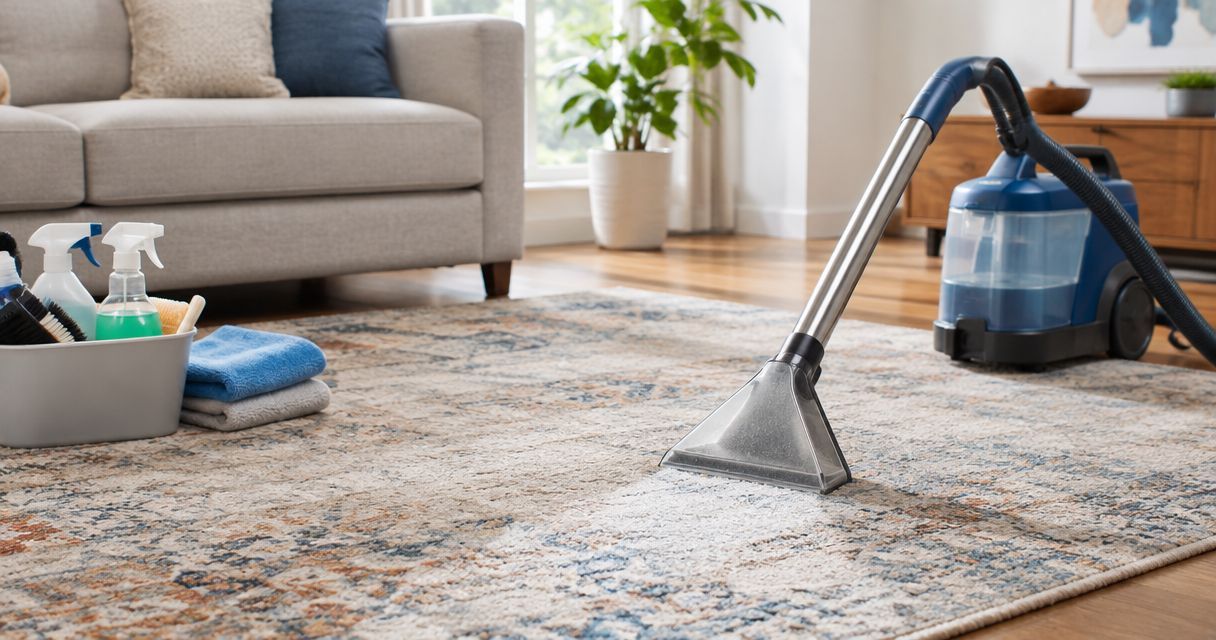
Professional carpet cleaning is the right next step when a stain survives appropriate spot treatment, repeatedly returns, or has an unknown history. Finesseproserv provides residential carpet cleaning for homeowners in Wilmington and surrounding Pender and Onslow counties.
Explain what spilled, which cleaners you used, and whether the area still smells or feels damp. That history matters more than calling the stain simply stubborn.
Professional carpet cleaning pros:
- Gives you a service option when household spot treatment has failed.
- Addresses carpet cleaning rather than requiring another product purchase.
- Lets you discuss stains, odors, and surrounding soiling together.
Professional carpet cleaning cons:
- Requires arranging a service visit rather than immediate DIY treatment.
- Cannot be assumed to reverse permanent discoloration or fiber damage.
Best for: Homeowners with persistent stains, repeated reappearance, or uncertainty about safe treatment.
Ask Finesseproserv about the satisfaction guarantee and its terms when requesting your personalized quote. A guarantee is not a reason to assume every mark is removable.
Verdict: Buy the service for unresolved carpet stains; request an assessment before expecting a particular result.
2. Manufacturer-approved spot cleaner: best for everyday spills
A carpet-manufacturer-approved spot cleaner is the strongest default for a known food or drink spill on compatible carpet. Approval narrows the choice before you compare stain claims.
Read both sets of instructions: the carpet’s care guidance and the cleaner’s label. A product marketed for carpet is not automatically suitable for every carpet fiber, backing, or dye.
Manufacturer-approved spot cleaner pros:
- Starts with compatibility rather than advertising claims.
- Provides instructions for the stains it is designed to address.
- Supports localized treatment without cleaning an entire room.
Manufacturer-approved spot cleaner cons:
- Does not cover stains outside its stated uses.
- Still requires testing and correct residue removal.
Best for: A clearly identified, localized household spill with no signs of material damage.
Use 2 clean white cloths: one for blotting during treatment and one for checking what remains. This separates a dirty cloth from your final inspection; it is not a performance claim or a substitute for label instructions.
Verdict: Buy a compatible spot cleaner for routine stains, not an unrestricted all-purpose cleaner.
3. Enzyme carpet cleaner: best for organic pet messes
Enzyme carpet cleaners use enzymes to act on particular organic materials. Choose a formulation whose label explicitly covers your carpet and the pet contamination involved.
A visible surface stain does not tell you how far a pet accident traveled. If odor returns after appropriate treatment, stop assuming the answer is simply more cleaner on the surface.
Enzyme carpet cleaner pros:
- Targets specified organic contamination.
- Offers a stain-specific approach to pet accidents.
- Provides product-specific application and contact instructions.
Enzyme carpet cleaner cons:
- Requires the label’s conditions and contact time to work as intended.
- Does not establish whether contamination extends into padding or flooring.
Best for: Organic pet messes on carpet explicitly permitted by the product label.
Do not combine an enzyme cleaner with other cleaning chemicals. For the distinction between a visible mark and a recurring smell, read the guide to removing pet stains and odor from carpet.
Verdict: Buy for compatible organic pet stains; hold further DIY treatment when odor keeps returning.
4. Oxygen-based stain remover: best for colored beverage marks
Oxygen-based carpet stain removers use oxidizing chemistry to treat suitable colored stains. They belong on your shortlist only when both the carpet instructions and product label permit their use.
Do not treat oxygen-based as a synonym for harmless. A product that changes a stain’s color also needs careful compatibility checks around the carpet’s own dyes.
Oxygen-based stain remover pros:
- Targets suitable colored food and beverage staining.
- Gives you a distinct option when the stain calls for oxidation.
- Includes treatment directions specific to its formulation.
Oxygen-based stain remover cons:
- Can change carpet color when unsuitable or misused.
- Is not interchangeable with chlorine bleach or household disinfectants.
Best for: Colored food or beverage marks on carpet that explicitly permits the selected product.
For your 2026 cleaning cupboard, choose compatibility over the broadest stain list. Test first, follow the stated application, and inspect the treated area after it dries.
Verdict: Buy only with confirmed compatibility; skip experiments on unknown fibers or dyes.
5. Carpet-compatible solvent remover: best for oily spots
A carpet-compatible solvent spot remover targets oily or greasy residue that water alone does not adequately address. The important words are carpet-compatible: a workshop degreaser or paint thinner is not a substitute.
Follow ventilation, application, and handling instructions exactly. Do not pour a solvent through the carpet or assume a larger amount produces a better result.
Carpet-compatible solvent remover pros:
- Matches the chemistry of oily contamination.
- Offers targeted treatment for a small, identified grease spot.
- Avoids repeatedly soaking an oily mark with water alone.
Carpet-compatible solvent remover cons:
- Carries handling and ventilation requirements.
- Unsuitable products or application can affect backing and adhesives.
Best for: A small grease or oil spot with clear product and carpet compatibility.
If the stain is extensive, unidentified, or already treated with several products, choose assessment instead of another chemical layer.
Verdict: Buy for a confirmed compatible oily spot; skip household solvent substitutions.
6. Water-assisted blotting: best for fresh spills
Water-assisted blotting is a first response, not a universal stain-removal formula. On carpet whose care instructions permit water, blot up the spill and use a lightly dampened cloth as directed by those instructions.
Work from the outside toward the center. Press and lift rather than scrubbing the spill across neighboring fibers.
Water-assisted blotting pros:
- Removes spill material before additional treatment.
- Avoids introducing a new cleaning formulation.
- Lets you check whether a simple response is enough.
Water-assisted blotting cons:
- Does not address every colored or oily stain.
- Excess water risks wetting material below the pile.
Best for: A fresh, water-soluble spill on water-compatible carpet.
Keep 1 stain under treatment at a time. That makes it easier to track the product used and recognize a reaction before repeating the same approach elsewhere.
Verdict: Use immediately when permitted; skip repeated soaking if the mark remains.
A safer spot-treatment sequence
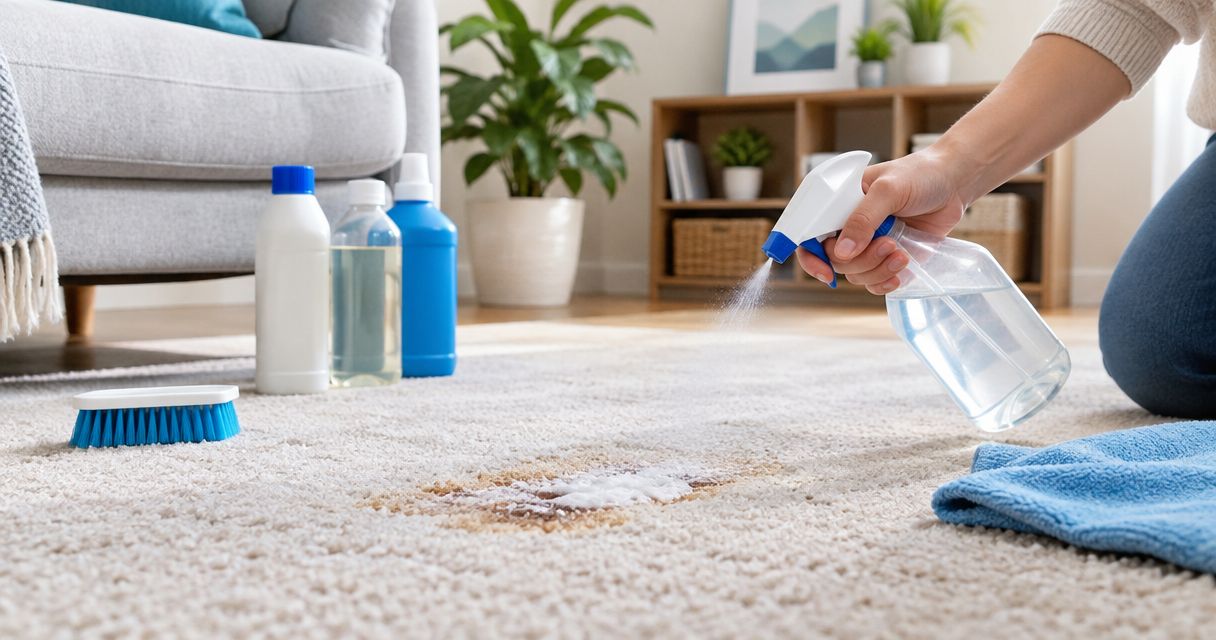
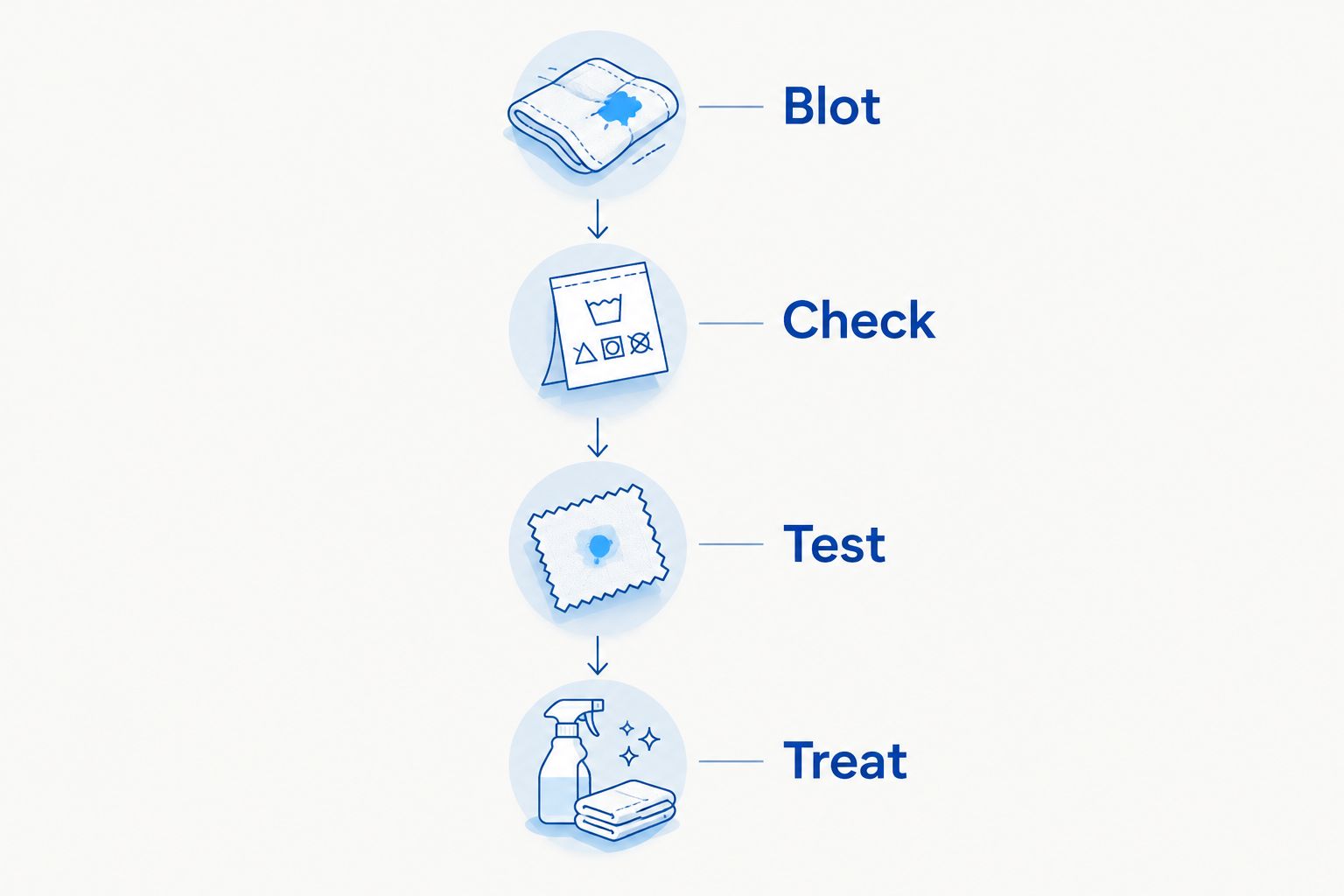
Use these 4 steps before escalating a household stain:
- Blot: Lift loose material without pushing it deeper. Blot liquid with a clean white cloth rather than rubbing.
- Check: Identify the spill and read the carpet’s care instructions alongside the cleaner’s label.
- Test: Treat an inconspicuous area according to the instructions. Check for dye transfer, discoloration, or texture change.
- Treat: Apply only as directed, remove residue as instructed, and let the area dry before judging the result.
Stop if carpet color transfers, the texture changes, or the smell becomes stronger. Repeated applications without a diagnosis are not a stain-removal plan.
Before requesting a 2026 service quote, answer 3 questions: What caused the stain? What have you applied? Does the area smell or stay damp? Share those answers with Finesseproserv so the conversation starts with the actual problem.
Request a carpet-cleaning quote
Describe the stain, previous treatments, and your Pender County location for a personalized quote.
How these options are ranked
The ranking follows stain match, carpet compatibility, residue control, moisture control, and the point at which DIY treatment should stop. It is a use-case ranking, not a claim that every product within a category performs equally.
Professional cleaning leads for unresolved stains. Manufacturer-approved spot cleaner is the household default; enzyme, oxygen-based, and solvent treatments serve narrower needs.
Which carpet stain remover should you choose?
Choose a manufacturer-approved carpet spot cleaner for an identifiable everyday stain. Choose professional carpet cleaning when appropriate treatment fails or the stain’s history is unknown.
For 2026, build your decision around the carpet and contamination—not a collection of increasingly strong bottles. Delicate area rugs and upholstery need their own care assessment; do not transfer a carpet-cleaning recommendation to them automatically.
FAQ
What’s the best carpet stain remover for tough stains?
The best carpet stain remover matches the stain and is permitted by the carpet manufacturer. Use a compatible spot cleaner for an identifiable spill and professional assessment for persistent or unexplained stains.
What should I use for pet stains on carpet?
Use an enzyme carpet cleaner whose label covers the pet contamination and your carpet. Recurring odor requires further assessment because a surface stain does not establish whether material underneath is affected.
Is an oxygen-based carpet cleaner better than an enzyme cleaner?
Neither is better for every stain. Oxygen-based treatments address suitable colored staining, while enzyme cleaners target specified organic contamination; compatibility determines whether either belongs on your carpet.
Can I use bleach to remove a carpet stain?
Do not use household chlorine bleach as a general carpet stain remover. It can permanently alter carpet color, and cleaning cannot reverse that color loss.
Should I scrub a fresh carpet spill?
Blot a fresh carpet spill rather than scrubbing it. Use a clean white cloth and work inward from the edge to avoid spreading the spill.
Why does a carpet stain return after cleaning?
A stain can reappear when contamination below the surface moves upward during drying or when remaining residue collects soil. Stop repeating the same treatment and request assessment of the affected area.
Who should I contact for carpet stains in Pender County in 2026?
Finesseproserv provides residential carpet cleaning for homeowners in Pender County and surrounding service areas. Request a personalized quote and describe the stain, previous treatments, and any recurring odor.
One last thing
A spot that looks like a stain can be missing color rather than added dirt. If the mark appeared after bleach exposure or the fibers are visibly damaged, another stain remover is the wrong purchase.
Ask about carpet patching instead of continuing to clean a damaged section. Carpet patching and power stretching are offered services, but they solve repair problems—not every discoloration or stain. Call or request a quote and describe what happened before choosing the next treatment.