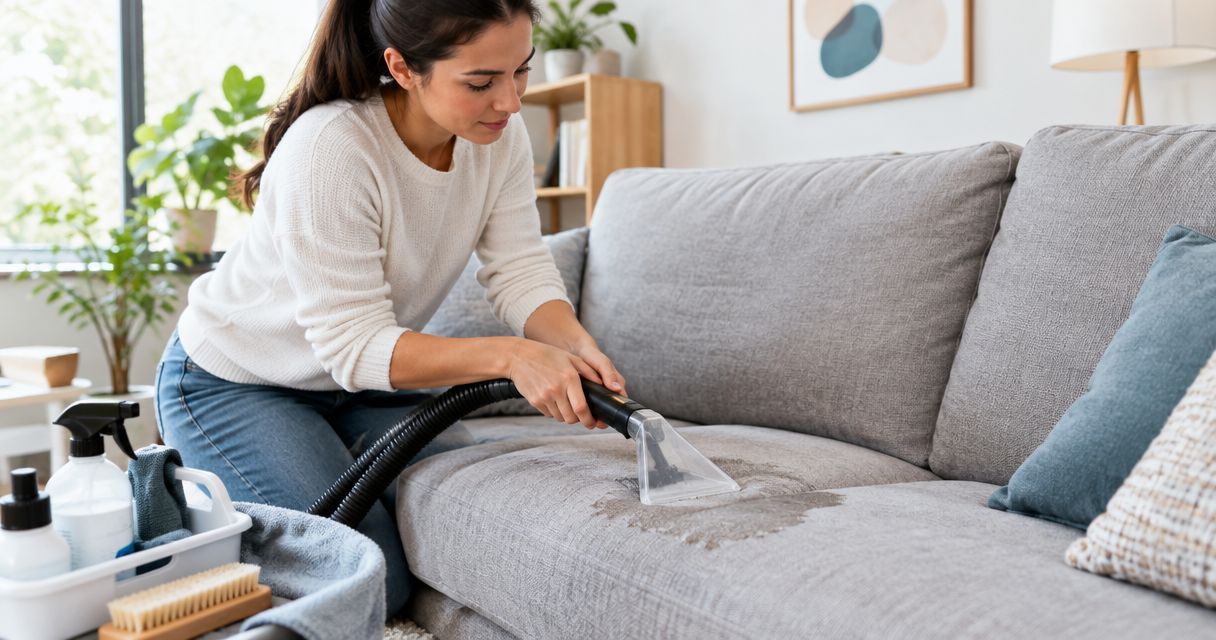
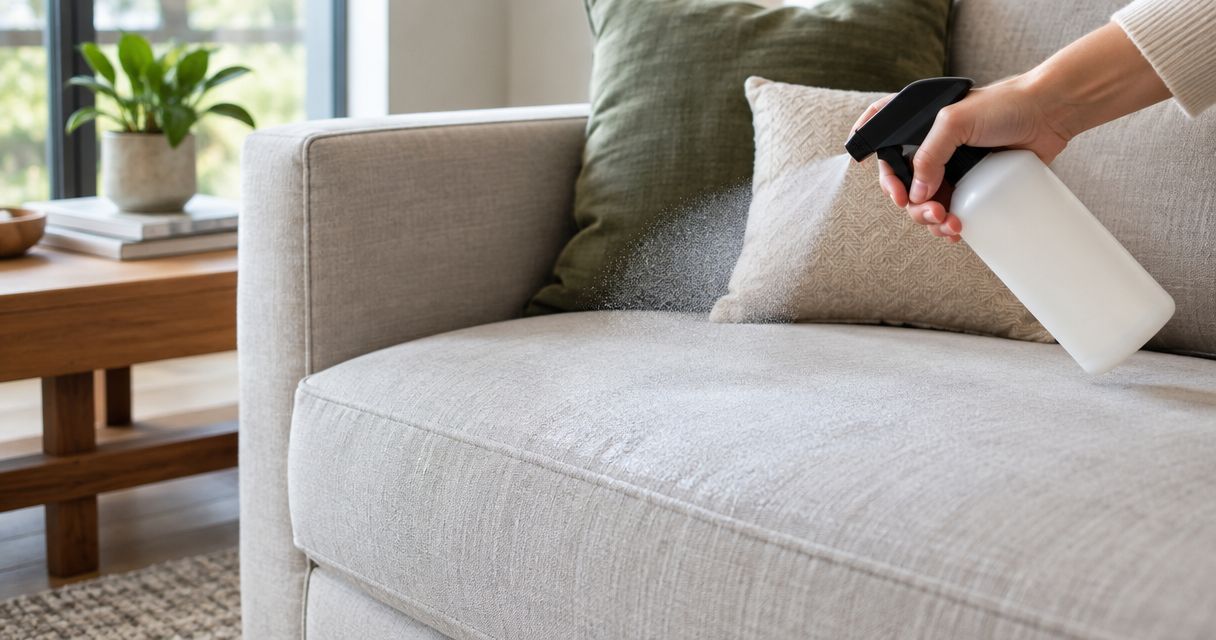
Best overall: a manufacturer-approved fabric protector for your upholstery. Best for delicate fabrics: professional assessment before treatment. Best DIY option: a ready-to-use spray explicitly labeled for your fabric. For homeowners in Pender County, Finesse Pro Services is a residential upholstery-cleaning option when cleaning needs to come before protection; this 2026 guide ranks protection approaches by suitability, not unsupported brand claims.
- The best fabric protector for upholstery matches both the furniture care instructions and the protector label.
- Choose manufacturer-approved treatment for routine upholstery; seek professional assessment for delicate or unidentified fabrics.
- Finesse Pro Services offers residential upholstery cleaning for homeowners in Wilmington and surrounding Pender and Onslow counties.
- Washable covers provide a removable barrier when spray-on fabric protection is unsuitable.
Why this matters
A fabric protector is not a substitute for cleaning, and it cannot make every upholstery material stain-proof. Textile protectors are intended to resist particular types of soiling or wetting, as stated on their labels. That distinction matters when you compare a water-repellent treatment with a product that also claims resistance to oil-based stains.
For a Pender County sofa used by children, pets, or visiting family, start with the actual problem: spills, dirty armrests, or damage to the fabric. Protection addresses only part of that list. Existing stains need assessment, while tears, worn fibers, and loose seams need a different solution.
Choose protection for the fabric you own, not for the strongest promise on the bottle. Your 2026 shortlist should begin with compatibility and care instructions.
What makes the best fabric protector for upholstery?
Use these criteria before choosing a treatment:
- Fabric compatibility: The protector label must include your material and must not conflict with the furniture manufacturer's instructions.
- Relevant protection: Match the stated protection to your concern. Water repellency does not establish resistance to every food, oil, or pet stain.
- Appearance and feel: A hidden-area test checks for discoloration, residue, or a change in texture before broad application.
- Application requirements: Follow the product's ventilation, drying, handling, and reapplication directions rather than borrowing instructions from another spray.
- Future care: Check whether the treatment changes how you should clean the furniture or whether cleaning requires reapplication.
No single protector wins on every fabric. A practical ranking puts confirmed compatibility ahead of convenience, then separates professional assessment, DIY application, and removable physical protection.
Upholstery protection options at a glance
The options below are ranked by decision priority. A washable cover is a physical alternative, not a chemical fabric-protector treatment.
| Rank | Option | Best for | Standout feature | Key limitation |
|---|---|---|---|---|
| 1 | Manufacturer-approved fabric protector | Routine sofas with documented care instructions | Starts with the furniture maker's guidance | Approval must apply to the actual upholstery |
| 2 | Professionally assessed protector treatment | Delicate, valuable, or unidentified fabrics | Suitability is assessed before application | Assessment can result in a recommendation against treatment |
| 3 | Ready-to-use upholstery protector | DIY treatment of clearly compatible fabric | Application instructions are available on the product label | User error and incompatible application remain risks |
| 4 | Washable fitted cover | Homes avoiding spray-on treatment | Provides a removable physical barrier | Changes the furniture's appearance and fit |
1. Manufacturer-approved protector: best for routine sofas
A manufacturer-approved fabric protector is the default choice when your furniture maker provides a clear recommendation for the exact upholstery. Check whether that recommendation names a product, a treatment category, or an application restriction. A general statement about easy-care fabric is not approval for every aftermarket spray.
This approach removes an avoidable decision: guessing whether a treatment belongs on your sofa. It does not remove the need to read the protector label, test an inconspicuous area, and follow application instructions.
Manufacturer-approved protector pros:
- Connects the treatment decision to the furniture's documented care requirements.
- Provides a clear starting point when several sprays make similar claims.
- Helps you identify restrictions before treating visible cushions or arms.
Manufacturer-approved protector cons:
- Furniture documentation does not always identify an acceptable aftermarket treatment.
- Approval for one fabric or furniture collection does not establish approval for another.
- It does not guarantee removal or prevention of every stain.
Best for: Homeowners with identifiable upholstery and explicit manufacturer guidance.
Before buying in 2026, check your furniture paperwork against the current product label. If the names or instructions differ, ask the furniture manufacturer to clarify rather than assuming the newer bottle is equivalent.
Verdict: Buy only when the treatment is explicitly compatible with your upholstery.
2. Professionally assessed treatment: best for delicate upholstery
Professional assessment puts fabric identification and condition ahead of applying a protector. That is the right order for delicate upholstery, heirloom pieces, unusual blends, or furniture with no readable care information. The assessment should establish whether cleaning is needed and whether any proposed treatment is appropriate.
Finesse Pro Services offers upholstery cleaning for residential customers in Wilmington and surrounding Pender and Onslow counties. For upholstery-cleaning guidance, the company is best suited to homeowners seeking a local service rather than another bottle to apply without assessment. Ask separately whether a compatible protector treatment is available for your particular furniture.
Professionally assessed treatment pros:
- Gives you a route to discuss fabric condition before choosing a treatment.
- Allows cleaning and protection questions to be considered together.
- Creates an opportunity to explain previous stains, treatments, and care problems.
Professionally assessed treatment cons:
- An assessment does not establish that a safe protector exists for the fabric.
- A provider's cleaning service does not automatically include protector application.
- You still need the proposed treatment's identity and aftercare instructions.
Best for: Homeowners with delicate, valuable, previously treated, or unidentified upholstery.
Ask the provider what will be applied, why it suits the fabric, and what a successful hidden-area test establishes. Also ask about the satisfaction guarantee and its terms rather than treating it as a promise that every stain will disappear.
Verdict: Hold treatment until the fabric and proposed protector have been assessed.
3. Ready-to-use spray: best for clearly compatible DIY upholstery
A ready-to-use upholstery protector is a consumer-applied treatment with preparation, application, and safety directions on its label. It belongs on your shortlist only when the label explicitly covers your fabric and the furniture instructions allow the treatment. A spray labeled for clothing or outdoor gear is not automatically suitable for an indoor sofa.
DIY application makes sense when you can follow every instruction without improvising. If the label requires ventilation or a drying period that your room cannot accommodate, choose another approach rather than shortening the directions.
Ready-to-use upholstery protector pros:
- Provides product-specific application directions for the homeowner.
- Lets you check the stated fabric exclusions before starting.
- Allows a hidden-area test before treating the main seating surfaces.
Ready-to-use upholstery protector cons:
- Uneven application can leave inconsistent treatment across the furniture.
- Applying too much does not establish better protection and can cause unwanted residue.
- A successful test does not prove resistance to every possible spill.
Best for: Homeowners with known, compatible upholstery who can follow the full label instructions.
For a 2026 DIY purchase, compare the protection claim and exclusions, not just the word fabric on the packaging. Avoid stacking different treatments unless their manufacturers explicitly permit that combination.
Verdict: Buy for confirmed-compatible fabric; skip experimental application.
4. Washable fitted cover: best for avoiding spray-on treatment
A washable fitted cover places a removable textile layer between everyday use and your upholstery. It is not a chemical protector and should not be described as equivalent to one. Its usefulness comes from removability and coverage, not an assumed stain-repellent finish.
Choose a cover that fits the furniture and has care instructions you can follow. Washable does not mean waterproof, and a loose cover can leave arms, seams, or cushion edges exposed.
Washable fitted cover pros:
- Avoids applying an aftermarket spray to the original upholstery.
- Can be removed for cleaning according to its own care label.
- Lets you inspect the underlying fabric rather than hiding it permanently.
Washable fitted cover cons:
- Changes the furniture's appearance and can shift during use.
- Liquids can reach the upholstery unless the cover has an appropriate barrier.
- Coverage depends on the fit, including around arms and cushion gaps.
Best for: Homeowners who want removable protection or whose upholstery instructions rule out the proposed spray.
Do not leave a wet cover against the sofa. Remove it, inspect the upholstery underneath, and follow the care instructions for each material separately.
Verdict: Buy as a physical alternative, not as a substitute for verified liquid protection.
Check compatibility before treating the sofa
Use 3 checks before committing to upholstery protection:
- Care tag: Identify the fabric and read the furniture instructions. Common upholstery cleaning codes include W, S, W/S, and X, but a cleaning code alone does not authorize a protector.
- Protector label: Check the allowed materials, exclusions, safety directions, and preparation requirements. A conflicting instruction is a reason to stop.
- Hidden test: Follow the label's test procedure in an inconspicuous location and allow the specified drying time before assessing appearance and feel.
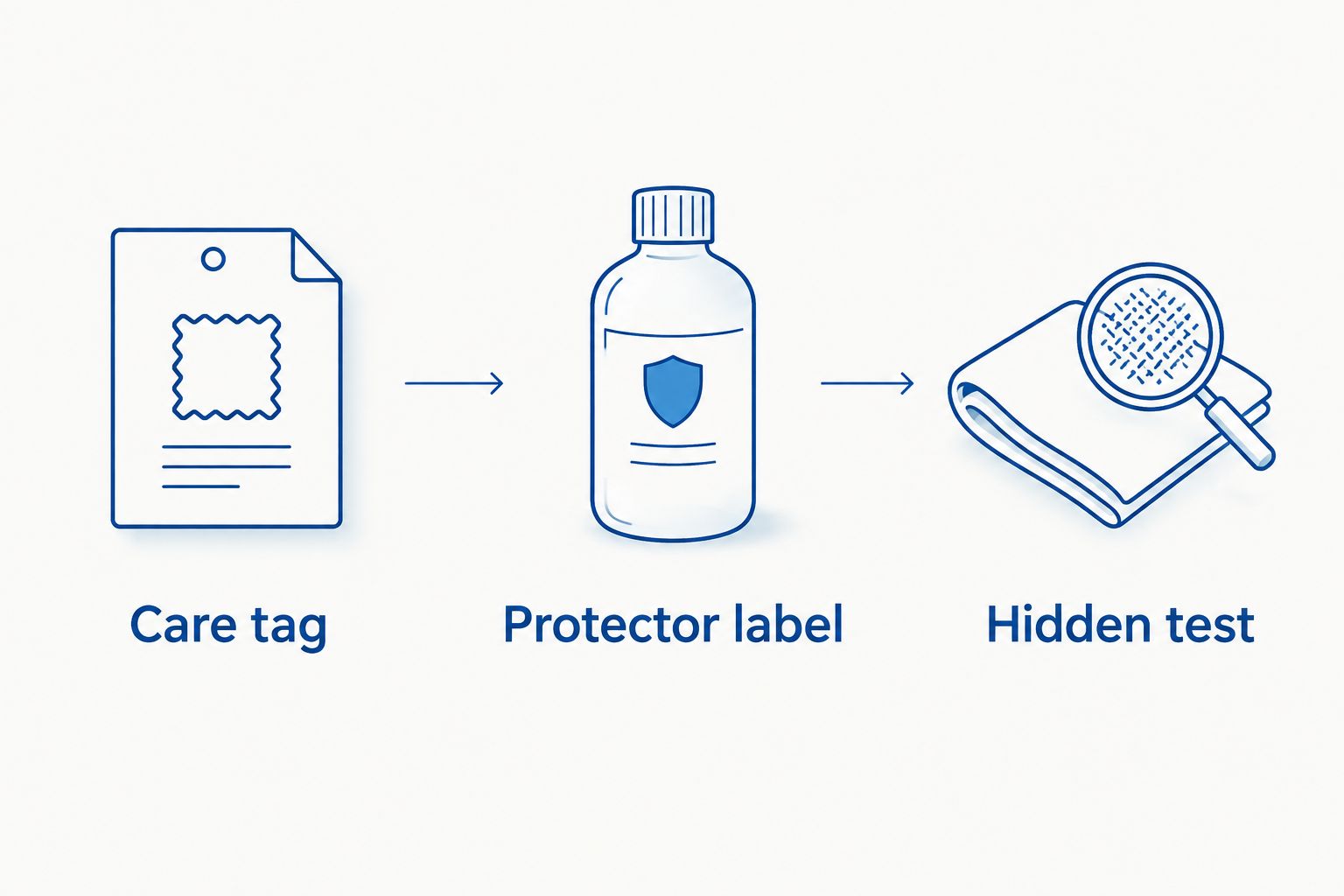
Take 2 photos before requesting advice: one of the care tag and one showing the whole piece of furniture. Add a close-up of any stain or damage when relevant. These are useful preparation steps, not a substitute for inspection.
If you have removable cushions, identify 1 cushion with a concealed test location before beginning. Do not assume a removable cushion cover is machine-washable; its construction and care instructions still control the cleaning method.
Cleaning comes before the protection decision
Protection does not remove the grime already on an armrest or the residue from an earlier spill. Before treating upholstery, establish whether the surface needs cleaning and follow the protector's preparation directions. Applying treatment over a problem makes that problem harder to assess later.
Tell your cleaner about earlier spot-cleaning attempts, previous protectors, pet accidents, and any discoloration. Keep the product names or packaging when you have them. That information is more useful than describing a stain simply as old.
For your 2026 service request, ask Finesse Pro Services for a personalized upholstery-cleaning quote and explain that you also want guidance on protection. Confirm the proposed scope before booking; do not assume cleaning includes a protector treatment.
Request an upholstery cleaning quote
Describe your furniture, fabric care tag, and stains when requesting a personalized quote.
How these options are ranked
This ranking prioritizes documented compatibility, relevant protection, appearance, application requirements, and future care. It does not rank named chemicals by laboratory performance or claim that one commercial product outlasts another.
Manufacturer-approved treatment comes first because it starts with furniture-specific guidance. Professional assessment takes priority when the material is uncertain. DIY spray belongs after compatibility is established, while a removable cover offers a different route when chemical treatment is not suitable.
Which upholstery protection should you choose?
Choose a manufacturer-approved protector when you have clear fabric-specific guidance. That is the default recommendation for this 2026 guide. If you cannot identify the upholstery or the instructions conflict, pause and request an assessment instead.
Choose a compatible DIY spray only when you can meet its application requirements. Choose a washable cover when removable physical protection better matches your needs. None of these choices makes prompt spill cleanup unnecessary.
For Pender County homeowners with stained or soiled seating, start with the cleaning decision. Finesse Pro Services provides residential upholstery cleaning; confirm any additional protection service directly before including it in your plans.
FAQ
What's the best fabric protector for upholstery in 2026?
The best fabric protector for upholstery is one explicitly compatible with your fabric and permitted by the furniture manufacturer's instructions. Start with manufacturer guidance, then check the protector label and complete its hidden-area test.
Is professional upholstery protection better than a DIY spray?
Professional assessment is the better starting point for delicate, valuable, or unidentified upholstery. That does not establish that every professional treatment performs better than every DIY spray; compatibility and application instructions still decide suitability.
Can I use fabric protector on any sofa?
No, fabric protector is not suitable for every sofa. Check both the furniture instructions and the protector's material exclusions, and do not use a textile spray on leather unless it is explicitly intended for that material.
Does an upholstery fabric protector make furniture stain-proof?
No, an upholstery fabric protector does not make furniture stain-proof. Its label defines the intended protection, and spills still require prompt attention using the furniture's approved care method.
Should I clean my upholstery before applying protector?
Resolve cleaning needs before applying protector and follow the treatment's preparation instructions. A protector does not remove existing stains, dirt, or cleaning residue.
Does Finesse Pro Services offer upholstery cleaning in Pender County?
Yes, Finesse Pro Services provides residential upholstery cleaning in Wilmington and surrounding Pender and Onslow counties. Request a personalized quote and ask separately whether a protector treatment is available and suitable for your furniture.
Is a washable sofa cover the same as fabric protection?
No, a washable sofa cover is a removable physical barrier, not a chemical fabric-protector treatment. Its ability to block liquids depends on its construction, and washable alone does not mean waterproof.
One last thing
An upholstery cleaning code is not a protector approval. That small distinction prevents a common shortcut: seeing W on a tag and assuming any water-based spray is acceptable. Keep the care instructions and protector label together so the next cleaning decision starts with facts rather than memory.