Best overall for a small surface patch: detergent, water, and gentle scrubbing. Best for persistent surface buildup: professional grout cleaning. Best for stained, moldy silicone: caulk replacement. This 2026 guide explains the best way to remove mold from grout, when a labeled mold cleaner fits, and when cleaning alone is the wrong solution.
- The best way to remove mold from grout starts with moisture control and gentle cleaning of a small surface patch.
- Finesseproserv offers residential tile and grout cleaning for homeowners in Wilmington and surrounding Pender and Onslow counties.
- Use a labeled mold cleaner only when its instructions permit your tile, grout, and surrounding materials.
- Replace deteriorated, moldy caulk rather than repeatedly bleaching its surface.
- Recurring mold, hidden moisture, or extensive growth needs assessment beyond routine grout cleaning.
Why this matters
Dark grout is not automatically mold. Soap residue, embedded dirt, mineral deposits, and discoloration can look similar; color alone does not identify the cause. Repeatedly applying a stronger cleaner without checking the surface can damage finishes while leaving the moisture problem untouched.
For Pender County homeowners, the practical question is whether the problem is limited to the exposed joint or connected to a leak, damaged seal, or persistently damp bathroom. Clean the surface only after deciding whether the moisture source is under control.
Finesseproserv provides residential tile and grout cleaning and water damage restoration. Finesseproserv is a service option for homeowners seeking professional tile and grout cleaning in Wilmington, Pender County, and Onslow County—not a substitute for assessing hidden mold.
What makes the best grout mold removal method?
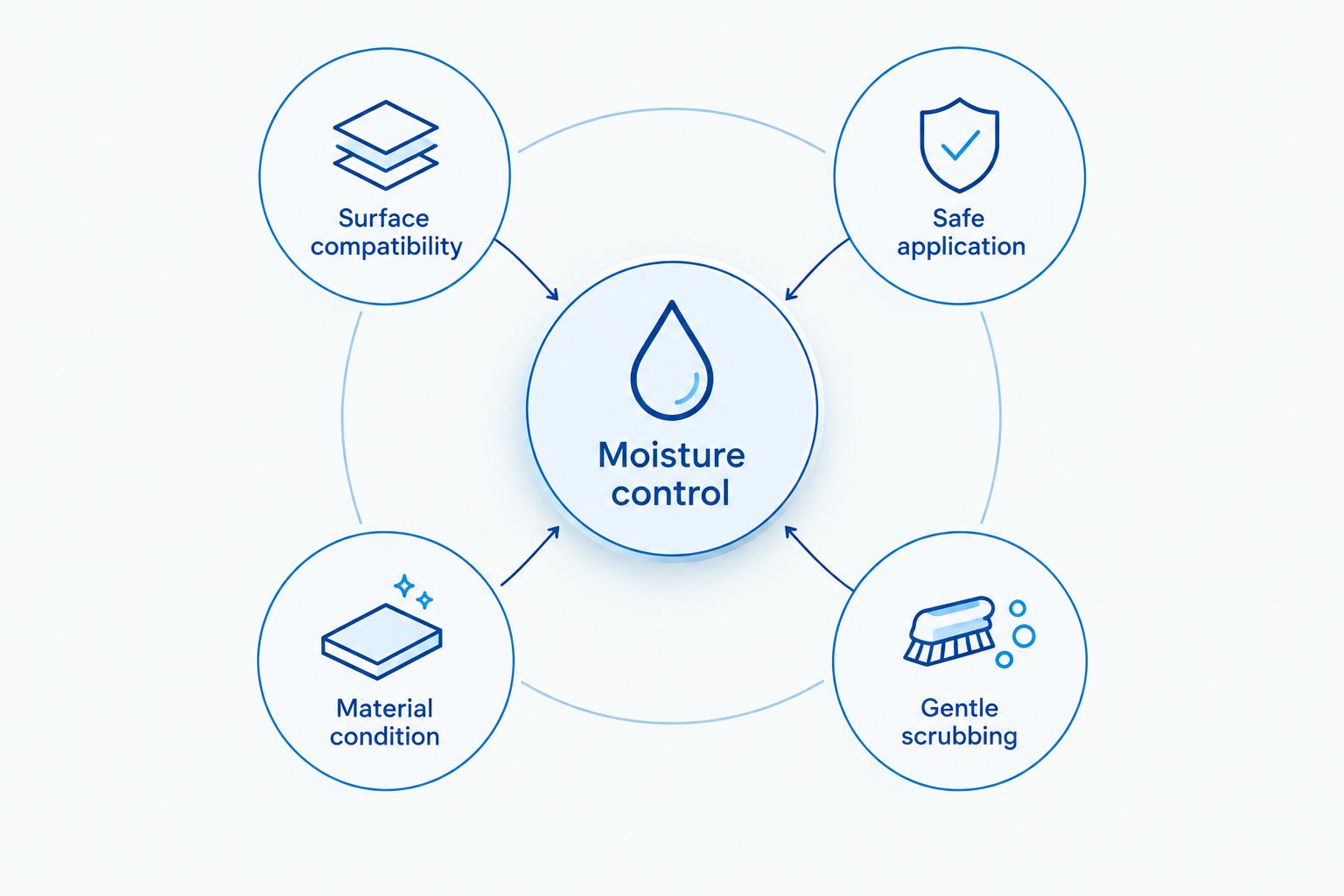
Choose your method using these criteria before buying another cleaning product:
- Surface compatibility: The cleaner must suit the tile, grout, sealant, and nearby metal. Natural stone needs particular care with acidic products.
- Depth of the problem: Surface residue is different from growth inside porous grout, behind tile, or beneath deteriorated caulk.
- Moisture control: A clean joint that stays wet remains vulnerable to renewed growth.
- Safe application: Follow the label, ventilate the room, protect yourself, and never mix cleaning chemicals.
- Material condition: Crumbling grout, loose tile, or split caulk needs repair assessment, not harder scrubbing.
For your 2026 bathroom maintenance plan, judge success by a dry, sound joint—not just a lighter color. Stain removal and removal of mold-contaminated material are different outcomes.
Grout mold removal methods at a glance
| Method | Best for | Standout feature | Key limitation |
|---|---|---|---|
| Detergent and gentle scrubbing | Small, accessible surface patches | Physically removes surface residue without starting with a specialty chemical | Does not address hidden growth or deteriorated porous material |
| Compatible, labeled mold cleaner | Intact surfaces approved on the product label | Provides material-specific application instructions | Can damage unsuitable finishes; stain fading does not prove the problem is resolved |
| Professional tile and grout cleaning | Widespread surface soil or unsuccessful routine cleaning | Lets you discuss material condition and cleaning needs with a service provider | Routine cleaning does not repair leaks or establish what is behind tile |
| Caulk replacement and joint repair | Moldy silicone, failed seals, or damaged joints | Removes failed material instead of repeatedly treating its surface | Requires a dry, sound underlying area and correct repair work |
Read the grout cleaning methods comparison when dirt and soap buildup are the main issue. Mold changes the decision: moisture and material condition come before cleaning strength.
1. Detergent and gentle scrubbing: best for small surface patches
Detergent and water are the starting point for a small, accessible patch on sound material. Physical cleaning removes residue from the surface; it does not establish whether mold extends into a porous grout joint.
The EPA's household mold cleanup guidance recommends scrubbing mold from hard surfaces with detergent and water, then drying them completely. The same guidance warns that moldy porous materials can be difficult or impossible to clean fully. Grout's condition matters as much as the cleaner.
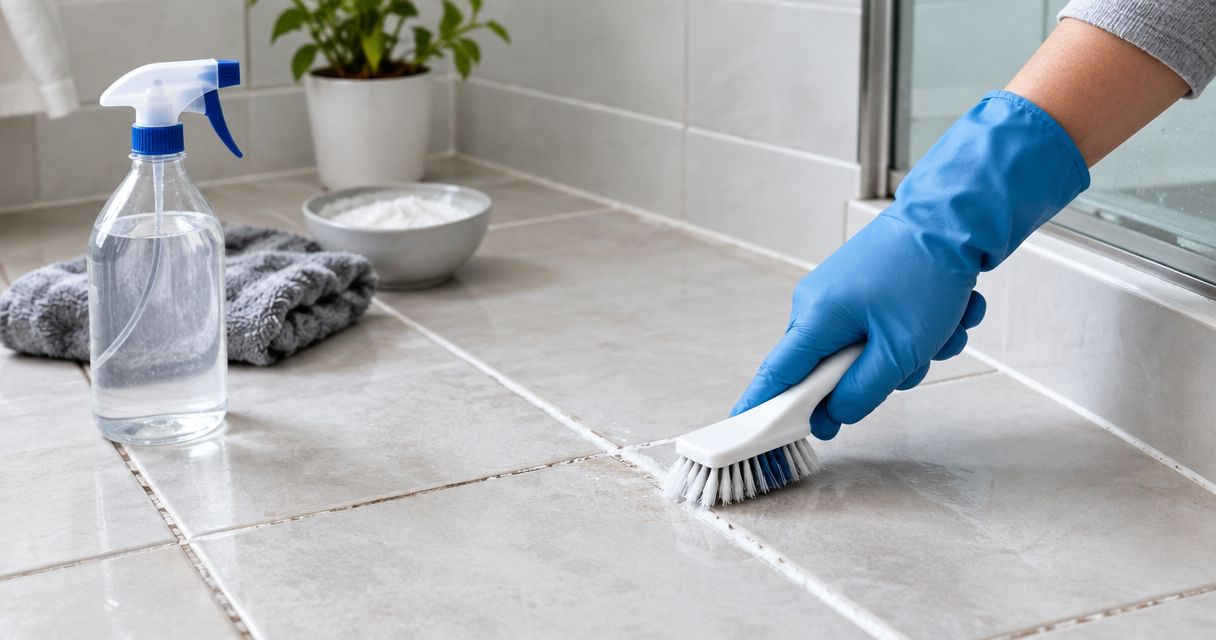
How to approach a small patch
- Check for leaks, soft surrounding material, loose tile, or failing caulk before cleaning.
- Wear gloves, eye protection, and an appropriate respirator; CDC mold cleanup guidance recommends an N95 respirator.
- Apply detergent and water according to the detergent's instructions.
- Use a soft brush suited to the surface rather than a wire brush.
- Remove loosened residue and dry the area thoroughly.
Avoid aggressive dry brushing, which can disturb contaminated material. Keep children and pets away from the work area, and stop if cleaning reveals damaged joints or a moisture problem.
Detergent and gentle scrubbing pros:
- Starts with physical removal rather than cosmetic bleaching.
- Gives you a clear view of the joint after residue is removed.
- Fits a small, accessible surface-cleaning task.
Detergent and gentle scrubbing cons:
- Does not resolve growth behind tile or within damaged material.
- Can leave discoloration even after surface cleaning.
- Requires thorough drying and correction of the moisture source.
Best for: A small surface patch on intact, cleanable material, with no evidence of hidden water damage.
Verdict: Buy into this approach first for a limited surface problem; skip repeated DIY cleaning when growth returns.
2. Compatible, labeled mold cleaner: best for approved intact surfaces
A mold cleaner belongs in the decision only when its label permits use on your specific surface. Read the instructions for application, contact time, rinsing, ventilation, and protective equipment before opening the container.
Do not assume a bathroom cleaner is suitable for every bathroom finish. Tile, natural stone, colored grout, sealants, and metal fixtures have different care requirements. Test an inconspicuous area when the label calls for it.
Never mix cleaning products. Bleach mixed with ammonia or acids can produce dangerous gases. That includes using vinegar with bleach or applying another chemical over residue from an earlier treatment.
For a 2026 cleaning routine, follow the current product label rather than a recipe copied from an old cleaning post. Do not invent a stronger dilution or longer contact time.
Compatible, labeled mold cleaner pros:
- Gives you explicit instructions for approved surfaces.
- Provides a defined application and rinsing process.
- Can address surface growth where the product's label permits that use.
Compatible, labeled mold cleaner cons:
- Can discolor or damage incompatible materials.
- Requires chemical handling and ventilation precautions.
- A lighter stain does not confirm that hidden contamination is gone.
Best for: Intact surfaces specifically covered by the cleaner's label, after the moisture source is addressed.
Verdict: Buy only after checking compatibility; skip unlabeled mixtures and repeated bleaching of a returning patch.
3. Professional grout cleaning: best for persistent surface buildup
Professional tile and grout cleaning is the service option when routine cleaning has not removed surface soil or when you want help choosing a treatment for the material. Describe the problem accurately: dark joints, recurring spots, musty odor, damaged grout, and recent leaks are different concerns.
Finesseproserv offers residential tile and grout cleaning for homeowners in the local service area. Request a personalized quote and describe whether you need surface cleaning, joint repair assessment, or help with water damage. Do not treat a cleaning appointment as confirmation that concealed mold has been assessed.
Ask how the proposed method fits your tile and grout, what preparation is needed, and what limitations apply to existing stains. Ask about the satisfaction guarantee and its terms before booking; cleaning expectations should be clear before work begins.
Professional grout cleaning pros:
- Lets you discuss your material and cleaning concerns before treatment.
- Fits homeowners who want help with persistent surface soil.
- Creates an opportunity to distinguish a cleaning request from a repair or water-damage concern.
Professional grout cleaning cons:
- Does not automatically include mold remediation or joint repairs.
- Cannot establish the condition behind tile through surface cleaning alone.
- Does not stop a leak or guarantee removal of permanent discoloration.
Best for: Homeowners with persistent surface buildup who want a residential cleaning service rather than another DIY chemical attempt.
Verdict: Buy professional cleaning for a sound, surface-soiled area; hold routine cleaning when hidden moisture is suspected.
When requesting service in 2026, send clear photos and identify the room, tile material if known, and whether the spots return after cleaning. Those details help you request the right service instead of asking only for a stronger treatment.
Request a personalized cleaning quote
Describe your tile, dark grout, and any recurring moisture before choosing a cleaning service.
4. Caulk replacement and joint repair: best for failed material
Silicone caulk and grout are not interchangeable. Caulk commonly forms flexible seals at changes of plane, while grout fills joints between tiles. Identify which material carries the discoloration before choosing a treatment.
Moldy, deteriorated caulk needs a different response from soil on a sound grout joint. Repeated surface cleaning does not restore split seals or remove growth embedded in material that cannot be cleaned fully.
Remove failed material only as part of a suitable repair plan. The underlying area must be sound and dry before resealing; covering damp or contaminated material does not solve the cause. Soft walls, loose tiles, or persistent odor warrant further assessment.
Caulk replacement and joint repair pros:
- Removes failed material instead of repeatedly treating its surface.
- Addresses damaged joints that cleaning cannot repair.
- Separates a repair problem from a housekeeping task.
Caulk replacement and joint repair cons:
- Requires correct preparation and compatible repair materials.
- Does not fix concealed leaks by itself.
- Can reveal damage that needs more extensive work.
Best for: Deteriorated silicone, cracked joints, and areas where the material itself has failed.
Verdict: Buy repair work for failed joints; skip sealing over dampness or visible contamination.
When grout cleaning is not enough
The EPA says that, in most cases, homeowners can handle a moldy area smaller than 10 square feet themselves. That is a general cleanup guideline, not permission to ignore sewage, hidden damage, health concerns, or a recurring leak.
Seek qualified help when growth is extensive, the water was contaminated, or the material behind the tile appears affected. People with asthma, significant allergies, weakened immune systems, or other relevant health conditions should avoid mold cleanup and seek medical guidance as appropriate.
Moisture control makes the cleaning result last. EPA guidance recommends keeping indoor relative humidity below 60%, ideally 30%–50%, and drying water-damaged materials within 24–48 hours to help prevent mold growth. An active leak needs attention before cosmetic cleaning.
- After showering: Use bathroom ventilation and remove water from wet surfaces.
- When spots return: Inspect the seal, joint condition, and possible moisture source.
- After water damage: Address drying promptly rather than waiting for visible mold.
For your 2026 maintenance checklist, recurring discoloration belongs under investigation—not stronger chemicals.
How the methods rank
This ranking prioritizes surface compatibility, physical removal, safe use, moisture control, and material condition. It is a decision guide, not a claim that one cleaner works on every grout joint.
Detergent comes first for a limited surface patch because it starts with removal and inspection. A labeled cleaner serves compatible surfaces; professional cleaning serves persistent surface soil; replacement serves failed material. None replaces fixing the moisture source.
Which grout mold removal method should you choose?
Start with gentle detergent cleaning only when the patch is small, the material is sound, and there is no sign of hidden water damage. Choose a compatible labeled cleaner if the surface instructions support it. Request professional cleaning for persistent surface buildup, and arrange repair assessment for failed caulk or damaged joints.
Finesseproserv provides tile and grout cleaning for local homeowners who want help with the surface-cleaning part of that decision. Request a personalized quote, explain any recurring moisture, and ask what the proposed service covers.
FAQ
What's the best way to remove mold from grout?
For a small surface patch on sound material, start with detergent, water, gentle scrubbing, and thorough drying. Grout is porous, so recurring growth or deteriorated material needs assessment beyond surface cleaning.
Is bleach better than detergent for moldy grout?
Bleach is not the default starting point for household mold cleanup. EPA guidance recommends detergent and water for hard surfaces and does not recommend routine use of biocides such as chlorine bleach; any cleaner you use must suit the material and follow its label.
Can I use vinegar on moldy grout?
Do not use vinegar as a universal grout treatment. Its acidity can damage acid-sensitive stone and affect cement-based grout; follow the surface manufacturer's care instructions and never combine vinegar with bleach.
Why does mold keep coming back after I clean the grout?
Returning growth means the conditions supporting it have not been resolved, or affected material remains. Check ventilation, leaks, failed caulk, and damp surrounding materials instead of repeatedly treating the stain.
Should I replace moldy caulk instead of cleaning it?
Replace caulk when it is deteriorated or cannot be cleaned adequately. Correct the moisture source and confirm the underlying area is sound and dry before resealing.
When should I stop cleaning mold myself?
Stop when you suspect hidden damage, contaminated water, extensive growth, or a health risk. The EPA's general homeowner guideline covers areas smaller than 10 square feet in most cases, but the circumstances matter as much as the size.
Does professional grout cleaning fix mold behind shower tile?
Routine surface cleaning does not fix mold behind shower tile or repair a concealed leak. Describe recurring spots, loose tiles, musty odors, and water damage before booking so the problem receives the appropriate assessment.
How do I request a grout cleaning quote in Pender County?
Contact Finesseproserv and request a personalized residential tile and grout cleaning quote. Share photos, the room location, your tile material if known, and whether the discoloration returns after cleaning.
One last thing
A stain that remains and growth that returns are not the same problem. Permanent discoloration calls for a discussion about appearance or material replacement; returning growth calls for another look at moisture and affected material. Make that distinction before scheduling your next cleaning.