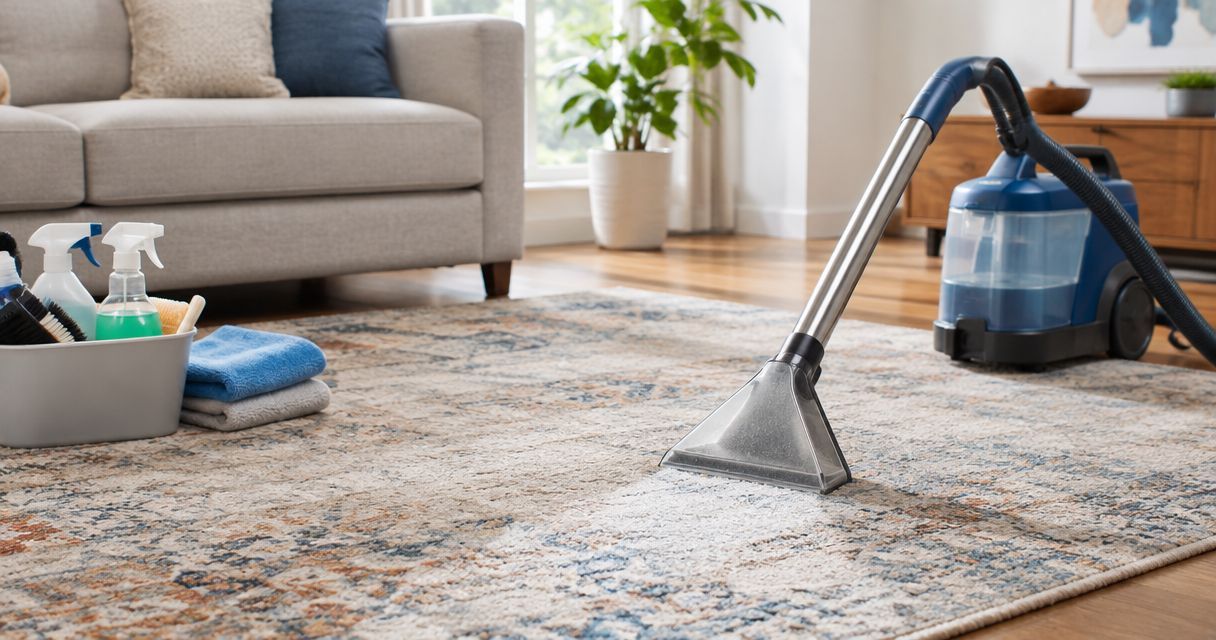
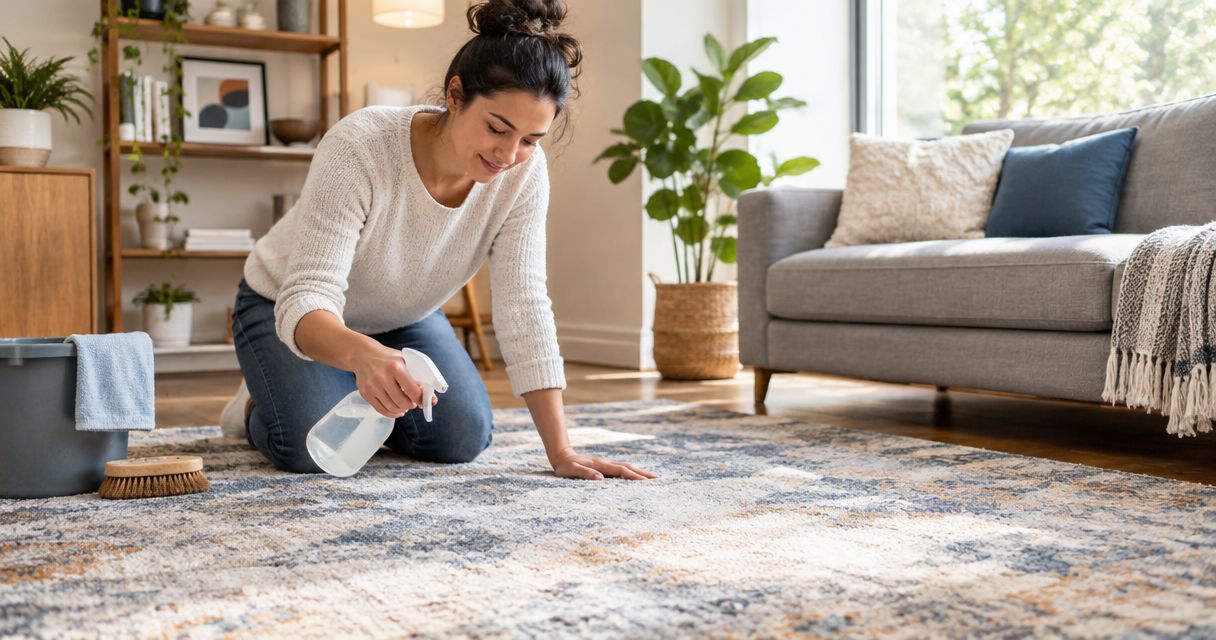
Best overall for persistent odors: professional area rug cleaning. Best for a fresh spill: immediate blotting. Best basic option for dry debris: careful vacuuming. This 2026 guide ranks the best way to remove odor from area rug fibers by the odor source, rug material, and care instructions—not by which treatment smells strongest.
- The best way to remove odor from area rug fibers depends on the source and care label.
- Finesse Pro Services offers professional area rug cleaning for homeowners in Pender County and surrounding communities.
- Blot fresh spills; use enzyme treatments for pet accidents only when the rug and product instructions permit.
- Persistent odor, delicate fibers, and wet backing call for professional assessment rather than repeated home treatments.
For persistent smells or a delicate rug, contact Finesse Pro Services to discuss the material, odor source, and a personalized cleaning quote. Professional area rug cleaning is the best starting point when you cannot safely identify or treat the problem yourself.
Why this matters
An area rug can smell because something remains in the fibers, backing, pad, or floor beneath it. Treating only the visible surface leaves the actual source untouched. Fragrance covers a smell; it does not remove the material causing it.
For homeowners in Hampstead, Burgaw, and other Pender County communities, the practical question is whether the rug needs routine maintenance, targeted spill treatment, or professional cleaning. Do not add water until you know the rug tolerates it. Wool, silk, viscose, dyes, adhesives, and backing materials require different care.
What makes the best area rug odor-removal method?
Use these criteria to choose a treatment in 2026:
- Source removal: The method addresses the spill, residue, or debris rather than covering its smell.
- Material compatibility: The rug’s care label and treatment instructions permit the method.
- Backing protection: Treatment accounts for the underside, rug pad, and supporting floor.
- Controlled moisture: Cleaning includes a realistic plan for complete drying.
- Limited disruption: You can carry out the treatment without scrubbing, soaking, or repeatedly adding products.
- Clear stopping point: Persistent odor, color transfer, or material changes trigger professional assessment.
Inspect **2 rug surfaces—the face and underside—**before choosing a treatment. Also inspect the pad and floor separately. A clean-looking face does not prove that the whole rug is clean or dry.
Area rug odor-removal methods at a glance
These 6 methods have different jobs. The ranking favors appropriate source removal, not a claim that every rug needs the same treatment.
| Rank and method | Best for | Standout feature | Key limitation |
|---|---|---|---|
| 1. Professional area rug cleaning | Persistent odors and uncertain materials | Assessment before selecting a cleaning approach | Cleaning cannot reverse every type of damage |
| 2. Immediate blotting | A fresh liquid spill | Removes liquid before you add cleaning products | Does not remove contamination already absorbed into backing |
| 3. Compatible enzyme treatment | A localized pet accident | Targets organic residues covered by the product label | Not suitable for every fiber, dye, or backing |
| 4. Care-label-approved washing | A rug explicitly labeled washable | Cleans the rug through an approved washing process | Washability and drying requirements limit its use |
| 5. Careful vacuuming | Dry debris and routine maintenance | Removes loose material without wet cleaning | Does not extract dissolved or embedded residues |
| 6. Airflow and complete drying | Residual dampness in an otherwise clean rug | Addresses moisture without adding chemicals | Does not clean contamination or remediate mold |
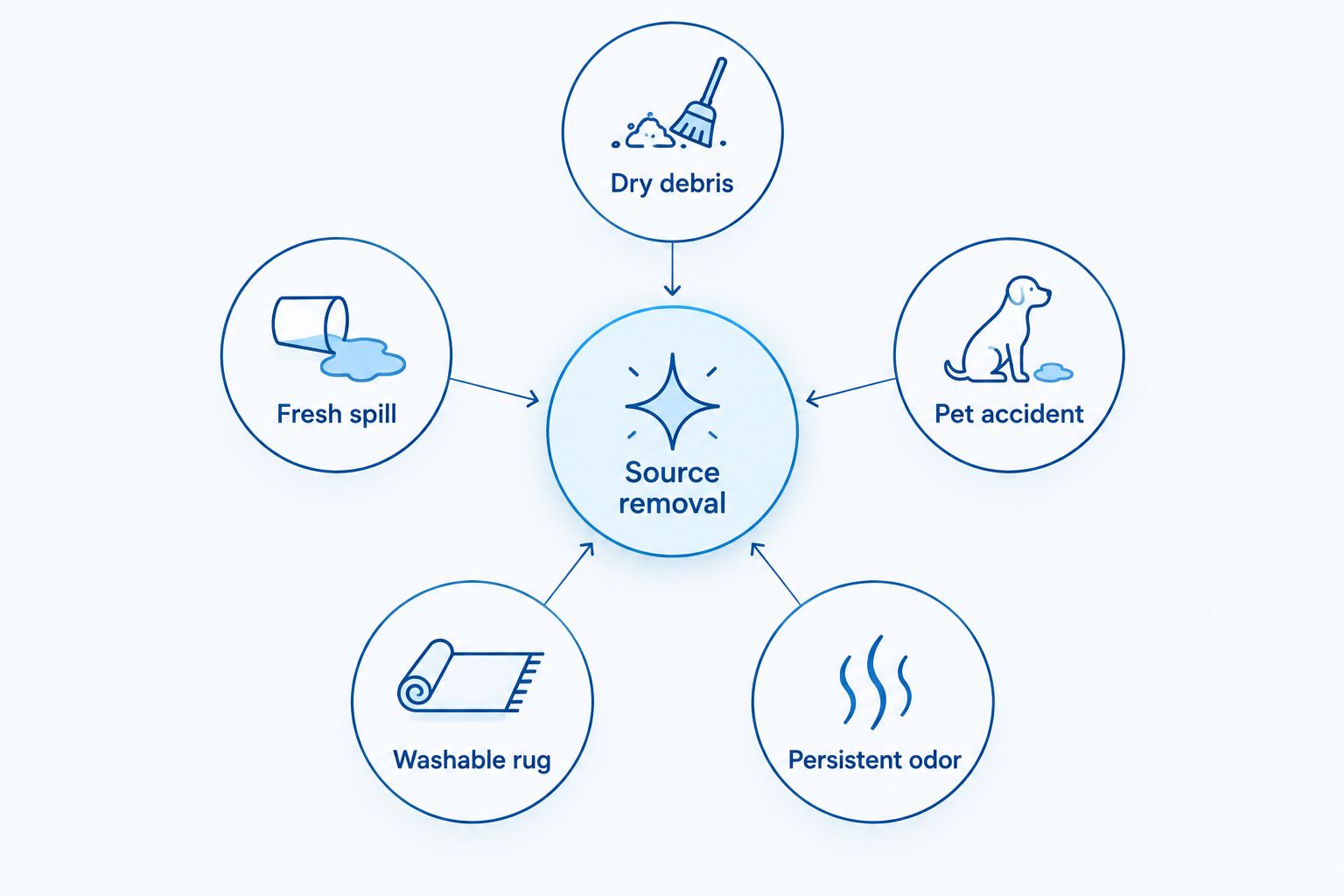
Before you follow the ranking, identify the closest match: dry debris, a fresh spill, a pet accident, a washable rug, or persistent odor. If several apply, start by protecting the material and removing fresh liquid—not by combining treatments.
1. Professional area rug cleaning: best for persistent odors
Professional cleaning is the strongest starting point when an odor returns, the source is unclear, or the rug needs delicate handling. Finesse Pro Services provides residential area rug cleaning for homeowners in Wilmington and surrounding Pender and Onslow counties. Describe the smell and previous treatments when requesting an assessment.
A professional assessment should distinguish soil and residue from material damage. It should also establish whether the backing, pad, or floor needs separate attention. Cleaning the rug alone does not solve an odor originating underneath it.
Professional area rug cleaning pros:
- Allows material and construction checks before treatment.
- Provides a route for addressing more than surface debris.
- Helps establish appropriate cleaning and drying requirements.
Professional area rug cleaning cons:
- Requires arranging service rather than acting immediately.
- Cannot guarantee reversal of deterioration or permanent discoloration.
Best for: Recurring smells, delicate rugs, and uncertain cleaning history.
Ask how delicate materials are handled and what the satisfaction guarantee covers for your particular rug. Describe the result you want without assuming that every old stain or odor is reversible.
Verdict: Buy—request a personalized professional cleaning quote for persistent or unexplained odor.
2. Immediate blotting: best for a fresh liquid spill
Blotting is the first response to a fresh spill, not a complete cleaning method. Use clean, absorbent cloths and press gently to lift liquid. Work without scrubbing, which can spread the spill and disturb the pile.
Check whether liquid reached the underside or pad. Do not pour water onto the rug to chase a smell, and do not apply a cleaner until you have checked material compatibility. Save the spill details for the cleaner if professional treatment becomes necessary.
Immediate blotting pros:
- Removes accessible liquid before further treatment.
- Avoids introducing an unnecessary cleaning mixture.
- Gives you a clear first action while checking care instructions.
Immediate blotting cons:
- Does not clean liquid already absorbed deeper into the rug.
- Does not resolve an established or recurring odor.
Best for: A newly discovered drink spill or pet accident that is still wet.
Verdict: Buy—use blotting immediately, then choose a compatible follow-up treatment.
3. Compatible enzyme treatment: best for localized pet accidents
An enzyme cleaner is a targeted option for organic residues identified on its label. It is not permission to saturate any rug. Check both the product instructions and the rug’s care requirements before use, especially with wool, silk, viscose, or unfamiliar backing.
Follow the labeled application and drying directions rather than improvising a stronger mixture. Test as directed in an inconspicuous area, and stop if color transfers or texture changes. A surface application is not a reliable solution when contamination extends into the pad or floor.
Compatible enzyme treatment pros:
- Targets specific organic residues rather than adding fragrance alone.
- Offers a focused approach for a localized accident.
- Provides product-specific instructions for application.
Compatible enzyme treatment cons:
- Compatibility varies across rug materials and products.
- Deep contamination requires attention beyond the visible spot.
Best for: A localized pet accident on a rug explicitly compatible with the chosen treatment.
Verdict: Buy only when compatibility is clear; skip unapproved enzyme treatment on delicate rugs.
4. Care-label-approved washing: best for explicitly washable rugs
Washing is appropriate only when the care label permits the process you intend to use. A rug that fits inside a washing machine is not automatically machine washable. Size, construction, backing, and the machine’s instructions all matter.
Follow the specified washing and drying directions without substituting hotter water or stronger products. The rug must dry completely before you return it to its pad or floor. If the label is missing or unclear, get material-specific advice instead of experimenting.
Care-label-approved washing pros:
- Follows an established care route for a suitable rug.
- Treats the washable rug rather than only a small surface patch.
- Gives clear washing and drying instructions when the label is intact.
Care-label-approved washing cons:
- Excludes rugs that lack suitable washing instructions.
- Requires enough space and suitable conditions for approved drying.
Best for: Rugs explicitly labeled washable with instructions you can follow fully.
Verdict: Buy for label-approved washable rugs; skip machine washing when permission is unclear.
5. Careful vacuuming: best for dry debris
Vacuuming removes loose dirt, crumbs, hair, and other dry debris. It is a maintenance step, not an extraction treatment for urine, soaked spills, or damp backing. Check whether the rug permits a rotating brush, and keep fringe away from moving parts.
Adjust your approach to the material and construction. Do not repeatedly scrub a delicate pile with the vacuum head because an odor remains. Persistent smell after dry debris removal means you need to reassess the source.
Careful vacuuming pros:
- Removes loose material without adding moisture.
- Fits routine care for rugs that permit vacuuming.
- Helps reveal whether debris was the main problem.
Careful vacuuming cons:
- Does not remove residues dissolved into fibers or backing.
- Unsuitable equipment or technique can damage fringe and delicate pile.
Best for: Dry debris and routine upkeep between appropriate cleaning treatments.
Verdict: Buy for maintenance; skip vacuuming as the sole response to wet contamination.
6. Airflow and complete drying: best for residual dampness
Airflow supports drying when a rug is otherwise clean and its care instructions permit the setup. Keep the underside from remaining trapped against a damp pad or floor. Do not return the rug to normal use while its backing remains wet.
Drying does not remove urine residue, spilled food, or contamination from water damage. A persistent musty smell, visible suspected mold, or a history of flooding requires assessment rather than repeated deodorizing. Never treat airing out as proof that a contaminated rug is safe.
Airflow and complete drying pros:
- Supports moisture removal without adding another cleaner.
- Draws attention to the underside and supporting surfaces.
- Complements a material-appropriate cleaning process.
Airflow and complete drying cons:
- Does not remove the material causing a contamination odor.
- Does not substitute for mold or water-damage assessment.
Best for: Residual moisture after permitted cleaning, with no suspected contamination.
Verdict: Hold—use drying as a supporting step, not a stand-alone odor treatment.
How the methods are ranked
The 2026 ranking uses source removal, material compatibility, backing protection, moisture control, and a clear stopping point. Professional assessment ranks first for unresolved problems; blotting ranks ahead of chemical treatment for fresh liquid. Each lower-ranked method wins a narrower use case rather than competing as an all-purpose solution.
No method earns a recommendation simply because it leaves a pleasant scent. The correct treatment removes the source without sacrificing the rug.
Which area rug odor-removal method should you choose?
For a persistent smell in 2026, choose professional assessment before another home treatment. Finesse Pro Services area rug cleaning is the local service option for homeowners who want help with an unresolved odor or delicate rug.
For a fresh spill, blot first. For dry debris, vacuum carefully. Use enzymes or washing only when the relevant instructions approve them, and treat complete drying as part of cleaning—not a replacement for it.
Before calling or requesting a quote, prepare 3 details:
- Rug material: Share the label, construction information, or what you know about the fibers.
- Odor history: Explain the suspected source and whether the smell returns after treatment.
- Previous treatment: Name the products and cleaning methods already used.
You do not need to diagnose the rug perfectly. Accurate details help establish the right next step without repeating a treatment that already failed.
Request an area rug cleaning quote
Describe your rug, odor source, and previous treatments for a personalized quote.
FAQ
What's the best way to remove odor from an area rug?
The best way to remove odor from an area rug is to remove the source with a material-compatible treatment. Blot fresh liquid, vacuum dry debris, and seek professional assessment for persistent odors or delicate rugs.
Should I use baking soda on a smelly area rug?
Do not make baking soda your default area rug treatment. Powder does not remove liquid contamination in backing or padding, and you must check the rug's care requirements before applying it.
Is vinegar safe for every area rug?
No, vinegar is not a universal area rug cleaner. Fiber, dye, backing, and care instructions determine compatibility; do not improvise a vinegar mixture for an unfamiliar or delicate rug.
Can I use an enzyme cleaner for pet odor in a wool rug?
Use an enzyme cleaner on a wool rug only when both the product instructions and rug care requirements permit it. If compatibility is unclear, request professional advice rather than testing an unapproved treatment.
Why does my area rug still smell after cleaning?
Remaining residue, incomplete drying, or contamination in the backing, pad, or floor can explain odor after cleaning. Check those areas instead of repeatedly treating only the rug's face.
Can I put a smelly area rug in the washing machine?
Machine-wash an area rug only when its care label permits it and you can follow the washing and drying instructions. Physical fit inside the machine does not establish washability.
Who can help with area rug odors in Pender County in 2026?
Finesse Pro Services provides residential area rug cleaning for homeowners in Pender County and surrounding communities. Call or request a personalized quote and describe the rug material, odor history, and previous treatments.
One last thing
Before treating an area rug in 2026, lift a corner and inspect underneath. The pad or floor can be the odor source even when the face looks clean. If the source is beneath the rug, another surface deodorizer is the wrong next move.